
Brief (coffeeyo.com): Two-thirds of an iced latte is ice, and ordering “less ice” gets you a cup that is not full — is the shop shortchanging you? There is no industry standard for ice at all, and the coffee and milk in the cup stay exactly the same whichever option you pick.
Two-thirds of an iced latte is ice, and the coffee is gone after a few sips; choose “less ice” and the cup arrives not even full. Are shops using ice to cut corners?
How much ice belongs in a coffee, anyway? It is a thoroughly Schrödinger’s-ice sort of question.

An iced latte. Photo: Tuchong Creative.
01 — The ice in your drink: regular, extra, less
How much ice should go into a cold drink? Is there an industry standard?
No. At least, not yet.
When most shops make regular ice, less ice or no ice, they essentially go by “roughly, about, that much”. Nothing specifies how many cubes each option should contain. Standards also differ between brands: one interview put Luckin’s regular ice at about half a cup of cubes and its less ice at a quarter of a cup; Cotti’s less ice is a third of a cup; MANNER’s regular ice is six cubes, roughly a third of the cup.
So far there is no industry standard for ice at all — everyone adds it by feel. And it is much the same as sugar levels: “30 percent”, “50 percent” and “70 percent” sugar mean different things at different shops too.
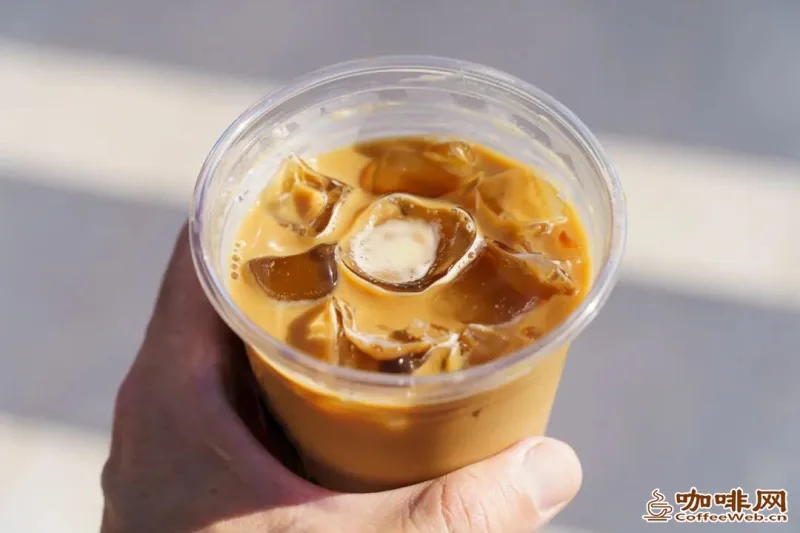
There is no standard for how much ice to add. Photo: Tuchong Creative.
Iced drinks did not originally come with adjustable ice levels. Extra-ice and less-ice options appeared later, presumably to meet customer demand.
When a shop develops an iced drink, it is usually formulated on the basis of a full cup of ice: so many grams of jam, so many pieces of lemon, so many shots of espresso — a fixed recipe. Adjusting the ice mainly accommodates a customer’s preference for a slightly different temperature, while the drink’s own standard operating procedure stays unchanged.
Ordering less ice does not mean they top you up from one shot of coffee to three. Ordering extra ice does not mean they reduce the coffee. For the same coffee, the difference between regular, less and extra ice is only the amount of ice — the coffee, milk and other ingredients stay the same.
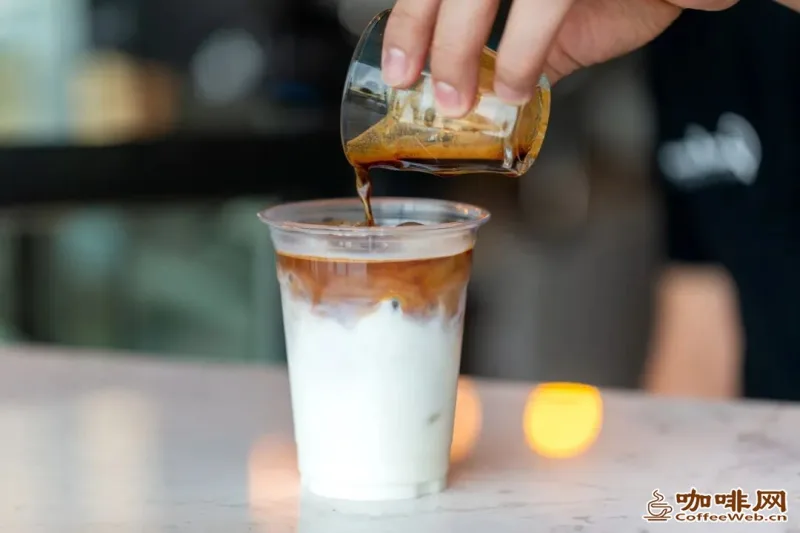
Pouring espresso over milk and ice. Photo: Tuchong Creative.
Some iced drinks, because of how the recipe works, offer no less-ice or no-ice option at all, or mark no ice as “not recommended”. Either way, what shops most want is for you to order standard ice.
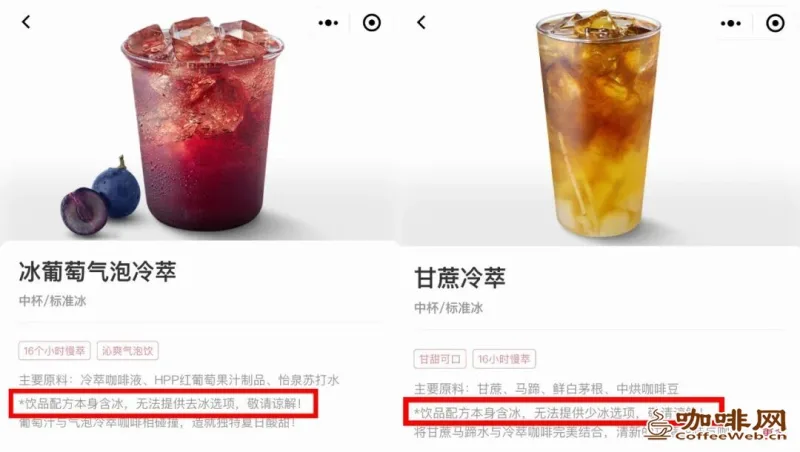
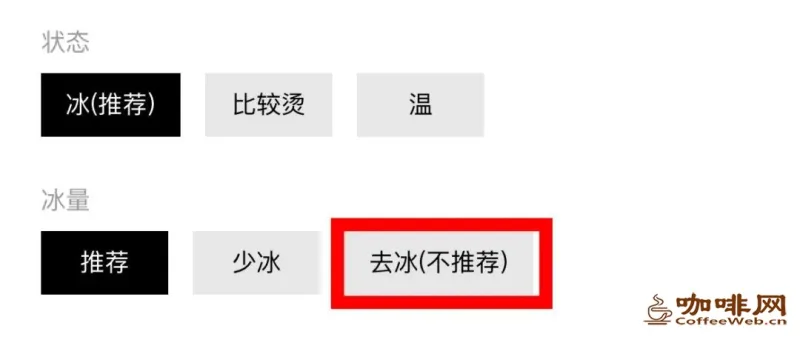
Ice-level notice on a product detail page. Screenshot from a merchant’s mini-app.
Of course, where there is no industry standard, unscrupulous operators will find loopholes. But if ice-level options are offered, consumers’ right to be informed and to fair dealing should be protected accordingly. A simple diagram on the detail page showing standard, less and no ice might well reduce the feeling that the product does not match the description — that you “bought a cup of ice”.
02 — Why do shops like so much ice? To make it taste less bad
Many people feel there is far too much ice in drinks these days. Why so much?
First, low temperature fools the tongue: ice helps your taste buds screen out the less pleasant flavours in coffee. Let an iced americano come up to room temperature and it becomes bitter on bitter — which is why people joke that “a room-temperature americano is worse than medicine”. More ice keeps the coffee cold for longer. (This may also be why people in South Korea insist on iced americanos even in winter.)
Iced americanos in the snow in South Korea. Source: uofhorang.com.
Lemon tea is another case: most shops offer only standard ice, with no less-ice or no-ice option. The warmer it gets, the more astringent lemon tea tastes, so staff pile in the ice to keep that astringency down.
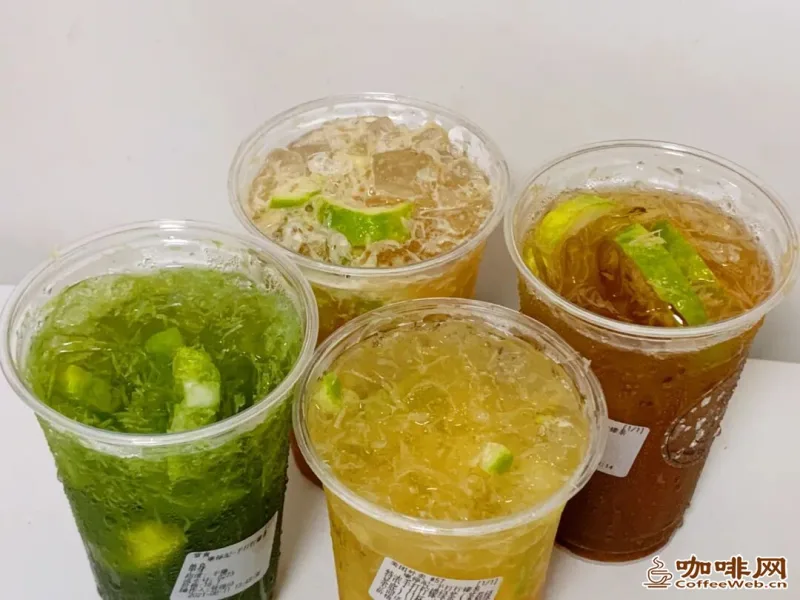
Lemon tea tends to come with a lot of ice. Photo by Lu Qi’an.
For a shop, ice is nearly worthless; the valuable part is the tea and the coffee. Whether you choose no ice, less ice, regular ice or extra ice, the amount of the valuable stuff in the cup is identical.
Of all iced drinks, those with milk need extra ice the most. As ice melts into water it dilutes the milk and makes the drink taste worse, and a larger quantity of ice melts more slowly than a small one — more ice simply postpones the moment when the drink stops tasting good.
That said, if you ask for less ice in person and request the rest be topped up with milk, most staff will happily oblige.

Milk-based drinks need extra ice most. Photo: Tuchong Creative.
03 — Less ice, cup not full: why?
Extra ice is not the only complaint; “less ice but not a full cup” gets criticised too.
Complaints about less ice leaving the cup short. Screenshot from Xiaohongshu.
One reason is that the standard recipe cannot change — reduce the ice and the other ingredients cannot simply be increased. Another is that less ice melts faster, and as it melts the volume drops. The shrinking volume is not even the main problem; ice turning into water dilutes the drink’s flavour.
Take a 360 ml iced latte with regular ice: two shots of espresso plus 250 ml of milk. Made with less ice or no ice but still filled to the brim, it would need either more than 100 ml of extra milk or additional coffee — either of which breaks the original ratio. Stick to the ratio and the cup genuinely will not be full.
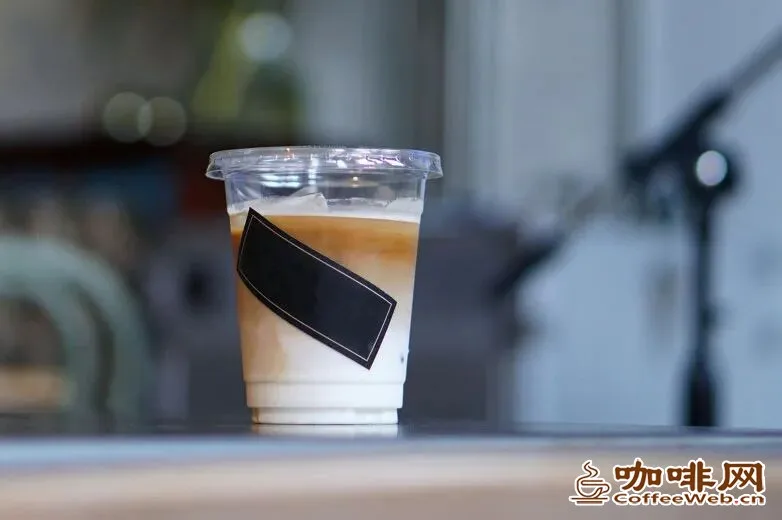
Less ice really can leave the cup short. Photo: Tuchong Creative.
Some drinks are unaffected by more or less ice, because water is already the bulk of the recipe — whatever the ice level, the remaining space is simply topped up with water, as with an iced americano. The same goes for cheap drinks made from syrup, milk-tea powder or non-dairy creamer mixed with water: the amount of ice barely changes the texture or the taste.

Extra-ice and less-ice americanos differ very little. Photo: Tuchong Creative.
04 — So how much ice should you choose? For most drinks, regular or extra
Whether you order extra or less ice, the only difference is the amount of ice — the valuable coffee portion is the same. On taste, regular or extra ice is generally the better choice for most iced drinks; less ice is not recommended.
As for whether it is “good value”, that is a highly subjective feeling.
Experiments in consumer psychology have repeatedly shown that people estimate a price not from a product’s actual value but from whether it meets their expectations: a piece of clothing costing thousands is bought without hesitation, while a ten-yuan shipping fee prompts a long pause.
By the same logic, a larger drink feels like better value (though it may cost the shop little more to make), and a two-cup bundle feels cheaper than one cup (even though you are spending more). It is the mind doing the calculating, not the actual cost.
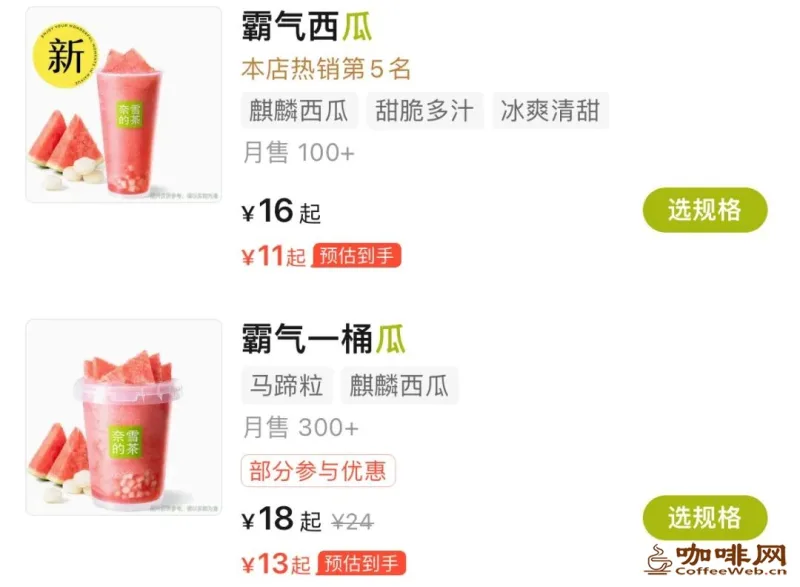
The big bucket looks like better value, but costs little more to make. Screenshot from a delivery platform.
Convenience stores now sell cups of ice at an average of RMB 4–7, which is not especially cheap. They are not priced that way because the water is worth it, but because on a sweltering summer day they save you the trouble and the time of freezing ice at home.
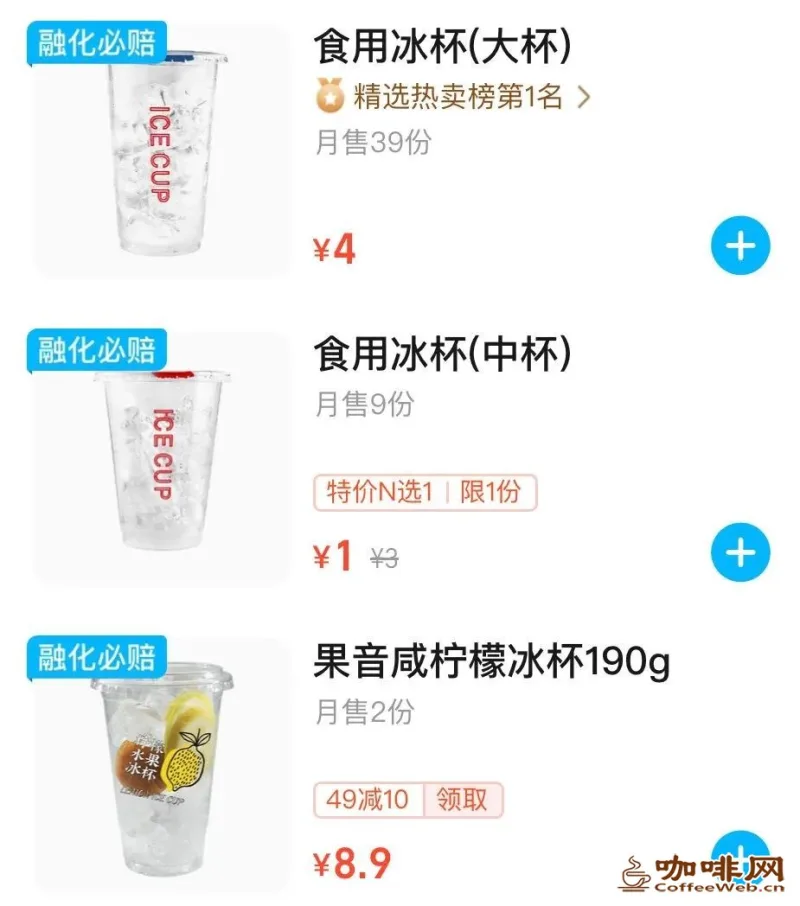
Ice cups at a convenience store. Screenshot from a delivery platform.
Iced drinks have become something many of us can hardly do without. How much ice do you usually ask for?

Anyone from a coffee shop or tea shop care to tell us how it works?

Original title: “My coffee is half ice — am I being ripped off?”
Reprint Note & Disclaimer
- This article is reprinted from Chinese media for information and cultural exchange. The views expressed are those of the original author and do not necessarily reflect the position of coffeeyo.com.
- All trademarks, brand names and logos mentioned belong to their respective owners.
- For cooperation, reprint or correction requests, please contact coffeeyo.com.
Reprint Notice & Disclaimer
- This article has been edited and compiled by China Coffee Network. The information and images therein come from public sources and the copyright belongs to the original author. This reprint is intended solely for information sharing within the coffee industry and does not represent the views of this website; all data and opinions are subject to the original article. Our thanks to the original author for creating and sharing it.
- For matters concerning content licensing, attribution, copyright or otherwise, please contact us promptly and we will verify and cooperate in handling them as soon as possible. We also welcome coffee origins, brands and industry media to exchange ideas and contribute articles.
- Contact China Coffee Network: Tel 400-0000-641 (+86-18288016826) | Email 405854472@qq.com | Address: Jinghong, Xishuangbanna, Yunnan Province / Tieling, Liaoning Province
Related Reading
 How ‘Sea-Flavored’ Coffee Blooms Across Dongtou
- Health Guide: How to Enjoy Your Coffee the Healthy Way
 Study: Regular Coffee and Tea May Lower Dementia Risk, but More Is Not Better
 Frontline Story: A ‘Mobile City Coffee Bar’ Arrives by the Grand Canal
 Yantai’s Wind Tastes of Coffee
 In Zhenyuan, a Cup of Coffee and a Waiting Train







 Liaoning ICP Security No. 21122402000217