
Brief (coffeeyo.com): The rise of the home coffee machine isn’t a new need — it’s spillover demand educated and then squeezed out by the 9.9-yuan price war. As the category grows against the tide, the real puzzle is whether brands can keep users inside their ecosystem without over-complicating the machine.
This article is from the WeChat public account “Business Review Retail Scene,” author: Jia Hehui.
Sometimes a category’s explosion isn’t because it fights so well itself, but because competitors paved the road for it first.
Before Luckin and Cotti ignited the 9.9-yuan price war, China’s automatic coffee-machine market had developed for over 20 years — yet remained an inconspicuous presence in the home-appliance market. It was only after chain brands spent a few years cultivating consumers’ daily coffee habit that freshly made coffee became a daily necessity, and the demand squeezed out by the price war spilled over onto coffee machines.
Against this backdrop, daily coffee drinkers started doing the math: at 9.9 yuan a day, the annual cost exceeds 3,600 yuan — they might as well buy a machine and make it at home. Thus the demand displaced by the price war overflowed into machines.
AVC (All View Cloud) data shows that in 2025, online-channel cumulative coffee-machine sales reached about 4.137 billion yuan, up 36.75% year on year; volume was 2.23 million units, up 36.42%. Rarely does any other home-appliance category deliver this performance in a stock market.
Luckin and its peers never imagined that after spending real money on years of price war, they ultimately made the wedding dress for coffee machines.

Before Luckin and peers launched the 9.9-yuan war, China’s freshly made coffee market had long been a consumer good of social currency and “third place,” represented by Starbucks at around 30 yuan, targeting high-end offices and core business districts in tier-1 and -2 cities.
For the mass consumer, it meant either habitually drinking instant coffee or treating freshly made coffee as an occasional “luxury” reward.
After the rise of local brands like Luckin, the threshold for freshly made coffee dropped rapidly. The biggest contribution of the 9.9-yuan war was not just lowering the price, but completing the habit education of “drinking coffee daily” over a few years; chain-store expansion made buying coffee as simple as walking into the convenience store downstairs.
The “China Urban Coffee Development Report” shows that before the price war fully erupted in 2023, the national per-capita annual coffee consumption was about 12 cups; by 2025 that number had grown to nearly 30 cups.
To this day, 9.9-yuan coffee drinks are everywhere. Yet a growing number of loyal freshly made coffee consumers, after a simple calculation, began to feel the pinch.
Take one 9.9-yuan drink a day: about 3,600 yuan a year, already exceeding many high-end automatic machines. So these consumers, who had formed the freshly made coffee habit but could not go back to instant, if unwilling to pay at least 9.9 yuan daily, seemed to have only one outlet — moving a coffee machine into their own kitchen.
AVC data shows 2025 online coffee-machine sales of about 4.137 billion yuan, up 36.75% year on year; volume 2.23 million units, up 36.42%. De’Longhi has also revealed in interviews that in 2025 the share of young consumers buying automatic machines in the domestic market rose markedly — even those still renting are increasingly willing to spare a counter spot for a coffee machine.
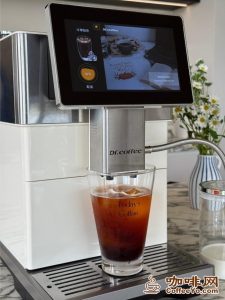
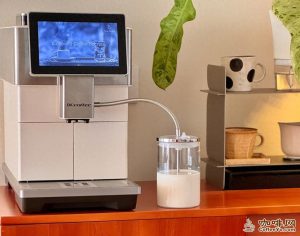
Offline chain coffee meets the functional need to wake up; the home machine adds a layer of emotional value. Making a cup with the machine in your own kitchen each morning, enjoying “one-touch coffee” while having a ritual all your own.
On social platforms like Xiaohongshu, the automatic coffee machine has become a hit item for setting a cozy home mood.
Yet ritual is only a result after purchase, not the core driver; the real factor is consumers shifting from 9.9 yuan a cup to 3 yuan a cup — unable to leave freshly made coffee yet unwilling to pay 9.9 yuan daily.
A few-thousand-yuan automatic machine versus 9.9-yuan freshly made coffee — even factoring in the beans you must buy, it “pays back” in about a year; yet how many machine buyers actually worked the accounts through before ordering? In fact, after the machine caught the overflow demand from the 9.9-yuan war, the industry’s divergence trend was even more unexpected.

Coffee machines grow against the tide, but in a normal consumption market the rich buy expensive and the cautious buy cheap entry models — reality seems otherwise.
AVC data shows products around 100 yuan account for only 0.21% of sales, trending down year on year; the 500–2,000 yuan entry mainstream saw volume fall 2.75%. By contrast, the 5,000–8,000 yuan band saw sales rise 4.04% year on year; the 8,000-yuan-plus top configurations showed an across-the-board climb.
In short: low-end products find no takers and the entry line is also contracting — only the high-end series are sprinting.
Why this pattern? Essentially it is not simple consumption tiering, but a rational analysis about a shift in reference frame.
First, the downward-comparing group: for the 500–2,000 yuan entry automatic, the question consumers face is not whether to buy a machine, but what it truly replaces once bought. The entry machine’s direct competitor is the 9.9-yuan coffee downstairs. Take a 1,500-yuan machine: spread over three years at one cup a day, the average is about 1.4 yuan — seemingly far cheaper than 9.9. But in the consumer’s mind, grinding, extracting, cleaning, and maintaining is a whole daily process costing much more time; a breakdown means non-trivial repair cost and some chance of failure.
Moreover, when the automatic machine sits idle, the payback period only stretches far longer.
The deeper problem: the entry machine offers strongly substitutable function. Whether Americano or latte, 9.9 yuan buys it anywhere. For mass consumers mainly seeking daily wake-up, the entry automatic brings no economic or experience advantage, only a more cumbersome alternative — the “do it yourself” story no longer holds.
Then the upward-comparing group: high-end buyers do not compare with Luckin but benchmark Starbucks-style specialty coffee, demanding more of taste and experience. Imagine an 8,000-yuan high-end machine: at two cups a day, even adding bean costs versus Starbucks, it pays back in just over a year.
Judged purely by usage frequency, the math doesn’t close. Xianyu (second-hand platform) data shows home coffee machines idle as high as 6.5%, averaging only about 5 uses a year — an 8,000-yuan machine used 5 times a year makes cost skyrocket.
Clearly, consumers spending nearly 10,000 yuan on a high-end machine aren’t running that math; what’s really on their mind is the sunk cost behind it — “I already spent 8,000, so I must use it.”
This is the high-end machine’s reverse driving effect: to live up to the heavily invested machine, users self-select specialty beans, deeply study extraction parameters, and actively post beautiful photos to friends after success.
The unique emotional experience of this “home cafe” is often what 9.9-yuan chain coffee cannot give. This is the high-end model’s core competitiveness: it sells not the function of making coffee, but a product positioning that makes users unable to easily give up.
In short, an entry machine left to gather dust means you feel little loss in not using it; a high-end machine gathering dust means bearing the psychological pressure that not using it is waste — which instead drives the latter’s usage frequency.
From these two angles, machines in the middle price band mainly sell function and cost-performance, exactly squeezed by two more persuasive positionings. Buying entry is worse than the 9.9 yuan downstairs; buying high-end pursues quality, and long-term versus 30–40 yuan Starbucks also looks extremely “cost-effective” — ultimately forming the strange pattern of cheap products unwanted and high-end products continuously rising.
For example, industry leader De’Longhi, though still holding the top market share, saw its share slip 4.54%; meanwhile the high-end brand LAMARZOCCO (La Marzocco), averaging over 30,000 yuan, entered the top-10 best-selling brands list.

China’s coffee-machine market was only 2.6 billion yuan in 2021, growing to 6.5 billion by 2025; on volume, cumulative domestic sales were 1.862 million units in 2021, rising to 3.481 million in 2025 — roughly doubling in five years. On penetration, home penetration of the domestic coffee-machine market grew from 12.3% in 2021 to 21.7% in 2025, still far below the 80%+ of Europe and the US and leaving huge room.
The growth potential is enormous, yet basic smart features like app scheduling, parameter memory, and auto-clean were already industry standard by 2025. What brands focus on now is the consumables consumers must keep repurchasing after buying the machine.
Recall that for the whole home-appliance industry, the traditional sales path was often a “one-shot deal” — sell the product, and beyond necessary after-sales it was basically over.
Coffee machines differ. Take Nespresso’s capsule machine: overseas it sells for only tens of euros, even failing to cover production cost; yet the continuously repurchased capsules that follow carry up to 60% margin. At 300 capsules a user buys a year, the initial hardware loss is recovered in just three months.
A similar path translated directly to China: although De’Longhi and Philips maintain gross margins above 40%, their real profit source usually isn’t the machine itself.
De’Longhi, through its membership system, compresses the repurchase cycle to 47 days — a De’Longhi user needs to buy consumables from the brand ecosystem every month and a half on average. Philips launched a subscription for cleaning supplies and filters, delivering consumables on schedule once users bind monthly charges.
Brands turn the automatic machine into an entry point for continuous revenue; selling the product is only the start of a series of paid activities.
Like the robot vacuum’s vulnerability, if a machine’s consumables are fairly generic, even with many cheap alternatives, the brand loses its monopolistic position for continuous charging. Higher-order smart functions under AI try to solve this, truly keeping consumers inside the brand ecosystem.
Imagine a user spending half a year or more letting the machine remember their preferences — 90°C water, 15g dose, 25-second extraction, 3mm foam — using parameters to remember taste. What you then buy is no longer a simple machine, but a private barista at home.
Switching machines zeroes the data; the migration cost of a coffee machine is thus far higher than swapping a fridge or TV. This is why brands keep investing in AI functions: the more the machine knows you, the harder to leave.
The contradiction: excessive smartness can also make users lose patience.
Some consumers reported that after using an AI voice assistant, multiple attempts to have the machine brew a cup were refused — similar situations appear in smart-home and other fields.
This reveals the truth of “too much is as bad as too little”: when a machine’s smart complexity exceeds the trouble it solves, the consumers educated by the 9.9-yuan war can vote with their feet at any time and return to the cafe downstairs.
Not smart, and the consumable ecosystem can’t bind; too smart, and the user experience regresses — brands must find a balance, not just think about charging continuously after the sale. Otherwise, the 9.9-yuan price war can both make the coffee-machine category and bite it back.
In plain terms, the coffee machine’s growth isn’t a “new need,” but spillover demand educated to maturity by the price war and then squeezed out. The against-the-tide growth is because Luckin and peers paved the road first; how to sustain it is the category’s real exam.
Reprint Note & Disclaimer
- This article is compiled and edited by coffeeyo.com based on a piece from the WeChat public account “Business Review Retail Scene” (author: Jia Hehui). The materials and images herein are sourced from public channels and the copyright belongs to the original authors. This site reprints them solely for information sharing within the coffee industry and does not represent our stance; all data and views are subject to the original source. We thank the original authors for their work and sharing.
- For matters concerning content authorization, attribution, copyright, or any other issues, please contact us promptly. We will verify and cooperate in handling them without delay. We also welcome coffee-growing regions, brands, and industry media to exchange and contribute articles with us.
- Contact coffeeyo.com — Tel: 400-0000-641 (+86-18288016826) | Email: 405854472@qq.com | Address: Jinghong City, Xishuangbanna, Yunnan / Tieling City, Liaoning
Reprint Notice & Disclaimer
- This article has been edited and compiled by China Coffee Network. The information and images therein come from public sources and the copyright belongs to the original author. This reprint is intended solely for information sharing within the coffee industry and does not represent the views of this website; all data and opinions are subject to the original article. Our thanks to the original author for creating and sharing it.
- For matters concerning content licensing, attribution, copyright or otherwise, please contact us promptly and we will verify and cooperate in handling them as soon as possible. We also welcome coffee origins, brands and industry media to exchange ideas and contribute articles.
- Contact China Coffee Network: Tel 400-0000-641 (+86-18288016826) | Email 405854472@qq.com | Address: Jinghong, Xishuangbanna, Yunnan Province / Tieling, Liaoning Province
Related Reading
- Automatic Coffee Machines Recommended for Office Workers
 Gree Wins New Robot Patent as Its Coffee Robot Draws a Flood of Orders
 Midea-Led National Standard for Home Coffee Machines Takes Effect, Elevating China Coffee-Machine Voice
 Robot Barista Debuts in Wuhan: One Cup in 90 Seconds, in a Real Consumer Setting
 Auto-cleaning the brew group of a super-automatic espresso machine: the overlooked cleaning key, and how the Grindel H3 handles it
 Which super-automatic espresso machine for when guests come over? Picks for home entertaining


 Liaoning ICP Security No. 21122402000217