
At a Glance (China Coffee Network): Wake up one morning, and the floor price of coffee has been broken through again. A small shop in Qingdao sells an Americano in a customer’s own cup for just 52 cents, and a latte…
Wake up one morning, and the floor price of coffee has been broken through again.
A small shop in Qingdao sells an Americano in a customer’s own cup for just 52 cents, and a latte for 3.52 yuan. With no fancy decor and no standard menu, a 53-year-old man uses a handmade, well-pump-style espresso machine of his own devising to turn out a cup in about four minutes on average.
Many people make a special trip to check it out, with the longest queue reaching 80 minutes.
Some joked, ‘It’s as if the owner is paying out of his own pocket to treat everyone to coffee.’ What kind of little shop is this, exactly?
Americano at 52 Cents, 80-Minute Queues: An ‘Ultra-Low-Price Coffee’ Goes Viral in Qingdao
There is no shortage of stories about cheap coffee, but this Qingdao shop still comes as a surprise.
It sells only two products—latte and Americano. An Americano (iced or hot) in your own cup is 52 cents, and a latte is 3.52 yuan; bring no cup and you pay an extra 50 cents, and business hours are entirely at the owner’s whim.
The shop is called ‘Houhai Coffee,’ tucked inside an old residential community in Licang District. There is no eye-catching storefront, no standardized design, and not even a printed menu.
Push the door open and it feels more like a private collection room: old-style tea sets, modified audio equipment, handmade trinkets—the owner’s own old belongings are everywhere. The core equipment for making coffee is a steam espresso machine he designed himself and ‘hand-built’ with a small lathe; shaped like a pressure well, it grinds the beans fresh.
Riding on rock-bottom prices plus contrast, the shop went viral almost overnight. Comments flooded social platforms:
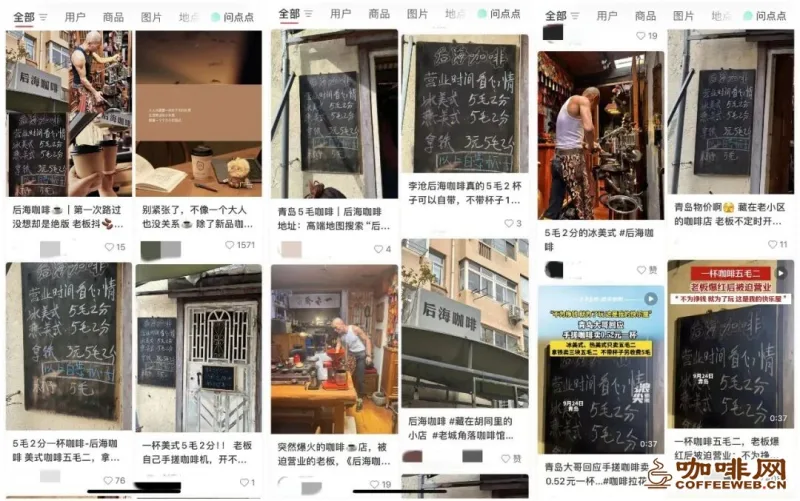
‘52 cents? I thought I misread the decimal point.’
‘Even bottled water costs 2 yuan now; this coffee is cheaper than water.’
‘Boss, are you sure you’re not running a charity?’
The owner is a 53-year-old local man. The shop sits in his own property, and he has been gradually shaping it into a coffee space since last year. In his view, this isn’t really a coffee shop but his ‘happy house.’ Making coffee isn’t about money—purely about joy and making friends.
There is no fixed schedule; the little blackboard at the door even notes ‘off to run at 17:00.’ After the shop unexpectedly went viral, he had no choice but to extend hours and stand watch a few extra days—only to end up so exhausted his hands trembled, and even his homemade machine was driven to ‘go on strike.’
The shop has a rule: one cup per person, no takeaway. Even so, some still queued 80 minutes. Facing a never-ending stream of customers, the man admitted bluntly, ‘I’m exhausted, I’m totally burned out.’
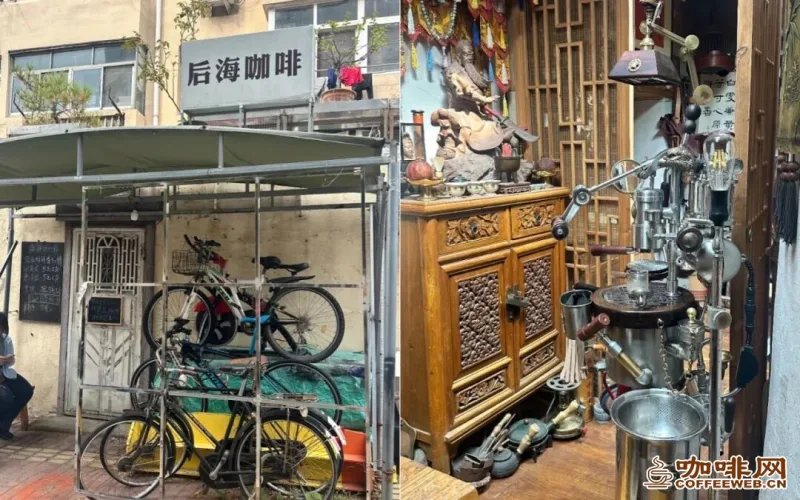
Image source: Xiaohongshu blogger Fengmi Youzicha, used with permission
Netizens ran with the joke, quipping that ‘Houhai Coffee’ nearly became ‘Regret Coffee.’ Just yesterday (September 29), a visiting netizen found the shop’s blackboard updated with the note ‘not in a good mood, closed for business.’
However, according to feedback from visitors, the coffee tastes surprisingly good; the shop uses whole boxes of Yili pure milk made fresh on the spot, with honest ingredients.
But at this price, even before labor and rent, the raw-material cost alone isn’t covered—selling a cup means losing a cup. The man seems unconcerned: ‘As long as it tastes good and everyone sits together and chats happily, that’s enough.’
This Isn’t Low-Price Involution—It’s a Personal Hobby
Many who see 52 cents a cup’s first reaction is ‘another round of low-price involution.’ But once you understand the inside story, you realize it’s fundamentally different from the low-price promotions of chain brands.
A peer in the trade flatly said this pricing is ‘fine to look at, but impossible to copy.’ Houhai Coffee is the product of pure personal hobby once the pressures of rent, revenue, and operations were set aside.
The viability of such low prices is bound to extremely strong personal conditions: own housing, disregard for losses, and enough time and passion to sustain it. Remove any one link and it collapses; for a normally commercial store, such low prices cannot last.
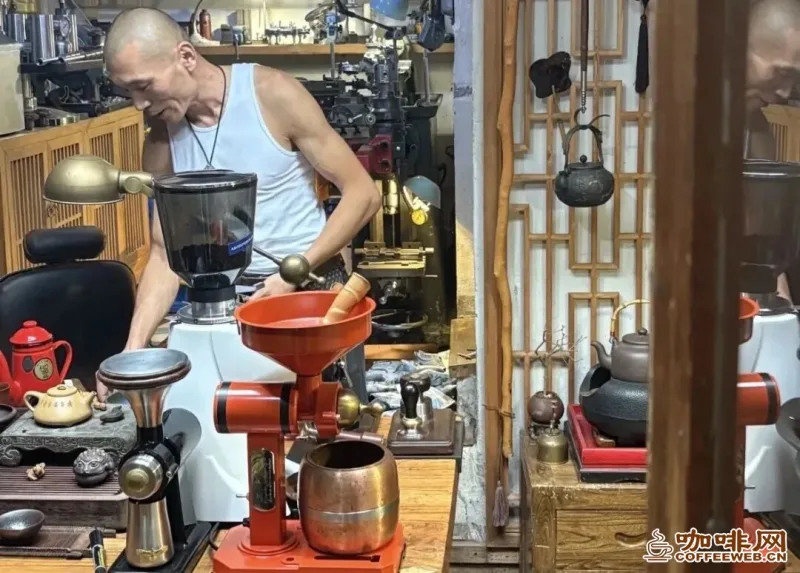
Image source: Xiaohongshu blogger Feng Baobao, used with permission
‘This ultra-low price has limited reference value for ordinary shops,’ a coffee practitioner admitted.
Many who make a special trip also mention that beyond the rock-bottom price, the owner himself is a draw. At 53 he has real personal charm: gentle and witty in speech, he tends his teapots, birdcages, cricket jars, and audio gear by hand; he keeps fit and runs marathons, laughing that he eats 20 eggs a day to stay in shape.
It is precisely this authenticity and ease that give the little shop an appeal beyond a cup of coffee. People queue 80 minutes not just for the 52-cent Americano, but more to meet this owner and feel this unique kind of joy.
Behind the Viral Shops: Other Ways for Independent Coffee Shops to Survive
Houhai Coffee’s survival is full of uncertainty. Once the traffic fades, or the day the owner no longer feels like running it, it could close at any time. Yet it remains an interesting coffee case study.
According to iiMedia Research data, among China’s coffee consumers in 2025, the share who drink coffee for leisure and relaxation reached 45.2%, nearly on par with the 47.89% who drink it to stay alert for work.
This means the same cup of coffee plays completely different roles in the two scenarios of ‘staying alert’ and ‘socializing.’ As the need to stay alert is gradually met by chain brands, ‘socializing and experience’ becomes the only ground where independent shops can still stand.
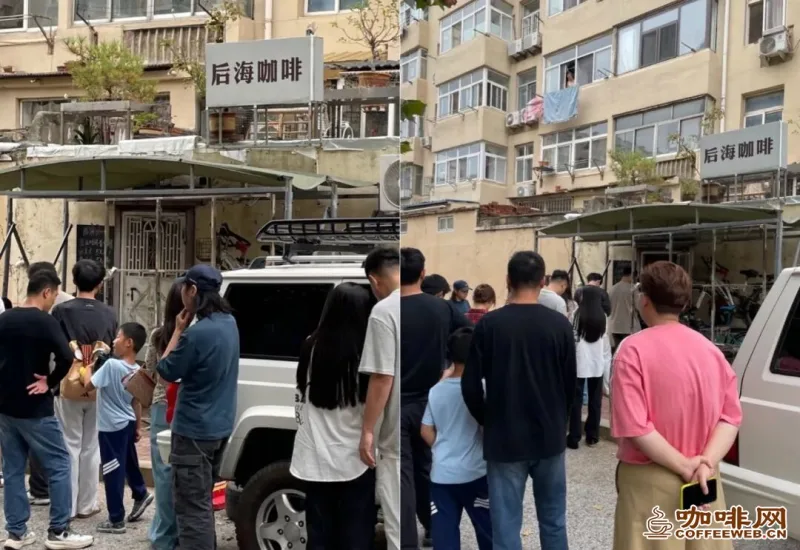
Image source: Xiaohongshu blogger mqwo, used with permission
This year, a batch of ‘warm-hearted’ little shops have gone viral.
1. A 4.2-square-meter cliffside kiosk turns ‘breathtaking views’ into its unique selling point
Beneath the Danxia cliffs of Wuyi Mountain, an old sentry kiosk of just 4.2 square meters was transformed by returning youth Wang Haowei into ‘Cliffside Coffee.’
With red cliffs at its back and clear streams in front, the former military kiosk was turned into a space blending sightseeing, culture, and leisure. Its signature product is a ‘Wuyi rock tea + specialty cold-brew blend,’ infusing the rocky bone and floral aroma of rock tea into tea-coffee.
During this year’s May Day holiday, in just over ten days of trial operation, it welcomed about 50,000 visitors in five days, with post-90s and post-00s making up over 80%.
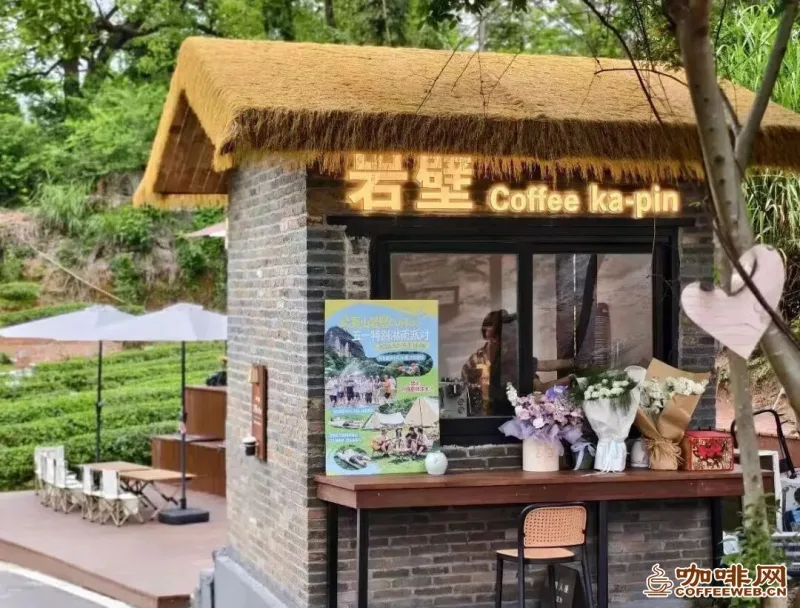
Image source: Xiaohongshu blogger Mujin, used with permission
2. An 86-year-old coffee grandma sustains a comfort shop through warmth
At Luona Coffee in an old district of Shinan, Qingdao, 86-year-old Grandma Zhao Qiying has tended the bar for over a decade.
In 2015, after her husband passed away and her son’s coffee shop hit hard times, she took it over to help share the burden. She didn’t even know how to use the coffee machine then, and when she sought a teacher she was talked out of it: ‘At your age, just go home and enjoy life.’
With no one to teach her, she studied books and videos on her own, simulating milk foam with water and detergent and substituting soy sauce for coffee liquid, practicing latte art day after day.
Today, Luona Coffee has grown from selling just twenty or thirty cups a day to fifty or sixty on weekdays and seventy or eighty on holidays. Two ‘silver-haired besties’ whose ages add up to over 160 run the shop into an emotional comfort station for many young people.
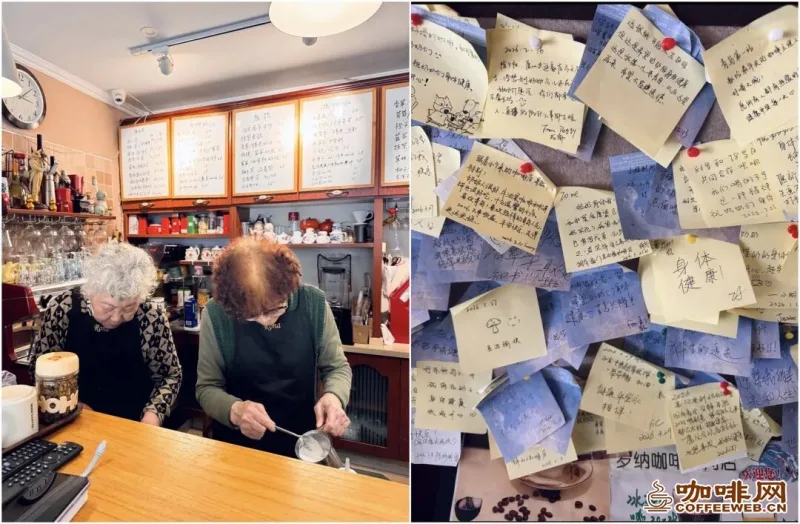
Image source: Xiaohongshu blogger Ma Huanle, used with permission
3. A market stall under 6 square meters: everyday bustle becomes the memory point
In the Hanqiao fresh-food market of Hanyang, Wuhan, ‘Liuyi Bean Shop’ hides in a stall under 6 square meters, next to a pork stand and across from a vegetable stand. With no fancy decor, it uses raw OSB boards for the bar and hangs a white cloth curtain at the door reading ‘life’s pursuit: coffee freedom.’
Average drink price is 15 yuan, with member-price Americano as low as 3.9 yuan. The owner even plays with ‘free scallions with coffee’; in just over half a month since opening, daily sales are around 100 cups, with young people making up 80%.
The common thread among these shops is clear: find your own unique differentiator and keep amplifying it.
Chains compete on scale and cost; small shops compete on character and warmth. The way out for small coffee shops is not mimicking influencers’ gimmicks for traffic, but finding their own irreplaceable value.
This article is from the WeChat public account ‘Kamen’ (ID: KamenClub), author: Wuyue, published by 36Kr with authorization.
Reprint Notice & Disclaimer
- This article has been edited and compiled by China Coffee Network. The information and images therein come from public sources and the copyright belongs to the original author. This reprint is intended solely for information sharing within the coffee industry and does not represent the views of this website; all data and opinions are subject to the original article. Our thanks to the original author for creating and sharing it.
- For matters concerning content licensing, attribution, copyright or otherwise, please contact us promptly and we will verify and cooperate in handling them as soon as possible. We also welcome coffee origins, brands and industry media to exchange ideas and contribute articles.
- Contact China Coffee Network: Tel 400-0000-641 (+86-18288016826) | Email 405854472@qq.com | Address: Jinghong, Xishuangbanna, Yunnan Province / Tieling, Liaoning Province
Related Reading
 ‘All-Ice’ Coffee Goes Viral! Will the Next Hit Be Your Personal Favorite?
- Hong Kong’s Dyee Coffee Lands in Qianhai, Building a Specialty Pour-Over Outpost
 Ken Yue Coffee Opens Egg-Tart Pop-Up in Hangzhou: Sweet Craft, Reinvented Classics
 World Cup Enters the Breakfast Slot: Can Coffee-Tea Brands Turn Traffic into Orders?
- ICE Agricultural Futures Mostly Rise at Close; Coffee Futures Up 3.28%
- ‘Sleep Cafés’ Become a New Favorite Among Seoul Office Workers


 Liaoning ICP Security No. 21122402000217