
At a Glance (China Coffee Network): In recent years, along with the rapid development of China’s tea-drink industry, all kinds of cutthroat competition plays have emerged endlessly. Just recently, media reported tha…
In recent years, along with the rapid development of China’s tea-drink industry, all kinds of cutthroat competition plays have emerged endlessly. Just recently, media reported that milk-tea shops have started to steal business from convenience stores. Would you buy things at a milk-tea shop?
I. Have milk-tea shops started to steal business from convenience stores?
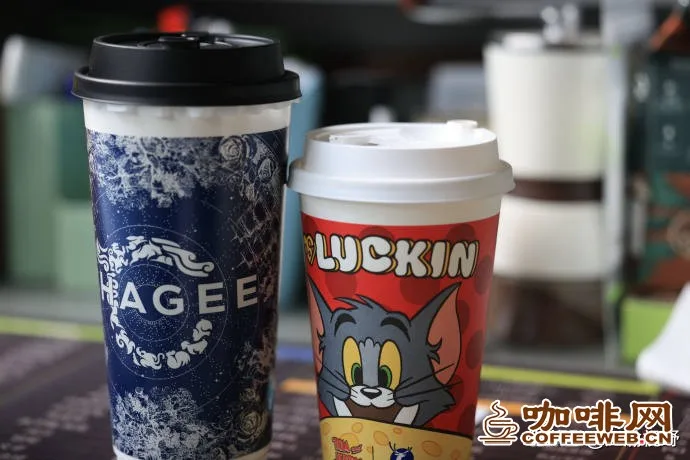
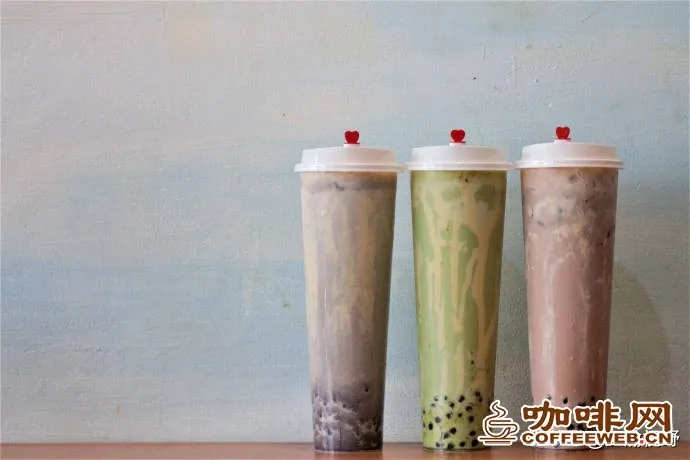
According to a report by Daily Character, recently at 8 a.m. young people rushing to work bought a coffee at Guming and grabbed a sandwich on the way out; at 3 p.m. milk tea is still the main star; in the evening, on the way home from work some stop by Chagee for an ice cream, while others duck into Mixue’s Fulujia for a cup of freshly poured draft beer.
In the past, these products were scattered across the shelves of cafés, breakfast shops, convenience stores, and bars; today, milk-tea shops are taking over almost all of them.
Milk-tea shops moving closer to convenience stores, on the surface, means more items on the shelves. But if we turn the clock back a bit, we find this did not begin with a grand ambition, but rather looks like a choice forced by circumstance. Because selling only milk tea has become increasingly unable to sustain a shop’s business.
“Exactly how many cups must a shop sell each day to make money?” is a calculation franchisees have repeatedly run in recent years. An entrepreneur who joined a top tea-drink brand once wrote on social media: “After careful consideration, I lost 1 million yuan.”
There is also a counter-example: when Nayuki (NEO) opened its first store in 2015, it bundled tea drinks with soft European-style bread. Before its IPO, the bakery business once contributed about a quarter of revenue; stores needed ovens, workstations, and dedicated baking staff, with an average customer spend above 43 yuan.
This model once helped Nayuki build differentiation. But as store scale expanded, on-site baking demanded more space, labor, and supply chain. From 2022, Nayuki began removing on-site baking areas on a large scale, shifting baking to central-kitchen pre-making. By the first half of 2026, bakery revenue had fallen to 133 million yuan, about 7% of total revenue, down 32.4% from the same period in 2025.
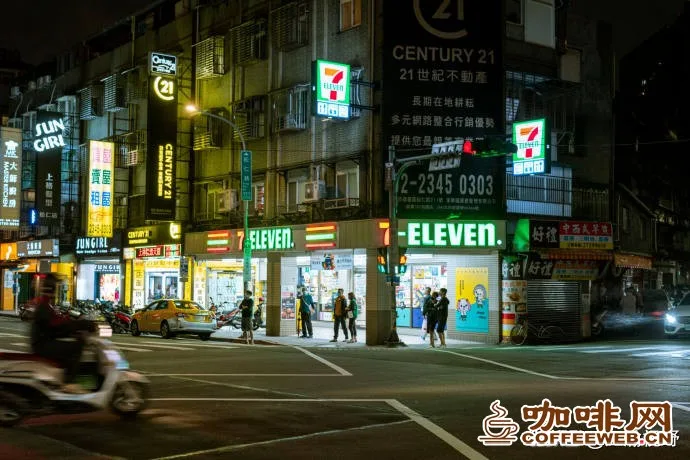
II. Is milk-tea shops crossing over into convenience stores actually useful?
Recently, stores that once only smelled of milk tea in the afternoon now light up at seven or eight in the morning, with warm burritos and freshly ground coffee on the counter, and late at night you can still see people walking out with a cup of freshly poured draft beer. What exactly is going on?
First, the new tea-drink industry has fully entered an era of stock-game competition. From the perspective of the industry life cycle, any fully competitive consumer industry goes through a complete cycle from incremental expansion to deep cultivation of existing stock, and new tea drinks are no exception. Over the past decade or so, new tea drinks achieved nationwide store penetration through consumption upgrading, young-consumer preference, and scenario dividends, with top brands, regional brands, and niche internet-famous brands layering their layouts, and market blank areas essentially filled in. Although many lower-tier markets still have considerable gaps, the market stage has begun to change significantly; there is no longer any market space where simply opening stores yields profit, and the crude model of merely competing on store count and expansion coverage has lost its business value.
Under such a stock landscape, all industry players face a common predicament: per-store traffic has peaked, homogenized competition is severe, and the ability to charge a premium on new products keeps declining. In the past, a brand could drive overall store revenue with one hit drink; today new-product iteration is faster, consumer aesthetic fatigue is increasingly evident, and the profit margin of the drinks themselves is continuously compressed. This forces all tea-drink brands to change their operating thinking — no longer seeking scale outward, but tapping potential inward. The core goal is to raise per-store productivity, lengthen the store’s profit cycle, and activate the traffic value of existing stores. Cross-border retail and expanding all-category consumption scenarios are the core means for new tea-drink enterprises to break through growth bottlenecks and amplify the single-store effect, and one of the optimal solutions under the industry’s stock competition.
Second, crossing over into convenience stores is to grab all-day consumption share. Breaking down the moves of milk-tea crossovers, we can see it has very clearly cut into the three core time slots on which convenience stores depend for survival, expanding the operable scope from the traditional afternoon tea to all-day, and doing everything possible to seize users’ all-day, all-scenario shopping needs.
First, in the breakfast slot it brazenly grabs the breakfast and coffee market. Many office workers are in a hurry in the morning and used to conveniently buy a steamed bun with an Americano at a convenience store; now, if they pass a large store on the way, those freshly baked croissants and sandwiches are placed in the most prominent position, paired with the recently launched freshly ground and extracted coffee, forming quite a qualified breakfast combo.
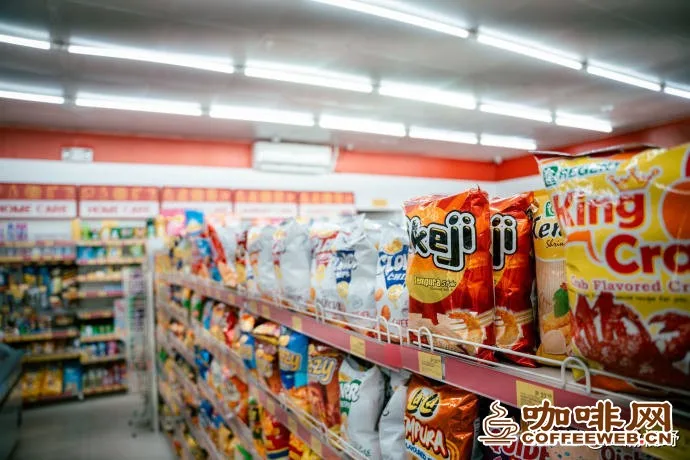
Second, it quietly penetrates during everyday hours, directly grabbing the snack and dry-goods shelves of convenience stores. When consumers suddenly get hungry or crave a snack in the afternoon, they used to buy a sausage or a bag of chips at a convenience store; now many in-store displays have taken on a snack-corner character, stocked with tempting low-sugar snacks, baked pastries, and even everyday souvenirs. For young people who want a bite but fear greasiness, the temptation is simply fatal.
Third, in the nighttime consumption slot, it even reaches into the convenience store’s tipsy business. Today’s young people relax at night and don’t want to make a special trip to a bar; the convenience-store cooler was once their go-to for a can of beer. But now some brands boldly launch low-alcohol special blends, letting customers enjoy a tipsy ambience right in the store. These three directions of crossover are clearly aimed at making money around the clock.
We have repeatedly mentioned the concept of “total national time.” Today’s total national time is no longer simple entertainment time, but all-day consumption time, and the goal of milk-tea brands is to evolve from the simple afternoon tea toward all-day consumption scenarios, maximizing the value of their rent location. This is the core logic behind their current series of expansions.
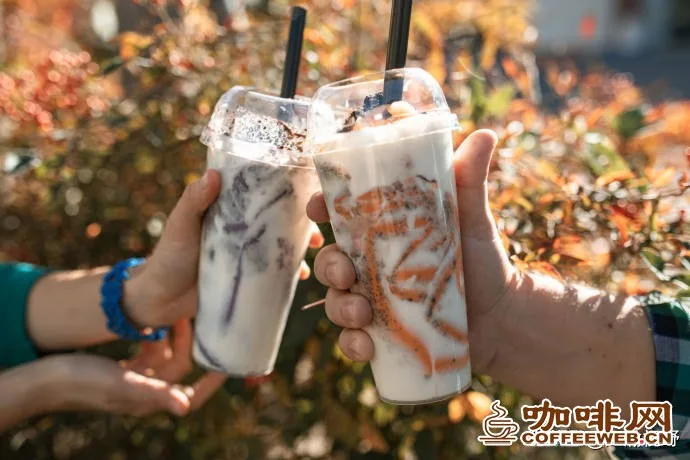
Third, new tea drinks’ crossover land-grab is useful, but with large differences in effect. This wave of crossover really is useful, tangibly helping many brands stabilize single-store operating efficiency, but the operating logic of convenience stores and the underlying logic of milk-tea shops differ greatly; each additional SKU adds a bit of operating pressure on the milk-tea shop. The core difficulty has never been adding a few new products, but how to truly match the new product forms with one’s existing consumption scenarios.
Many people only see that milk-tea shops added coffee, breakfast, and beer, and think crossover is simple — just put the products on the counter. In fact it is nothing like that. The original system of milk-tea shops was built around freshly made tea drinks; all supply chains, staff training, and store-management logic serve the making of a standardized fresh drink. But baked breakfast products, pre-packaged snacks, and freshly poured draft beer each have supply-chain requirements, storage standards, and staff operating norms completely different from making milk tea.
When many brands first started crossing over, they took it for granted and added every category to the menu, only to make their stores a jumble; staff had to make milk tea and coffee while also handling breakfast and snack stocking, and during peak hours fell into chaos, dragging down the quality of their core milk-tea business.
So this has never been a case of the more categories the better; the key is whether your new categories can truly match your existing store scenarios, user profiles, and supply-chain capabilities. If the match is poor, the so-called efficiency gain will end up becoming extra burden.
Fourth, boundary-blurring mixed-business operation will become the general trend. Although milk-tea shops’ market-grabbing efforts are showing initial results, this does not mean the position of convenience stores will be easily replaced. We must clearly recognize that the core essence of convenience stores is all-day emergency retail, behind which lies strong SKU fine-management capability, a huge community store network, and extremely flexible, extremely consumer-proximate ability.
Late at night when you urgently need a fever reducer, or by the roadside when you urgently need a pack of daily necessities, that is still the convenience store’s domain. The logic of milk-tea shops is essentially to provide freshly made flavor and emotional value — an experiential store. Often, people may be curious to buy coffee or alcohol at a milk-tea shop, but those scenarios truly close to the bottom of daily life remain firmly in the convenience store’s hands. It can be asserted that after this round of fierce competition, the boundary between the two will surely blur day by day.
In the future, mixed-business operation will no longer be an experiment, but a general trend responding to the needs of the times. We will eventually enter a new business form where the two blend and learn from each other’s strengths; as for exactly how this form will change the entire market, we may as well wait and see.
Reprint Notice & Disclaimer
- This article has been edited and compiled by China Coffee Network. The information and images therein come from public sources and the copyright belongs to the original author. This reprint is intended solely for information sharing within the coffee industry and does not represent the views of this website; all data and opinions are subject to the original article. Our thanks to the original author for creating and sharing it.
- For matters concerning content licensing, attribution, copyright or otherwise, please contact us promptly and we will verify and cooperate in handling them as soon as possible. We also welcome coffee origins, brands and industry media to exchange ideas and contribute articles.
- Contact China Coffee Network: Tel 400-0000-641 (+86-18288016826) | Email 405854472@qq.com | Address: Jinghong, Xishuangbanna, Yunnan Province / Tieling, Liaoning Province
Related Reading
 How ‘Sea-Flavored’ Coffee Blooms Across Dongtou
- Health Guide: How to Enjoy Your Coffee the Healthy Way
 Study: Regular Coffee and Tea May Lower Dementia Risk, but More Is Not Better
 Frontline Story: A ‘Mobile City Coffee Bar’ Arrives by the Grand Canal
 Yantai’s Wind Tastes of Coffee
 In Zhenyuan, a Cup of Coffee and a Waiting Train




 Liaoning ICP Security No. 21122402000217