
At a Glance (China Coffee Network): As EV adoption erodes fuel sales, China's gas stations are rapidly rolling out coffee, laundry and pet-grooming sidelines to monetize their captive traffic and turn brief refueling stops into longer consumer visits.
On a self-drive trip during the National Day holiday, many drivers encountered a sense of “bewilderment” at gas stations: after fueling up and heading to the convenience store for a bottle of water, they found a coffee window beside it; wanting to wipe down the car, they discovered a self-service washing machine tucked in the corner; some, walking their dog to stretch their legs, were told by staff, “The pet wash room is at the back, 39.9 yuan, ready in half an hour.” Gas stations are no longer just gas stations – they are turning into something hardly recognizable.
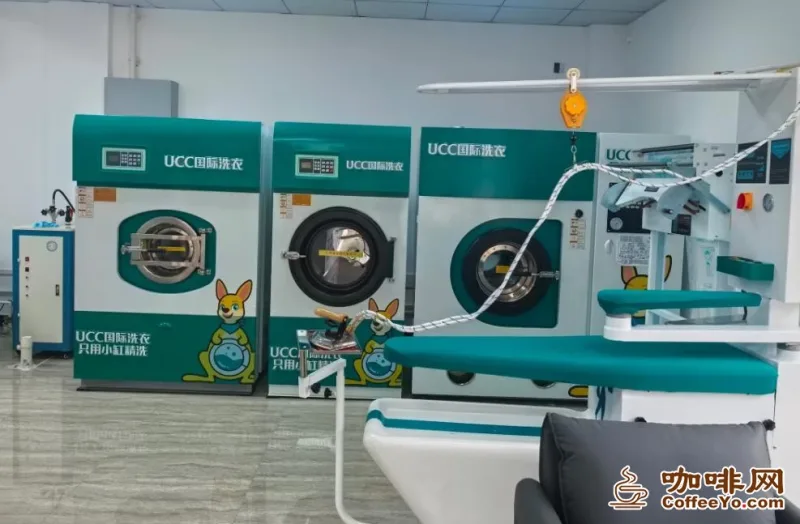
Behind this sense of “bewilderment” lies a survival experiment forced into fast-forward.
The shift toward non-fuel business at gas stations has been talked about for nearly a decade, but the real turning point came around 2025. That year, NEV penetration exceeded 40%, and by 2026 it had approached 63%. Although the stock of fuel vehicles remains, the “refueling frequency” that stations depend on for survival is being eroded. Industry forecasts are even harsher: within five years, one in five of the roughly 110,000 gas stations nationwide will disappear.
What does this mean? Per-station fuel sales are falling, yet the physical network of gas stations – those prime locations at urban transport nodes and community entrances – still holds irreplaceable value. Daily traffic of hundreds or even over a thousand vehicles is an asset any retail format would covet. The problem is that in the past this traffic only lingered three to five minutes, buying a bottle of water or a cigarette before leaving. Now, gas stations must stretch that window and turn “passers-by” into “consumers.”
Early non-fuel business at gas stations was essentially “shelf extension” – convenience stores selling water, snacks and motor oil, on the logic of “buy something while you fuel up.” But the margin on bottled water is pitifully thin and cannot support the operating costs of tens of thousands of stations. So the sidelines began to evolve toward “services.”
Coffee was the first wave. Sinopec’s Easy Joy Coffee surpassed 1,500 outlets by the end of 2025, while CNPC’s U-smile Coffee rolled out a “freshly ground + self-service + ready-to-drink + freeze-dried” mix across more than 8,000 stores, selling 100 million cups as early as 2021. The beauty of coffee is that it turns “fragmented waiting time” into “a reason to spend.” A freshly ground latte takes two to three minutes to prepare – just covering the refueling gap – and that very waiting scenario in turn lengthens the driver’s dwell time, bringing extra foot traffic to the convenience store.
Laundry was the second wave, and a more ambitious step. Jiangsu Petroleum laid out 59 garment-collection points and two laundry factories across the province, while Tianjin built five laundry factories and 248 collection stations, handling about 10,000 items a month. The logic is extremely precise: it takes a driver three minutes to drop off a garment and another three to pick it up – perfectly overlapping the refueling dwell time. Drivers need not make a special trip to the dry cleaner; they simply do it while fueling. This means the station’s fixed frequency (refueling weekly or biweekly) can be grafted onto the fixed frequency of laundry. In 2025, China’s dry-cleaning market surpassed 160 billion yuan, with stable demand largely insulated from economic cycles.
Pet grooming was the third wave, and the most counterintuitive step. In the summer of 2026, Sinopec opened “Easy Pet” pet lifestyle pavilions at two refueling stations in Changsha, charging 39.9 yuan for first-time grooming of dogs under 7.5 kg and 49.9 yuan for cats, priced right in line with community-store affordability. The business logic of this sideline is not “to make money from pets” but “to buy the driver’s time” – a single pet grooming session can stretch the driver’s dwell time from three minutes to an hour, during which they may drink coffee, browse the convenience store or get their car cleaned. The gas station becomes a one-stop container for the “people + car + pet” scenario.
Gas-station sidelines are not without boundaries. Observing the formats already deployed reveals a clear screening criterion: any offering must complete its transaction or delivery within the driver’s three-to-five-minute dwell, require no on-site processing and need no complex manual operation.
Coffee fits: it’s quick to serve, highly standardized, and the equipment can tuck into a convenience-store corner. Laundry drop-off fits: it only requires logging the garments, which are then shipped to backend factories, leaving the station with zero inventory and zero processing burden. The “handover” part of pet grooming fits: the driver leaves the pet with staff and walks away, with bathing done by professionals in the backend; but “on-site grooming” itself needs space and labor, so station pet stores usually operate independently right next to the fueling area, targeting the “long-dwell” EV-charging drivers rather than the “short-dwell” fuel-car drivers.
By contrast, food and fast service, though some stations are trying it, face greater challenges. On-site cooking involves kitchen equipment, grease handling and food-safety regulation, with operational complexity far above coffee or drop-off services. Collaborations between brands like McDonald’s and “Bai Jiaoyuan” with Easy Joy are concentrated at a few flagship stations and have yet to scale.
There is also an easily overlooked constraint: the absolute value of per-station non-fuel profit is too small. In 2025, Sinopec’s total non-fuel profit was 4.53 billion yuan; spread across 31,000 stations, the average per-station annual non-fuel net profit was only about 145,000 yuan. This number means stations cannot run sidelines just for the sake of it. Any new format must “not significantly raise labor costs, not occupy extra space and not introduce complex operational burdens” – otherwise, however high the gross margin, it cannot withstand the swelling of organizational costs.
The surge in gas-station sidelines is essentially a “revaluation of traffic assets.” When the fuel business shifts from profit center to traffic entrance, the valuation logic of gas stations changes. They are no longer retail terminals that sell oil, but offline service platforms boasting high-frequency reach, prime locations and stable vehicle traffic. Coffee, laundry and pet grooming are merely “SKUs” on this platform. In the future we may see parcel pick-up, urgent medicine delivery, community-group-buy collection points, even quick haircuts – the Yudaimen station in Hubei has already introduced Easy Joy quick cuts, validating the viability of a “ten-minute living circle.”
But this business has a cruel premise: you must be big enough. Only giants like Sinopec and CNPC, with tens of thousands of stations and hundreds of millions of member records, can bear the fixed costs of building laundry factories, setting up supply chains and training tens of thousands of employees. Privately run stations, though nearly half the count, account for less than 30% of sales and can mostly only offer lightweight convenience services, unable to replicate the “coffee + laundry + pet” matrix.
For drivers, the proliferation of gas-station sidelines is a good thing. It means you no longer need to plan a special trip just to launder a coat, bathe the dog or drink a decent cup of coffee. These needs can be met “along the way,” and prices are usually lower than at specialty stores, because stations want traffic and frequency, not high per-transaction margins.
For gas stations, this is a transformation they cannot afford to lose. As fuel profits shrink, non-fuel business must evolve from “supplement” to “pillar” within five years. The average per-station annual non-fuel net profit of 145,000 yuan is clearly not enough; that number needs to double, and double again. Coffee, laundry and pets are only the beginning. Next holiday, you may see even more “bewildering” things at gas stations. And that bewilderment is precisely how traditional energy giants are searching for relevance in the new-energy era.
Reprint Notice & Disclaimer
- This article has been edited and compiled by China Coffee Network. The information and images therein come from public sources and the copyright belongs to the original author. This reprint is intended solely for information sharing within the coffee industry and does not represent the views of this website; all data and opinions are subject to the original article. Our thanks to the original author for creating and sharing it.
- For matters concerning content licensing, attribution, copyright or otherwise, please contact us promptly and we will verify and cooperate in handling them as soon as possible. We also welcome coffee origins, brands and industry media to exchange ideas and contribute articles.
- Contact China Coffee Network: Tel 400-0000-641 (+86-18288016826) | Email 405854472@qq.com | Address: Jinghong, Xishuangbanna, Yunnan Province / Tieling, Liaoning Province
Related Reading
 A ‘Travel Pack’ Reveals Another Possibility for Pu’er Baristas
 Cangyuan: Yanshuai Town Delivers ‘Tech Nourishment’ to Coffee Fields
- 9.9-Yuan Coffee but a 50,000-Yuan Bike: Jiang Nanchun Fears Not Price but Lack of Soul
- After Just 19 Months in Coffee, He Was Called to Save Heineken
 Guangzhou Haizhu Uses Coffee to Engage Delivery Riders in Party Education
- Laishan Police Safeguard the Coffee Festival with Dedicated Patrols




 Liaoning ICP Security No. 21122402000217