
At a Glance (China Coffee Network): “Why is Guiyang coffee famous?” This is a hot topic repeatedly discussed on social media in recent years, interwoven with emotions of doubt, confusion, curiosity, and admiration. After all, Guiyang grows no coffee, yet is hailed as the “Coffee City.”
“Why is Guiyang coffee famous?” This is a hot topic repeatedly discussed on social media in recent years, interwoven with emotions of doubt, confusion, curiosity, and admiration. After all, Guiyang grows no coffee, yet is hailed as the “Coffee City.”
Two widely circulated “incomplete” statistics became the origin of the “Coffee City” title. First, Guiyang has a permanent population of about 6.6 million and over 3,000 cafés; by per-capita café density it surpasses Shanghai, known for its coffee culture. Second, Guiyang has produced the most Chinese coffee champions; Guiyang baristas frequently ascend the podium, giving birth to a unique “champion gene.”
This summer, many coffee lovers flocked into Guiyang to check in, experience, and share all kinds of “magical” experiences in the “Coffee City.” On the other hand, Guiyang—which grows no coffee—is also trying to find a complete answer to this question.
The Republic of China era: Guiyang grows no coffee, but its bond formed early.
The earliest word “coffee” appeared in the early-Republican-era Zhonghua Da Zidian (Zhonghua Book Company, 1915), defined as: “Coffee, a Western beverage, like our tea; English: coffee.”
During the Republic of China period, coffee, as a novel “imported product,” entered China, popular mainly in cafés and Western restaurants in treaty ports and coastal cities, but did not spread widely, remaining more of a fresh experience.
Guiyang at the time, though its economic development was relatively slow, was active in politics, thought, and culture: from the Hundred Days’ Reform to the Xinhai Revolution, the National Protection War, and the May Fourth Movement, Guiyang people were present. It was precisely this gene of progressive thought, openness, and inclusiveness that laid the foundation for Guiyang’s broad acceptance of foreign cultures and new things.
After the War of Resistance broke out, the nation’s political, economic, and cultural center of gravity shifted to the southwest. Guiyang, in the great rear area, saw an unprecedented wartime economic boom thanks to the influx of capital, equipment, technology, and talent. During this period, Western food, foreign dishes (Japanese-style cuisine), beer, coffee, soda, and other imported goods successively appeared.
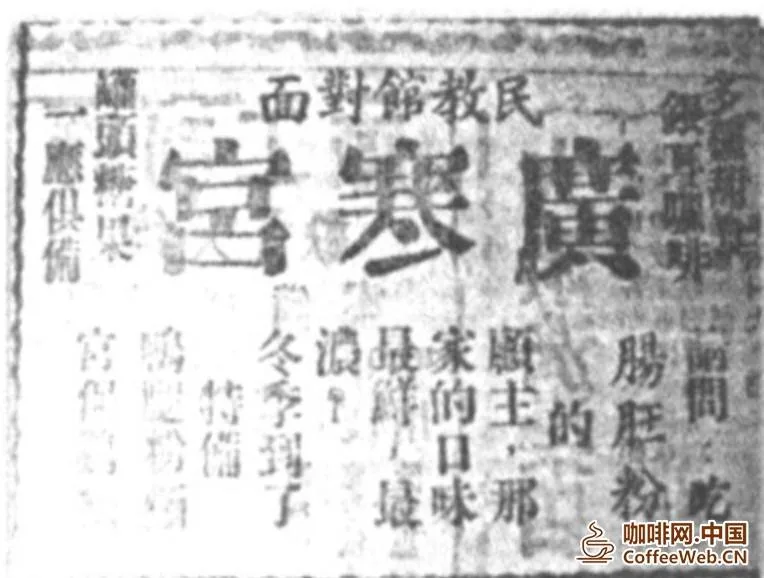
A catering advertisement from Guiyang in the 1940s is evidence—the “Guanghan Palace” in the ad was a well-known pastry brand on Zhonghua Middle Road in Guiyang at the time. Besides local delicacies like “changwang noodles,” the ad also featured terms such as “canned candies” and “tremella coffee.” Although the preparation and appearance of “tremella coffee” are unclear, it can be seen that coffee had become a fashionable and best-selling category.
In 1942, writer Ye Shengtao, while handling affairs for Kaiming Bookstore, traveled from Chengdu to Guilin and was forced to stop over in Guiyang, where he met Xie Liuyi, Li Qingya, and others. In his Diary of a Round Trip Between Chengdu and Guilin, he recorded his experience at a Guiyang café: “Dispersed at three; together we went to Meiyuan Coffee Shop. This shop is newly opened, exquisitely furnished, like a shop in the Shanghai French Concession. Yuan Shan’s friend Yu Yongzi hosted; five or six of us had coffee and pastries, spending a hundred yuan altogether—quite a waste.”
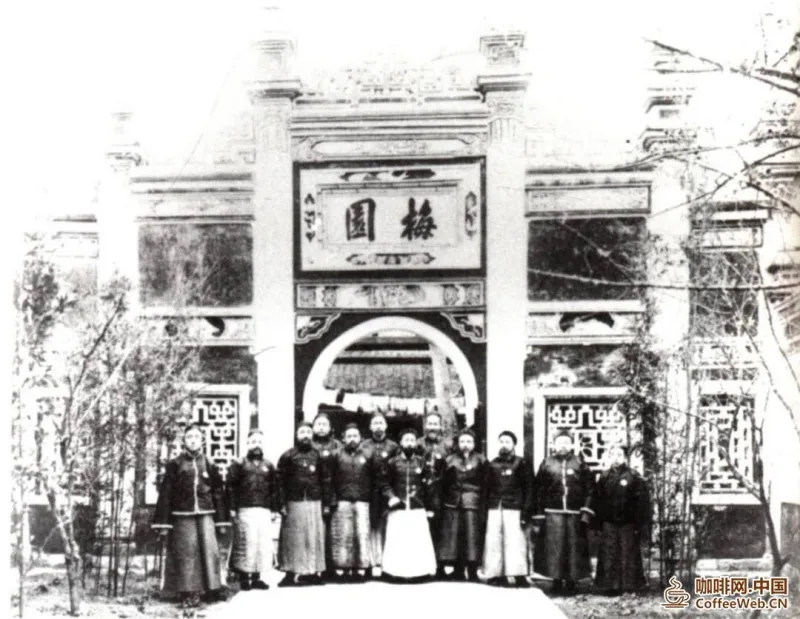
Meiyuan, once the site of the Guizhou Grand Han Military Government, located at today’s Provincial Government Road intersection (Guishan Hotel), was mostly frequented by government departments and upper-class cultural figures, showing that Guiyang already had new-style cafés with “Shanghai-comparable” refined environments and high prices.
According to a Guiyang historian’s recollection in Qianshuo · City Notes, after the War of Resistance, American soldiers driving jeeps were commonly seen on Guiyang streets, often handing bread or chewing gum to children, along with iron cans of different shapes, some containing black powder that tasted bitter and hard to bear—only later did they learn it was coffee.
Yue Daiyun, a Guiyang-born scholar, in her memoir Through the Dust of History, also mentioned that when she studied at Guizhou Middle School in 1946, American troops were stationed near the school, and “a small hill of coffee grounds emitted an enticing aroma.” She also mentioned that her father, Yue Senwei, after returning to Guiyang in 1927, taught English, wore Western clothes, drank coffee, and was a thoroughly Westernized figure.
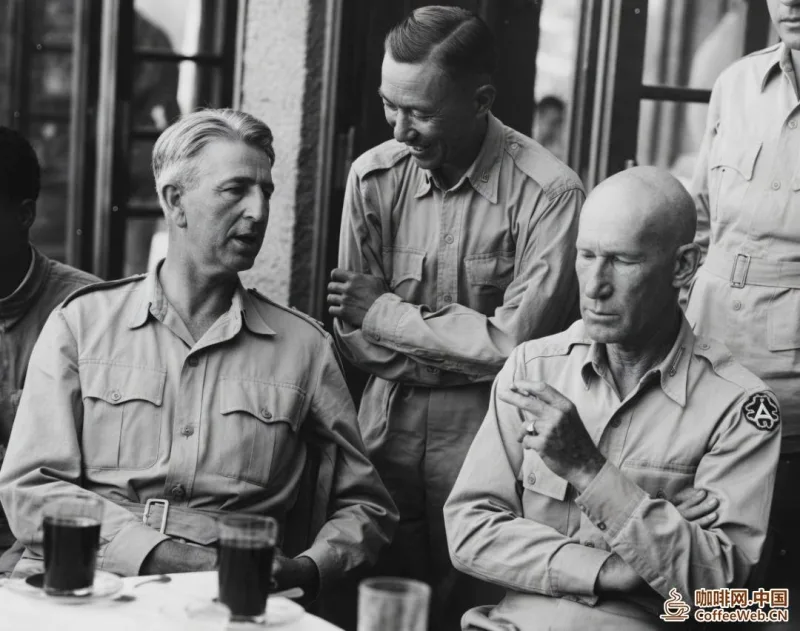
From scattered historical records and personal memories, we can piece together the social landscape of Guiyang at that time: though not a bustling metropolis, it became a southwest stronghold because of the war; the influx of population and culture brought unprecedented prosperity to the city, and coffee gradually entered daily life, testifying to the city’s innate inclusiveness and openness.
After Reform and Opening: instant, additives, and first impressions of coffee.
After liberation, due to restricted foreign trade, and coffee once being viewed as a typical “petty-bourgeois” product, it almost vanished from the market. It was not until the 1980s that coffee re-entered Guiyang people’s lives in different forms.
According to food writer An Shi’s recollection, in the mid-to-late 1980s, vendors already sold coffee on both sides of the Hebin Park gate. But there was no talk of filtration technique or brewing skill then; mostly coffee powder was wrapped in gauze and boiled directly in an aluminum pot or other containers, then ladled out for sale after the grounds settled—tasting like turbid “scorched-rice water,” becoming a kind of painful memory.
In contrast, some Guiyang people’s first impression of coffee was a fresh, sweet, delicious drink. The reason: later, some savvy vendors began to blend coffee—mixing coffee powder, saccharin, and milk powder to form the so-called initial “rich and mellow” taste.
Compared with ordinary vendors, those who cared more about quality of life had other choices. From the late 1980s to the mid-1990s, some Guiyang foreign-related hotels—such as Guizhou Hotel and Golden Bridge Hotel—opened cafés in their “executive corridors,” paired with bread, pastries, and nuts, meeting high-end social and leisure needs.
This direct trend promoted the emergence of business cafés: brands such as “Yesterday Once More,” UBC Coffee, Two Cafés (Liang’an), and Victoria entered Guiyang one after another. The menu began to show stylish names like “Blue Mountain,” “Brazil,” “Mocha,” and “Mandheling.” Stores gradually used moka pots and siphon pots to brew coffee, emphasizing bean origin and flavor differences; the sense of formality and fashion rose sharply.
For household consumption, instant coffee then appeared. In 1989, Nestlé’s slogan “It’s delicious!” swept the nation via television, setting off a coffee consumption craze. Thereafter, in Guiyang’s department stores and supermarkets, Nestlé 3-in-1, Maxwell House, and Hainan coffee powder once became scarce goods; many families would buy two jin of coffee powder, boil it, and drink it with milk powder and white sugar; even on Guiyang–Beijing flights, coffee entered the beverage list.
In the same period, local enterprises also tried innovation: Huaxi Distillery launched “coffee glutinous-rice wine” and “Huaxi coffee wine,” while Kaifu Candy Food Factory produced coffee sugar cubes and sold them externally.
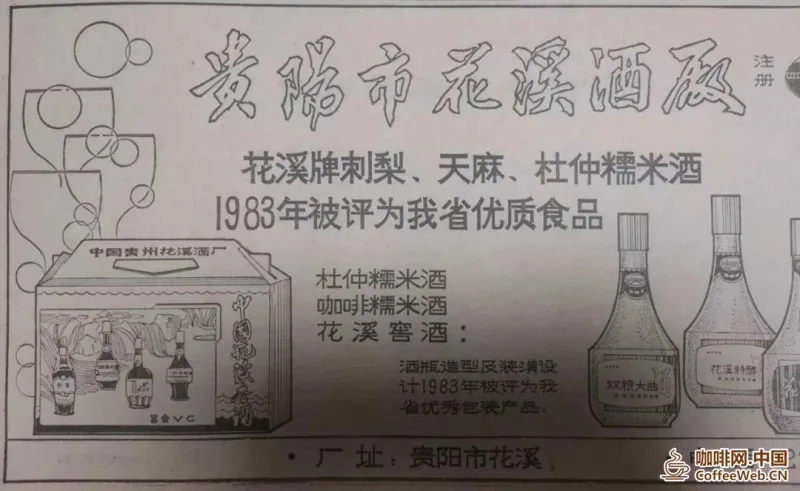
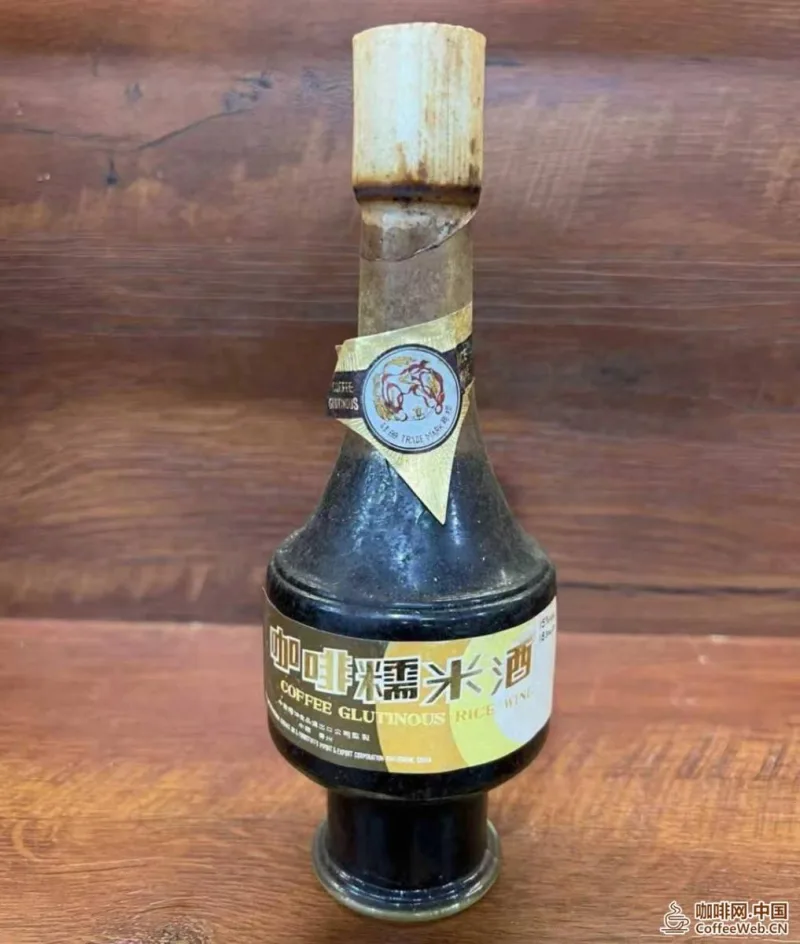
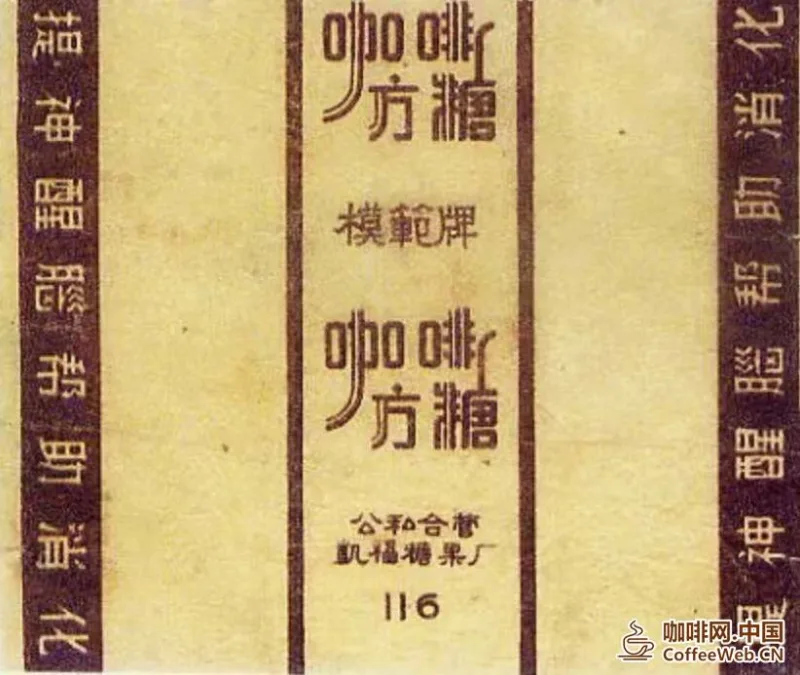
Throughout the 1980s and 90s, coffee remained a niche consumer good in Guiyang, mainly favored by literary youth, overseas students, business people, and returnees. But thanks to Guiyang people’s love of novelty and inclusiveness, coffee was broadly accepted and gradually integrated into city life. The café naturally became the most Western-style “third space” of Guiyang at the time.
The golden two decades: Guiyang swept by the third wave of specialty coffee.
According to the common definition in the global coffee community, coffee has gone through three waves: the first was the commercial popularization of instant coffee, making coffee an everyday drink; the second was large chain brands (such as Starbucks), focusing on convenience and mass taste.
The third wave, beginning around 2003, is coffee’s rise from an industrial raw material to “specialty coffee” emphasizing craftsmanship, quality, experience, and aesthetics. Notably, this wave arrived in Guiyang almost simultaneously.
In 2005, a coffee shop named “Mo Jie Shi” appeared on Humen Lane, gathering several young coffee enthusiasts to discuss the market and future of Guiyang’s specialty coffee, inadvertently becoming the source point of Guiyang’s specialty coffee wave.
Later, “Mo Jie Shi” was renamed “Tu Rang Coffee” (Soil Coffee), and together with the contemporaneously founded “Yue Du Shi Guang” (Reading Time), provided the enlightenment of specialty coffee to many Guiyang people.
Liu Kaisheng, owner of “Heng Guan Coffee,” came from “Mo Jie Shi” and “Yue Du Shi Guang”; while Peng Jinyang, owner of “Captain George,” fell in love with coffee as a high-school student at the Soil Coffee café.
Today, Liu Kaisheng is a veteran of Guiyang’s coffee circle; his Heng Guan Coffee factory store on Dazhi Road in Huaxi District can roast about 300 pounds of roasted beans daily, supplying over a hundred coffee shops nationwide.
Fang Xin, owner of “Bu Er Coffee,” once worked with Liu Kaisheng at Yue Du Shi Guang, and was an old-school netizen most active on the domestic “Coffee Salon” forum in the early days, insisting on popularizing specialty coffee knowledge in his shop.
Fang Xin explained that specialty coffee differs significantly from the previous generation’s business-club coffee: the older generation often only highlighted the burnt aroma of dark roasts, while specialty coffee uses light roasts, focusing more on origin traceability and flavor diversity.
In the philosophy of specialty coffee, coffee is no longer just a refreshing drink, but an art to be savored in detail. Baristas are no longer mere brewers, but disseminators of knowledge and exquisite craftsmen.
It was the joint persistence of this group of young baristas that set off Guiyang’s two-decade wave of specialty coffee.
Ten years after “Mo Jie Shi” was founded, in April 2015, Hu Ying, owner of “Dui De Coffee,” won the China Barista Championship, and Guiyang coffee’s “champion gene” surfaced.
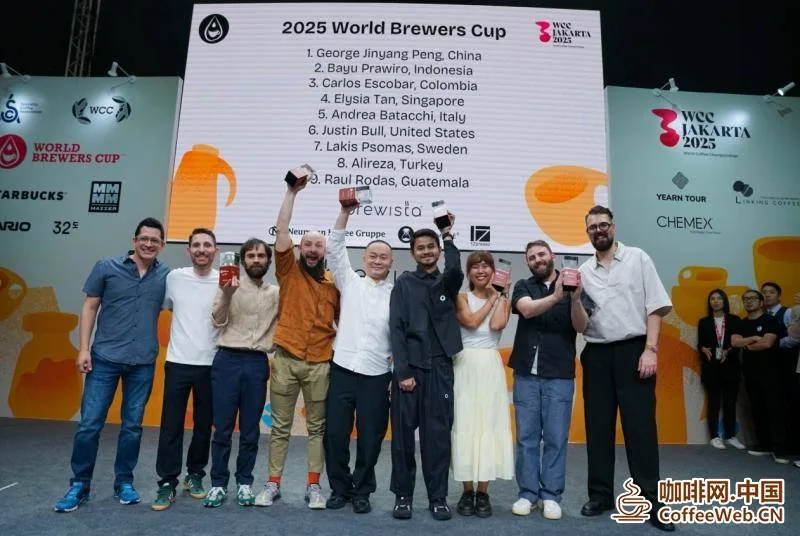
Another decade later, in May 2025, Peng Jinyang, owner of “Captain George,” won the world championship at the World Coffee Brewing Championship (WBrC). Combined with media dissemination and cultural-tourism fervor, Guiyang went viral as the “Coffee City.”
Guiyang’s baristas not only have superb skills but also form an industry atmosphere of mutual progress; Liu Kaisheng of “Heng Guan,” Peng Jinyang of “Captain George,” Qiang Hua of “Wu Jie Coffee,” Lei Ming of “Black Stone Coffee,” and others often discuss with each other, even suggesting customers try other cafés’ products.
From “champion shops” to community stores, from creative specials to refined hand brews, owners of different styles keep trying new expressions, even boldly blending Guizhou’s local ingredients—such as houttuynia (fish mint), Sichuan pepper, Rosa roxburghii, litsea (wood pepper), even “goat stomach”—into coffee, breaking the taste boundaries of traditional coffee.
Over two decades, Guiyang’s specialty coffee has grown locally in an almost “fermenting” way—rooted in communities and alleys, excavating local flavor and culture, while actively embracing trends, finding a unique expression of “absorb, localize, ferment, innovate, contrast” belonging to Guiyang coffee.
Conclusion.
In another “incomplete” statistic, Guiyang’s local coffee brands occupy about 70%–80% of the market share; the urban coffee culture nurtured by the specialty coffee wave has made domestic chain brands such as Luckin, Manner, Tims, and M Stand hard to find in Guiyang.
It can almost be said that Guiyang’s specialty coffee has formed an independent ecosystem. Under a strong learning ability and a mutually reinforcing atmosphere, local coffee people both uphold flavor authenticity and constantly conduct local innovation, making them extremely difficult to assimilate by outside trends.
At a time when coffee in first-tier cities is often joked as “wage-slave energy,” Guiyang still maintains a relaxed pace of life; the pleasant “Cool” climate and slow-paced lifestyle have become natural soil for nurturing coffee culture.
In 2024, Guiyang added 199,600 permanent residents, ranking first among cities with net population inflow nationwide, of which about 130,000 were fresh graduates and young people. In the same year, Guiyang’s population aged 18–35 accounted for 38% of the permanent population, showing a clear “rejuvenation” trend among emerging cities.
For the upward posture of young people’s efforts, the “young” city is also actively responding. In the 2025 Guiyang government work report, it was explicitly proposed to lead the construction of a full industry chain “from seed to cup” and create a consumption atmosphere of “coming to Guiyang for a cup of coffee.”
That same summer, Guiyang launched the publicity theme “One Cup of Coffee, One City; One Sentiment, One Community,” which is a direct answer to the question at the opening of this article.
Today, this young city is filling a cup of coffee with the youth’s expectations for the future. The beans keep tumbling, the coffee story is still fermenting, and the young city is embracing the future.
Text: Han Shao. Editor: Luo Chang. Second review: Shen An’yong. Third review: Hu Lihua.
Reprint Notice & Disclaimer: This article is compiled and edited by China Coffee Network (coffeeyo.com) from publicly available sources; copyright belongs to the original authors. This reprint is for coffee-industry information sharing only and does not represent the site’s position; all data and views follow the original. Contact: phone 400-0000-641 (+86 18288016826) | email 405854472@qq.com.
Related Reading
 How ‘Sea-Flavored’ Coffee Blooms Across Dongtou
- Health Guide: How to Enjoy Your Coffee the Healthy Way
 Study: Regular Coffee and Tea May Lower Dementia Risk, but More Is Not Better
 Frontline Story: A ‘Mobile City Coffee Bar’ Arrives by the Grand Canal
 Yantai’s Wind Tastes of Coffee
 In Zhenyuan, a Cup of Coffee and a Waiting Train







 Liaoning ICP Security No. 21122402000217