
At a Glance (China Coffee Network): China’s agricultural and rural modernization ultimately hinges on the farmer—their mindset, skills and rights. As the focus shifts from physical infrastructure to the full development of people, farmers’ own capacity has become the real yardstick of progress.
Chinese-style modernization is a modernization of a huge population and of common prosperity for all; its foundation is agriculture, its difficulty is in the countryside, and its key is the farmer. The essence of modernization is “the modernization of people,” aiming for the “all-round development of people.” Better addressing farmers’ development and continuously meeting their aspirations for a better life directly determines the quality of agricultural and rural modernization, and profoundly shapes the overall process and ultimate outcome of Chinese-style modernization.
I
After decades of steady advance—especially since the 18th National Congress of the CPC—and the comprehensive victory in the fight against poverty, China’s agricultural and rural modernization has achieved historic results. In material foundations, farmland-water conservancy facilities keep improving, agricultural mechanization and intelligence rise markedly, improved-seed coverage grows, and with about 9% of the world’s arable land the country feeds roughly 20% of the world’s population—moving from “food shortage” to “freedom of food choice.” In rural construction, road paving, grid upgrades, safe drinking water and universal compulsory education advanced across the board; the living environment improved enormously and village landscapes were transformed. In institutional safeguards, the agricultural tax was abolished, and rural cooperative medical care and pension systems were built, historically eliminating absolute poverty and laying a solid material base for faster modernization.
At this new historical starting point, the center of gravity has shifted from material accumulation toward the all-round development of people; farmers’ own development level has become the core measure of success. In 2025, the rural permanent population was about 450 million—32% of the national total. Even at a high urbanization rate around 75%, nearly 350 million people will still live in the countryside long term. This basic national condition means that without the all-round development of farmers, there can be no true agricultural and rural modernization.
In reality, farmers’ progress in mindset, capability and rights protection lags. In thinking, some remain shaped by traditional smallholder economics—weak market, risk and contract awareness and limited innovative drive. In capability, amid the fusion of digital economy and modern agriculture, many lack skills in smart-device use, information discernment and modern agri-tech. In rights, the urban-rural dual structure still limits equal access to public services, full property rights and effective participation in village governance.
This mismatch—advanced equipment and technologies that fail to work in practice—creates the real dilemma of “strong hardware, weak software” and “facilities but no talent,” a bottleneck holding modernization back.
II
Farmers face not a single difficulty but a double pressure: moving to the city and returning home. Under the dual urban-rural system, intertwined constraints hinder their all-round development and, by blocking migrants’ integration, also slow new-type urbanization.
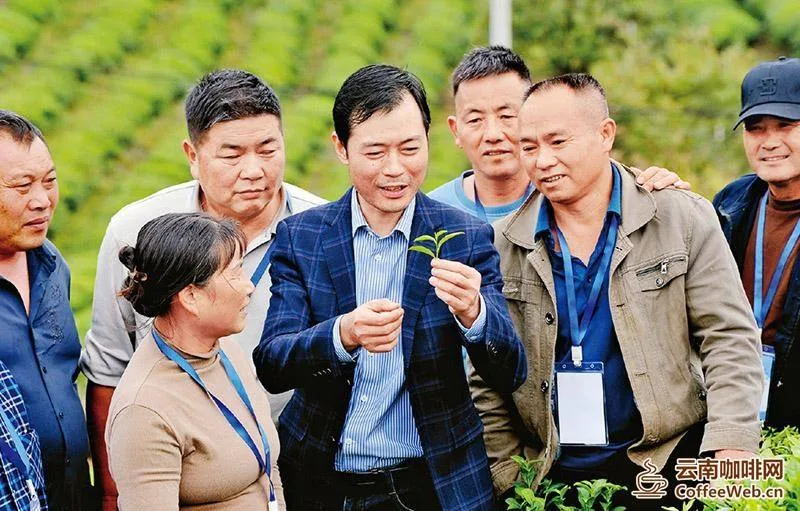
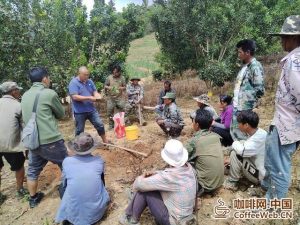
On one side, entering the city is hard. Structural barriers to citizenship leave nearly 300 million migrant workers commuting between city and countryside like “migratory birds.” In identity they may face hidden barriers—employment thresholds, social distance—risking marginalization and weak belonging. Their children struggle to enter urban public schools; cross-region medical insurance transfers remain awkward with low reimbursement; few enjoy urban employee social security; high housing costs push many into modest urban villages. In recent years, China has pushed high-quality farmer training—systematic skills upgrading human resources for modernization. (Photo: a trainer explaining high-mountain tea frost protection to trainees at a Jiangxi tea-garden base, Nov 11, 2025; photo by Zhuo Zhongwei / People’s Image.)
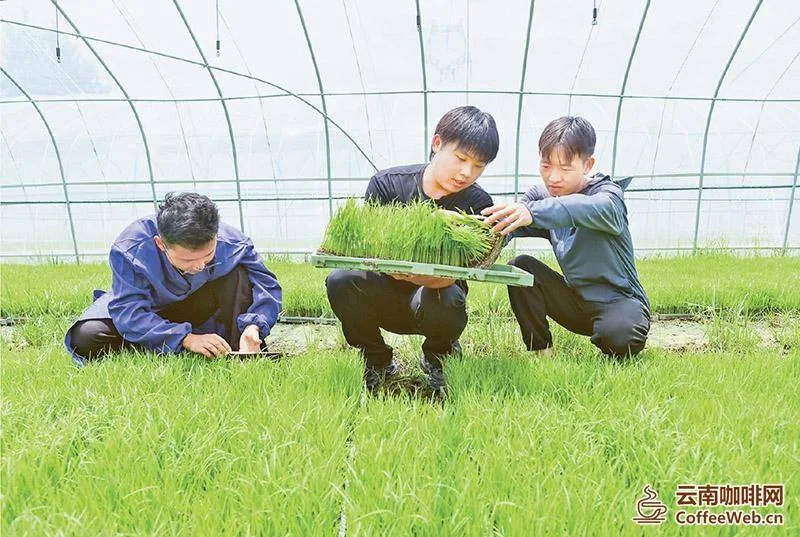
On the other side, returning home is constrained by “no work back in the village.” As socialized services enter agriculture and specialization advances, the old “every family farms” model has changed; contracted land alone no longer sustains a living. Returnees may find no local employment: rural new industries are underdeveloped, traditional farming dominates, and some projects lack professional management and market mechanisms, depending on policy support and absorbing little returnee labor. Financial institutions, risk-averse, “hoard credit” against rural small firms; rural capital outflow is pronounced. Returnees often lack the digital and professional skills for smart agriculture and new rural business forms.
The path forward is to place the farmer at the center: cultivate and empower farmers as the true subjects of modernization, so that infrastructure and institutions translate into real, lasting gains for people and countryside alike.
Reprint Notice & Disclaimer
- This article is compiled and edited by China Coffee Network (coffeeyo.com) from publicly available materials (author: Chen Wensheng; a commentary on agricultural and rural modernization). The copyright of the original text and images belongs to the original authors. This site reprints it solely for information sharing and does not represent our position; all data and views are subject to the original. We thank the original authors for their creation and sharing.
- Original article: “Agricultural and Rural Modernization Must Focus on the Farmer” (public channels; author Chen Wensheng).
- If there are any issues regarding content authorization, attribution, copyright or other matters, please contact this site promptly; we will verify and cooperate in handling them at the first opportunity. We also welcome coffee producing regions, brands and industry media to exchange and contribute articles.
- Contact China Coffee Network (coffeeyo.com): Tel 400-0000-641 (+86-18288016826) | Email 405854472@qq.com | Address: Jinghong City, Xishuangbanna, Yunnan Province / Tieling City, Liaoning Province, China
Related Reading
 A ‘Travel Pack’ Reveals Another Possibility for Pu’er Baristas
 Cangyuan: Yanshuai Town Delivers ‘Tech Nourishment’ to Coffee Fields
- 9.9-Yuan Coffee but a 50,000-Yuan Bike: Jiang Nanchun Fears Not Price but Lack of Soul
- After Just 19 Months in Coffee, He Was Called to Save Heineken
 Guangzhou Haizhu Uses Coffee to Engage Delivery Riders in Party Education
- Laishan Police Safeguard the Coffee Festival with Dedicated Patrols


 Liaoning ICP Security No. 21122402000217