
At a Glance (China Coffee Network): China now has close to 400 million coffee consumers and annual consumption of 280,000 tonnes. This beginner’s guide explains what coffee is, the three original species (Arabica, Robusta and Liberica), why roast level decides whether a cup tastes sour or bitter, how regulators test coffee products for safety, and four practical tips on drinking and storing coffee.
Not long ago, the Shanghai Bureau of China Media Group, the CMG Financial Program Center and the Ministry of Agriculture and Rural Affairs’ Rural Economy Research Center jointly released the “Global Coffee Industry Development Trend Insight Report” and its index. According to the report, China has close to 400 million coffee consumers and annual consumption of 280,000 tonnes, with both the size of the consumer base and per-capita consumption growing. In 2023, the country had about 157,000 coffee shops, with Shanghai ranking first at 9,553.
What exactly is coffee? How does it develop different flavors? And how should you choose it? Let’s take a look.
What is coffee?
Coffee is a beverage made from the pits of the fruit of the coffee tree — a perennial shrub or small tree of the genus Coffea in the family Rubiaceae — which are roasted and ground, then brewed by percolation, steeping or decoction. Under the national standard GB/T 18007-2011, “Coffee and Coffee Products — Terminology,” coffee covers green coffee, roasted coffee beans, ground coffee, coffee extract, instant coffee and coffee beverages.
The three original species
Arabica
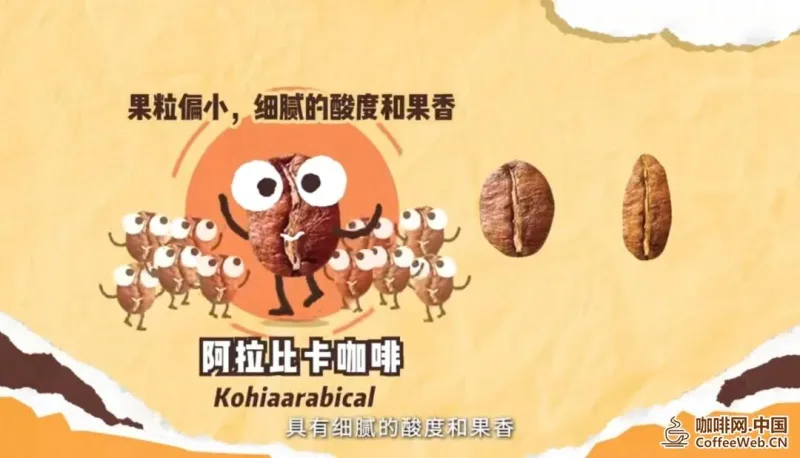
Arabica beans are relatively small with an S-shaped center cut, and are also known as small-bean coffee. One of the most popular species internationally, it offers delicate acidity and fruity aromas.
Robusta
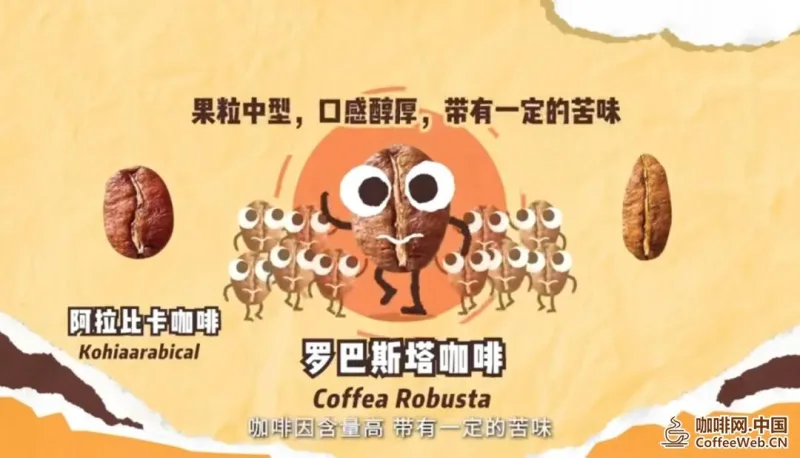
Robusta, also called medium-bean coffee, is the economical option: full-bodied, higher in caffeine and marked by a certain bitterness.
Liberica
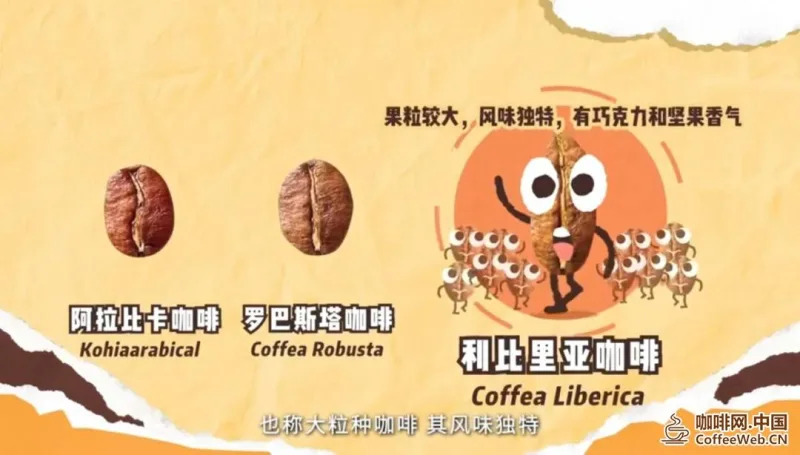
Liberica beans are comparatively large and are also known as large-bean coffee. They have a distinctive flavor with rich chocolate and nutty aromas.
Why is some coffee more bitter and some more sour?
Acidity and bitterness have a lot to do with roasting. Simply put, the lighter the roast, the more acidic; the darker the roast, the more bitter. Different roasting processes and degrees shape the bean’s flavor, color and mouthfeel.
- Light roast: a gentle process leaves the beans pale and preserves their natural flavors. It is often used for green-bean evaluation rather than for direct brewing.
- Medium roast: an even brown color and a balanced cup, with both fruity acidity and moderate bitterness and aroma; commonly used for filter black coffee.
- Dark roast: a more intense treatment darkens the beans further and brings visible surface oils, pronounced bitterness and a strong aroma; commonly used for espresso and often paired with milk or syrup.
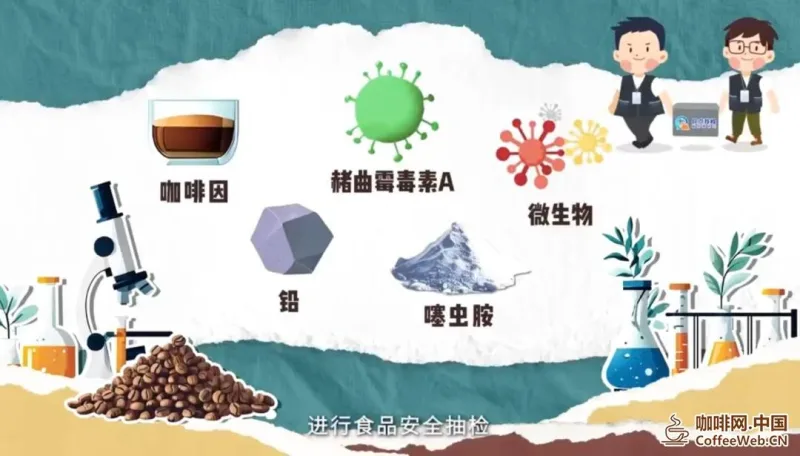
Coffee products on the market are becoming ever more diverse. To protect consumer food safety, market regulators regularly sample coffee products for caffeine, lead, ochratoxin A, clothianidin and microbiological indicators.
Four tips for drinking coffee
- Choose the type and amount that fit your condition and needs. People with sleep disorders, arrhythmia or digestive discomfort should limit their intake.
- Watch the timing. Drinking coffee on an empty stomach is not recommended, and try to avoid coffee in the evening, especially just before bed, so as not to affect sleep quality.
- Control how much you drink. According to the report “Dietary Caffeine Intake and Risk Assessment of Chinese Residents,” a general adult’s daily intake should not exceed 1 kg of liquid coffee.
- Store it properly. Prepackaged coffee products should be stored as indicated on the label. Roasted beans are best kept as whole beans in a sealed container, generally at 1–5 °C in the refrigerator; ground coffee does not keep well and is best brewed within two weeks.
Reporter: Lu Anyi | Editor: Liang Hui | Images: Tuchong Creative | Sources: Shanghai Municipal Administration for Market Regulation, Jing’an District Administration for Market Regulation. Reprinted with attribution to the Shanghai Jing’an official WeChat account (Shangguan author: Shanghai Jing’an).
Reprint Notice & Disclaimer
- This article is compiled and edited by China Coffee Network (coffeeyo.com) from publicly available materials (Shanghai Jing’an official WeChat / Shangguan account; reporter Lu Anyi, editor Liang Hui). The copyright of the original text and images belongs to the original authors. This site reprints it solely for coffee-industry information sharing and does not represent our position; all data and views are subject to the original. We thank the original authors for their creation and sharing.
- Original article: a beginner’s guide to coffee, via the Shanghai Jing’an official WeChat account; source materials from Shanghai Municipal Administration for Market Regulation and Jing’an District Administration for Market Regulation.
- If there are any issues regarding content authorization, attribution, copyright or other matters, please contact this site promptly; we will verify and cooperate in handling them at the first opportunity. We also welcome coffee producing regions, brands and industry media to exchange and contribute articles.
- Contact China Coffee Network (coffeeyo.com): Tel 400-0000-641 (+86-18288016826) | Email 405854472@qq.com | Address: Jinghong City, Xishuangbanna, Yunnan Province / Tieling City, Liaoning Province, China
Related Reading
 How ‘Sea-Flavored’ Coffee Blooms Across Dongtou
- Health Guide: How to Enjoy Your Coffee the Healthy Way
 Study: Regular Coffee and Tea May Lower Dementia Risk, but More Is Not Better
 Frontline Story: A ‘Mobile City Coffee Bar’ Arrives by the Grand Canal
 Yantai’s Wind Tastes of Coffee
 In Zhenyuan, a Cup of Coffee and a Waiting Train







 Liaoning ICP Security No. 21122402000217