
At a Glance (China Coffee Network): In a China News Service “East-Meets-West” interview, Loffet—associate professor at China Agricultural University and a coffee-product R&D expert—explains how coffee culture evolved in China and how tea and coffee, as symbols of Eastern and Western culture, blend and learn from each other.
China News Service, Beijing, April 14 — Title: “Coffee in the morning, tea in the afternoon”: how do Eastern and Western drinks intertwine in China? An exclusive interview with Loffet, associate professor at the College of Food Science and Nutritional Engineering, China Agricultural University, and coffee-product R&D expert. Authors: Sun Gengting, Yang Chengchen.
After coffee was introduced to China from the West decades ago, it has gone from an exotic import to a mass consumer product, forming a distinctive Chinese coffee culture. Recently, Loffet accepted the China News Service “East-Meets-West” interview to explain the evolution of coffee culture in China and discuss how tea and coffee, representing Eastern and Western cultures, blend and learn from each other. The following is an edited excerpt.
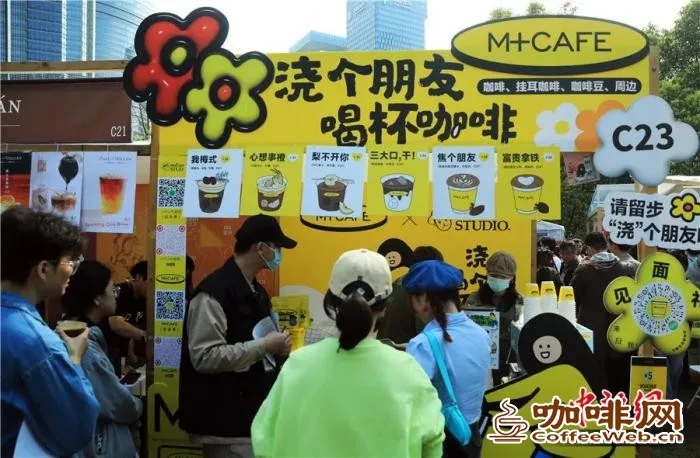
CNS: What role does coffee culture play in interpersonal exchange?
Loffet: Coffee’s global popularity is inseparable from its distinctive flavor and the buffering role it plays in cultural exchange. The café—a venue combining dining, salons and performances—provides a public space for communication, leisurely and relaxing, yet reflecting respect and equality in its seating arrangement. In cultural exchange, coffee has gradually become a symbol of unrestrained freedom, simplicity, convenience and speed; appreciating coffee also brings people closer. As coffee spread worldwide, while carrying Western cultural connotations, it also fully blended with local characteristics.
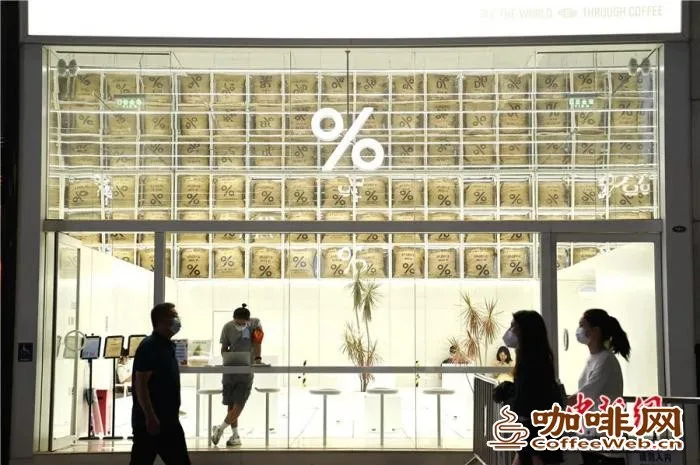
CNS: As a foreign import, why did coffee form its own culture in China?
Loffet: When coffee first arrived in China, as a representation of a Westernized, fashionable and elegant lifestyle, it appeared first in Shanghai. Some groups, chasing Western fashion, drove its gradual spread. Beyond the drink itself, cafés provided a public space for urban ideas to collide, using decor to tightly link coffee’s image with a particular lifestyle, building emotional resonance and identity. Moreover, with today’s faster pace, some people developed a physiological or psychological dependence on coffee’s quick alertness boost, and the habit itself nurtured the culture.
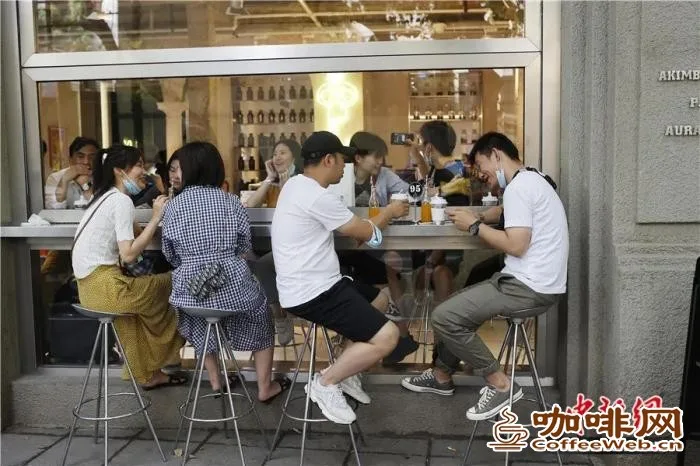
CNS: What are the characteristics of China’s coffee culture?
Loffet: Although coffee’s history in China is not long, Chinese coffee culture already carries distinct era-specific and cultural marks. When coffee entered China in the late 19th century, drinking it signaled status; it was a symbol of class. After reform and opening-up, coffee—a typical “imported culture”—was gradually linked to a tasteful, light-luxury, foreign and fashionable lifestyle; as international giants arrived, Chinese understanding deepened and coffee’s nature as a habitual beverage was recognized. After the 21st century, with consumption upgrading and the rise of local Chinese brands, drinking coffee became routine among mainstream young and middle-aged consumers; growing cultural confidence also raised tolerance and acceptance. Coffee may have become an indispensable presence in some urban lives.
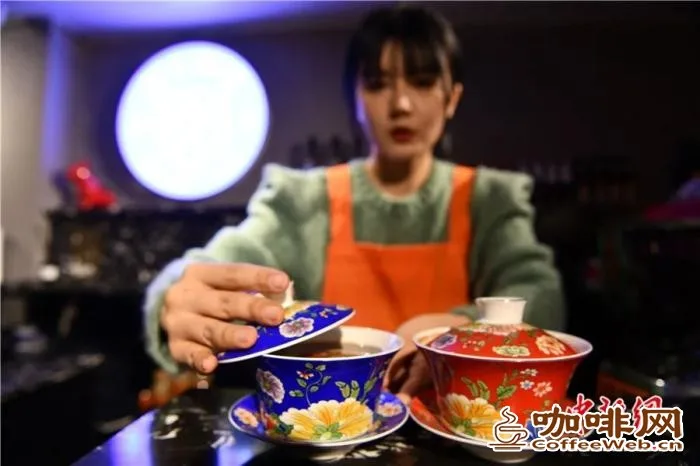
China’s coffee culture has always had a highly open and inclusive underpinning; diversity is one of its keywords. Driven by brand collaborations, seasonal limited editions, and Chinese-element fusions—such as adding black sesame or ejiao, or folding gorgon fruit and xiaolongbao into coffee—more Chinese entrants keep finding differentiated selling points that other markets cannot copy or fathom, reflecting the uniqueness of China’s coffee trends. The inclusive, innovative soil also bred hits like osmanthus latte, the ¥5 americano, fruit soda coffee and co-working cafés.
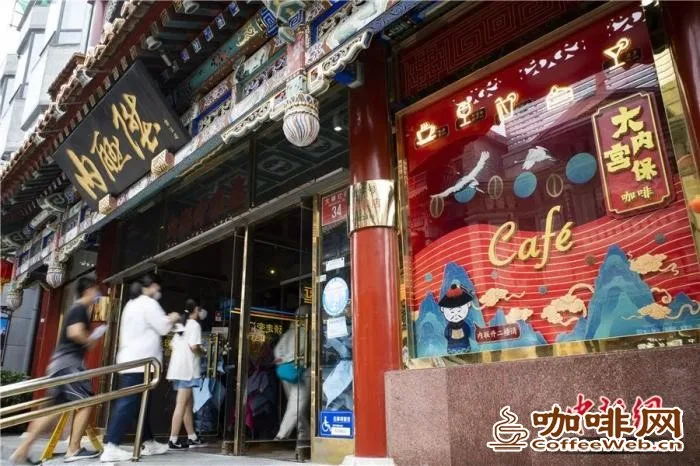
CNS: Why is coffee and its culture increasingly accepted by modern Chinese, and what needs does it meet?
Loffet: This is inseparable from China’s four decades of widening openness, rapid economic growth and rising disposable income. As the consumption-trend- and quality-focused “Generation Z” becomes the main consumer force, they also drive public acceptance of coffee. Meanwhile, coffee’s mild addictiveness, alertness and fat-metabolism functions increasingly fit modern Chinese people’s efficient, healthy rhythm. Combined with increasingly civilian pricing and more choices across price points, coffee precisely meets diverse needs. iMedia Research data shows China’s coffee market was about ¥381.7 billion in 2021, with consumers exceeding 300 million.
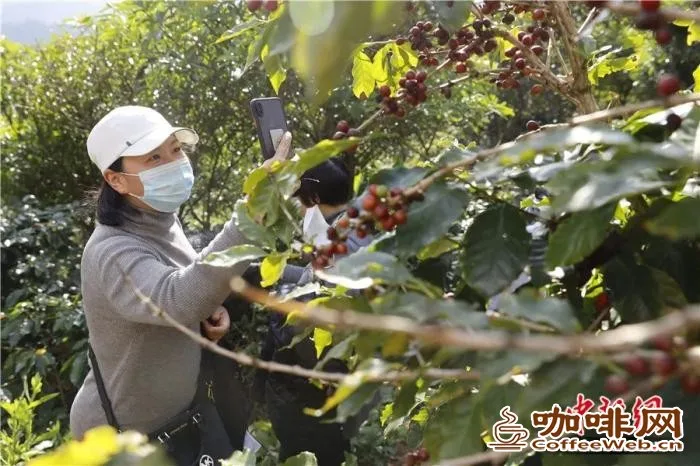
China’s coffee planting area and output are under 2% of the global total, concentrated in western and southern Yunnan. Yunnan accounts for over 98% of China’s coffee area, output and value, mainly the world-mainstream Arabica small-grain variety, with annual green-bean output above 100,000 tons in recent years.
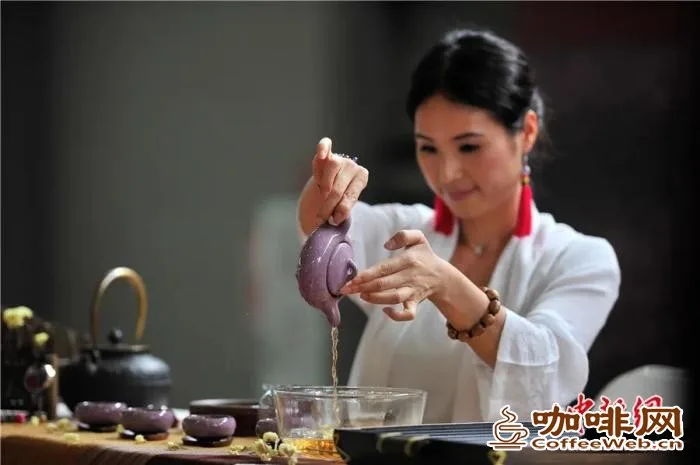
CNS: Pu’er tea is world-famous; today Pu’er is also an important coffee origin. What collision and fusion arise when two drinks with long histories meet in Yunnan?
Loffet: “Coffee in the morning, tea in the afternoon; coffee in one hand, tea in the other” has become the real picture of leisure life in today’s Pu’er. Both “Pu’er tea” and “Pu’er coffee” are renowned Chinese geographical-indication products. For over a millennium, because of a magical Eastern leaf, Pu’er has dialogued with the world in countless wonderful ways; for over a century, because of a magical shrub seed, Pu’er has connected with the world with boundless vitality. From the universe within a cup of Pu’er tea to the world within a cup of Pu’er coffee, ancient and modern, tradition and fashion, Eastern and Western cultures intertwine and collide here. Pu’er, endowed with top-tier tea and coffee resources, is soil for the collision and fusion of the two industries. Recently, camellia latte and Da Hong Pao latte went viral by satisfying curiosity for diverse flavors, offering some reference and inspiration for deep tea-coffee fusion.

CNS: In antiquity, tea moved East to West; in modern times, Western coffee culture took root in the East. What influence do you think this exchange has on Eastern and Western societies?
Loffet: Initially, Chinese tea entered the Western world via the Silk Road, and with its clean aroma and its status as a symbol of ancient Eastern prestige, it was warmly embraced in European aristocratic social life; to this day many Westerners keep their afternoon-tea culture. Tea ceremonies reflect Chinese philosophy and ethical virtues; Westerners drinking Chinese tea can observe Chinese tea-making craft and appreciate Chinese culture’s charm. China saw its first cafés around the late Qing; the more open-minded younger generation has always been the main consumer. Chinese people drink coffee as an experience of Western lifestyle, sensing Western cultural traits through grinding and brewing. As times changed, both coffee and tea fused into people’s daily work and life in the East and West. The cultural blending between China and the West also accelerated the mutual penetration and fusion of tea and coffee cultures, enhanced the warmth and comfort of exchange among different regions, effectively removed cultural barriers, and helped Eastern and Western people develop more diverse, friendly ways of coexistence based on mutual respect.

About the interviewee: Loffet, female, PhD in Food Science from Ohio State University, associate professor at China Agricultural University’s College of Food Science and Nutritional Engineering, former Nestlé R&D coffee-product expert, mainly engaged in new food-processing technologies and flavor-quality control. (China News Service, April 14, 2023; editor: Liu Zheng)
Reprint Notice & Disclaimer
- This article is compiled and edited by China Coffee Network (coffeeyo.com) from publicly available materials (China News Service “East-Meets-West” interview, by Sun Gengting and Yang Chengchen, April 14, 2023). The copyright of the original text and images belongs to the original authors. This site reprints it solely for coffee-industry information sharing and does not represent our position; all data and views are subject to the original. We thank the original authors for their creation and sharing.
- Original article: China News Service, “Coffee in the morning, tea in the afternoon”: how do Eastern and Western drinks intertwine in China? (April 14, 2023).
- If there are any issues regarding content authorization, attribution, copyright or other matters, please contact this site promptly; we will verify and cooperate in handling them at the first opportunity. We also welcome coffee producing regions, brands and industry media to exchange and contribute articles.
- Contact China Coffee Network (coffeeyo.com): Tel 400-0000-641 (+86-18288016826) | Email 405854472@qq.com | Address: Jinghong City, Xishuangbanna, Yunnan Province / Tieling City, Liaoning Province, China
Related Reading
 How ‘Sea-Flavored’ Coffee Blooms Across Dongtou
- Health Guide: How to Enjoy Your Coffee the Healthy Way
 Study: Regular Coffee and Tea May Lower Dementia Risk, but More Is Not Better
 Frontline Story: A ‘Mobile City Coffee Bar’ Arrives by the Grand Canal
 Yantai’s Wind Tastes of Coffee
 In Zhenyuan, a Cup of Coffee and a Waiting Train







 Liaoning ICP Security No. 21122402000217