
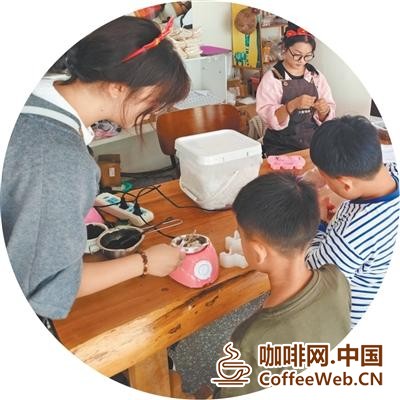


Tourists experience cultural and creative production at Elephant Boutique Coffee Estate.
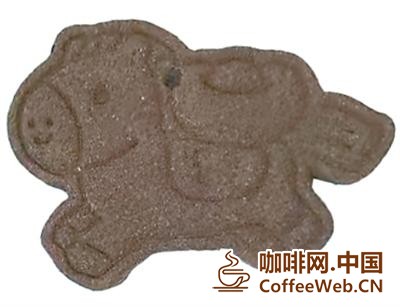
The team of "Yutong Xiaoke" at Tianjin University of Commerce uses coffee grounds to make environmentally friendly travel cups.
The coffee grounds fragrance brand of Elephant Boutique Coffee Estate.
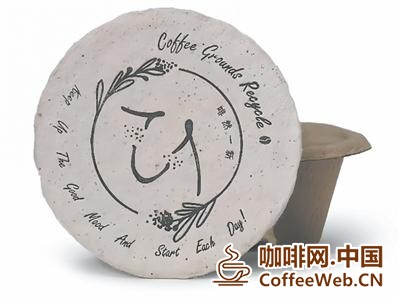
The "Coffee Tong Xiaoke" team at Tianjin University of Commerce uses coffee grounds to make environmentally friendly coasters. The above pictures are provided by the interviewees
During this Qingming Festival holiday, the popularity of Elephant Boutique Coffee Manor located in Nanbanghe Village, Liushun Town, Simao District, Pu'er City, Yunnan Province continued to rise, and all the homestays in the park were fully booked early on. In addition to overnight tourists, there are also many citizens and tourists who come specifically to check-in and play, just to taste the coffee in the estate.
Not long ago, the estate just completed the fresh coffee fruit picking work for this season. Taking advantage of the good freshness of the newly harvested fruits, the workers in the workshop worked tirelessly to roast coffee beans, allowing customers to taste the rich and fragrant freshly brewed coffee of the season at the first time.
Behind the huge production, there is the pressure of processing massive amounts of coffee grounds, as well as enormous potential for resource reuse
The afternoon sun shone through the glass window and onto the tasting table, as Chen Pingxian, the founder of Elephant Boutique Coffee Farm, skillfully brewed hand brewed coffee.
The water slowly dripped over the finely ground coffee powder, and the rich aroma instantly dissipated. "Come and taste our fresh boutique beans, grown and roasted at home, with a particularly good taste!" Chen Pingxian smiled and greeted the tourists who came to experience it, moving his hands non-stop.
After brewing, she collected the coffee grounds on the filter paper. These coffee grounds used to be waste in her eyes, but now they are "treasures" that cannot be wasted.
Chen Pingxian's estate has a self owned planting area of 200 acres, and with cooperation with surrounding coffee farmers, the planting area exceeds 4000 acres. It sells about 20 tons of green beans every year, attracting coffee enthusiasts from all over the country.
The aroma of coffee in the estate is becoming stronger and stronger, and the annoyance of coffee grounds also follows.
In the past, coffee grounds were just thrown away casually. When it was hot, they would smell bad and take up space for a long time. Surrounding farmers also had objections. She said that at that time, a lot of coffee grounds were produced every day and thrown into the fields, which not only polluted the environment but also wasted resources.
This kind of dilemma is not unique to Chen Pingxian. In Yunnan, where coffee production is huge, it is a common problem faced by many coffee practitioners.
In 2025, Yunnan Province will produce 138900 tons of coffee beans. According to relevant data, each ton of coffee beans can produce 650 kilograms of coffee grounds, which means that for every 300 milliliters of coffee made, approximately 13 grams of coffee grounds are produced. And for every 15 grams of coffee beans used to make coffee, about 0.4 kilograms of carbon dioxide equivalent is produced, which is equivalent to driving a regular gasoline car for 2 kilometers. Behind the huge production is the pressure of processing massive amounts of coffee grounds, as well as the enormous potential for resource reuse.
The coffee grounds cultural and creative industry, which embodies the concept of fireworks and environmental protection, has been well received since its launch
How to utilize this resource? Chen Pingxian began exploring ways to handle coffee grounds. She pondered over the characteristics of coffee grounds repeatedly and gradually had an idea in her mind: "Coffee grounds have a faint natural aroma and delicate texture. Maybe they can be made into creative products that are both environmentally friendly and memorable!" Collecting coffee grounds, drying them, and starting with simple fragrance brands, she began to try making coffee cultural and creative products.
Xiang Pai, bracelets, small ornaments, and a series of coffee grounds cultural and creative products have been launched one after another. What Chen Pingxian did not expect was that these cultural and creative products, which contain fireworks and environmental protection concepts, have been well received by tourists since their launch. Many tourists come to the estate and after drinking coffee, they will actively experience the fun of making coffee grounds by themselves.
In addition to coffee grounds, coffee peels are also fully utilized. Chen Pingxian led his staff to clean and dry the fruit peels, producing fruit peel tea that is priced similarly to coffee beans. It is sweet, refreshing, and has a coffee aroma, making it very popular among tourists. After fermentation, the fruit peel can regulate soil pH and provide nutrients for coffee trees, killing two birds with one stone, "she said.
But Chen Pingxian was not satisfied with the status quo. Just when she hoped to make further breakthroughs but lacked technical support, the "Feitong Xiaoke" team at Tianjin University of Commerce took the initiative to contact her.
In our research, we found that many coffee plantations in Yunnan are facing the problem of difficult coffee grounds processing and low added value. "Li Jiarong, the leader of the" Coffee Same Small Science "team, introduced that the traditional method of landfilling coffee grounds produces methane, and incineration releases carbon dioxide and particulate matter. Recycling and utilization can build a closed-loop ecology, reduce pollution and resource waste.
The team has increased the retention rate of chlorogenic acid in coffee grounds from 30% to 75% through "enzymatic hydrolysis microwave coupling technology", achieving high value-added utilization. Li Jiarong said, "We can use coffee grounds to make coffee cups, furniture, and extract coffee essential oils. We want to empower rural industries with professional technology
Li Jiarong introduced that using aerobic composting technology can significantly reduce carbon emissions. If combined with biofuels for co composting, each ton of coffee grounds can achieve a reduction of about 100 kilograms of carbon dioxide equivalent per treatment. "We also want to promote the pilot of organic fertilizer for coffee grounds, feed back to coffee gardens, reduce the use of chemical fertilizers, make coffee more ecological, and connect with the carbon inclusive system to make the carbon reduction benefits more quantifiable
Realizing deep resource utilization of coffee grounds and expanding channels for local residents to increase income
At present, the team has designed a closed-loop process of 'urban and rural dual network recycling, centralized processing and reprocessing, and diversified sales' in Yunnan. They plan to set up an ecological recycling station in Pu'er and connect with local contract factories to achieve large-scale processing. Li Jiarong said that they have also signed a' three-day recycling agreement 'with coffee shops, innovated the' carbon point recycling mechanism ', and urban users can donate coffee grounds to exchange for product coupons. Adopting coffee trees can earn coffee beans and carbon points, achieving a win-win situation.
Chen Pingxian is full of expectations for cooperation: "We hope to set up a small processing plant in the estate, learn technology from universities, and cultivate local talents." She also plans to jointly develop more coffee themed cultural and creative products to carry more coffee culture.
In addition to the exploration of Elephant Boutique Coffee Plantation and Tianjin University team, Ximeng Va Autonomous County in Pu'er City has also embarked on a unique path of regeneration for coffee grounds treatment, using coffee grounds to make yarn and weave brocade.
Relying on Yunnan's abundant coffee resources, the local government actively connects with relevant enterprises, overcomes technical difficulties, and processes discarded coffee grounds into delicate and soft yarn, innovatively applying it to the production of Wa ethnic brocade. This attempt not only adds new environmental selling points to the millennium old Wa ethnic brocade, but also enables the deep resource utilization of coffee grounds, further expanding the income channels for local people.
In Chen Pingxian's estate, the DIY experience area is still bustling, with tourists following Chen Pingxian to grind coffee grounds and make incense plaques, where the aroma of coffee intertwines with laughter and joy. From 'abandoned burden' to 'increased income treasure', coffee grounds have achieved a 'comeback'. In the future, we believe that coffee grounds recycling products will enter more people's lives, allowing the aroma of every cup of coffee to continue a longer journey. (Reporter Li Maoying)
Source: People's Daily
 Liaoning ICP Security No. 21122402000217