
News that Starbucks is piloting a “pay-to-sit” policy has kept simmering on social platforms lately. After the news broke, large numbers of consumers and industry players began to re-examine a long-held industry consensus: is the third place of chain coffee stores a core brand asset, or an increasingly heavy cost burden? Many stores apply inconsistent standards in practice — some proactively guide non-paying customers not to occupy seats for long, while others maintain their previous open model. This store-level divergence has further amplified market discussion.
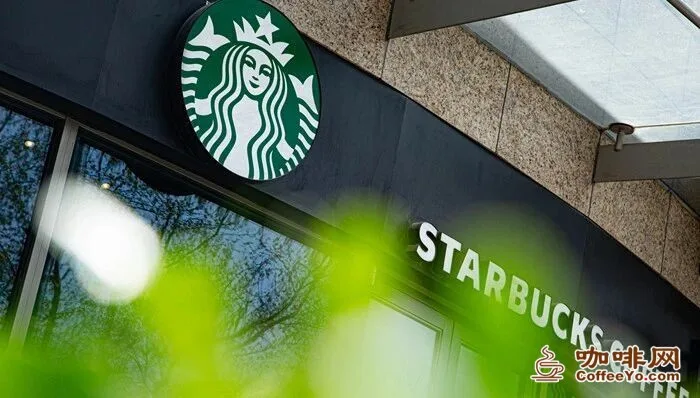
As the coffee brand that first brought the “third place” concept into the public eye in China, Starbucks relied on this model to build, over decades, a distinct mindshare different from other beverage brands. In Starbucks’s narrative, the store is not just a counter selling coffee, but an independent space between home and office where people can rest, meet, work and briefly unwind. This business model was copied by countless new tea-drink and specialty-coffee brands, which expanded store areas, added many seats and created comfortable environments, hoping to draw traffic through space and support product pricing with an environmental premium.
But as rent and labor costs keep climbing and competition in the coffee segment intensifies, the profit logic of the entire industry has changed dramatically. More and more brands find that large store areas, many idle seats, and customers who occupy space for long without spending are constantly eroding store profits. This time’s rumored pay-to-sit trial is less a sudden new rule unilaterally imposed by Starbucks, and more a visible adjustment attempt after the industry’s profit pressure erupted collectively.
The origin of the third place: selling a scenario experience beyond the product
The concept of the third place was not originally Starbucks’s. This sociological concept was first used to refer to public spaces outside home and workplace for ordinary people to socialize and relax; Starbucks was the first consumer brand to fully commercialize it. In last century’s market environment, coffee itself was not consumed frequently; relying solely on beans or a single drink made it hard to form strong differentiation. Consumers could brew at home or buy cheap canned coffee at convenience stores; competing purely on taste and ingredients left little gap.
Starbucks found a new value increment, bundling the store environment, atmosphere and service into the price of a cup of coffee. When a consumer buys a cup, they buy not just the drink but the right to linger in the space. Here they can meet friends, open a laptop and work alone, or briefly escape the noise of home or office and own a stretch of time. For the urban white-collar group then, such venues were scarce. Early cities had few affordable public spaces suitable for casual meetings or temporary work; high-end clubs had too high a threshold, mall rest areas were noisy and crowded, and libraries imposed strict quiet and time limits. Starbucks stores just filled that gap.
This model formed a positive loop for a long time. A comfortable environment drew heavy foot traffic, traffic drove product sales, and stable revenue let the brand afford higher rents and sustain large-store operations. Meanwhile the social attribute brought by the space kept reinforcing the brand’s tone, lifting Starbucks out of the ordinary drink-shop positioning into a symbol of urban lifestyle. Many consumers were willing to accept above-average pricing, essentially paying for that scenario value.
At that stage, foot traffic and revenue grew in the same direction. Even if some customers just sat a while over one drink for a long stay, the store could still achieve decent turnover. Rent and labor costs were relatively mild, and fluctuations in seat occupancy would not easily breach the store’s profit floor. Many peers, seeing Starbucks’s success, began to imitate. New tea-drink and local specialty-coffee brands all opened big stores, arranged sofas and seats, and created atmosphere, assuming that as long as the space was good, it would draw traffic and build brand competitiveness.
This wave of imitation lasted for years, until the domestic coffee segment entered an explosive growth phase, with value brands like Luckin and Cotti rising rapidly, and the industry’s underlying environment began to shift slowly. Value coffee brands chose the small-store model, compressing seat area, prioritizing pickup efficiency, and focusing on quick takeaway and self-pickup without relying on space to attract customers. Two completely different store models developed in parallel in the same market, gradually making the industry reflect on whether the third place is the only correct route for coffee brands.
The cost structure is rewritten: the invisible rigid spending behind free seats
When discussing this, many consumers easily view seat opening only from the user’s perspective, ignoring the rigid cost structure of an offline store. For a Starbucks store with many seats, the two largest fixed expenses are rent and labor. Rent is usually calculated by the store’s total leased area; the seating area, like the bar and back-kitchen areas, requires continuous rent per inch. Labor is the same: more seats mean higher cleaning frequency, more table clearing, trash removal and order-maintenance work, requiring more staff to keep operations running.
When seats are occupied for long but cannot continuously convert into drink orders, space shifts from asset to burden. A seat given to a repeat, high-frequency customer is effective capacity; a seat occupied all day by a customer who orders one drink or spends nothing continuously consumes rent and cleaning costs without bringing revenue. When traffic is unsaturated, this contradiction is not prominent — idle seats are surplus resources, and opening them to everyone can also warm up the store atmosphere. But as commercial-rent rises and the store’s break-even point keeps lifting, seat capacity efficiency becomes a key indicator of store profitability.
Here we can distinguish two completely different customer flows. The first is consumption-type traffic: the core purpose of visiting is to buy coffee, and space is just added value. After buying a drink they rest briefly or leave after a simple chat with friends; seat turnover is fast and new orders keep coming — the most welcome traffic. The second is space-type traffic: the core need is to find a place to sit long, with AC and stable internet; coffee is secondary or there is no spending intention at all. This latter type is exactly the object stores want to adjust and manage in this pay-to-sit rumor.
For commercial-district stores, this contradiction is amplified. Core-district rent per square meter per month is extremely high; many stores’ monthly rent cost per sqm is considerable. With the same area, reducing seats and expanding the bar and pickup zone to boost pickup and delivery efficiency yields a completely different output efficiency. But as long as the large-space layout is maintained, the brand must bear this fixed overhead.
There is also an easily overlooked hidden cost: managing user expectations. After long-open seating, consumers have formed a fixed perception that Starbucks is a place to stop for free. Once stores tighten seating rules, it easily triggers negative sentiment, fermenting on social platforms and bringing brand-reputation damage. This is also why Starbucks did not directly issue a uniform national hard rule, but only pilots in some stores with verbal guidance, with uneven enforcement standards. The brand knows that directly and forcefully restricting seating would cause widespread consumer resentment in the short term and harm the long-built brand image.
Beyond rising costs, changing consumption habits are also weakening the original value of the third place. Now cities offer more and more options for temporary stops and work meetings — mall free rest areas, co-working spaces, bookstores, and many new tea-drink stores can all provide a place to sit. The third place is no longer Starbucks’s exclusive differentiator, but basic supporting facilities that many stores have. When scarcity disappears, the premium consumers are willing to pay for space naturally keeps falling.
The contrast of two store routes: the contest between the heavy-space model and the quick-pickup small-store model
The domestic coffee segment now splits into two clear routes: one is the heavy-space route represented by Starbucks, some large Manner stores and Seesaw; the other is the small-store model led by Luckin and Cotti, focusing on quick pickup, delivery and minimal or no seats. Neither route is absolutely right or wrong; they serve different crowds, fit different profit models, and correspond to different operating risks.
Stores on the heavy-space route have experience as their core competitiveness; customers pay for environment and social scenes, with relatively higher per-customer spending and longer stays. Their shortcoming is obvious: profitability is highly sensitive to traffic quality and seat-turnover efficiency. Once many low-conversion space customers flood in, store profits are easily eaten. Such stores suit business districts and mature high-end commercial areas, with customers mainly business meetings and highly sticky white-collar workers whose coffee demand is stable and unlikely to occupy without spending. If opened in university towns or areas lacking free public resources, seats are easily occupied for long with low spending conversion, and operating pressure rises noticeably.
The logic of quick-pickup small stores is the opposite. It actively gives up the space dividend, does not rely on environment to attract customers, compresses store area, cuts many seats, and concentrates all resources on pickup speed, product cost-performance and online order handling. Customers take the drink and leave after ordering, with almost no seat-occupation issue; the store’s sales-per-square-meter calculation is simple and clear, each order directly corresponding to revenue, with little idle-resource consumption. The advantage of this model is stronger risk resistance, less rent pressure, low standardization-replication difficulty, suiting wide rollout into various commercial areas, communities and office buildings. Its shortcoming is the difficulty in forming a unique brand tone; product competition can only focus on price, taste and launch speed, easily falling into price involution.
Starbucks’s current dilemma is essentially being caught between the two routes. Its brand foundation is built on the third place; if it completely abandons space, it equals discarding decades of core mindshare and competing on price in the same arena as value coffee brands, where its advantage would quickly vanish. But continuing boundless open seating, amid continuously rising costs, puts growing profit pressure on stores. So the brand chose a compromised way: flexible store guidance rather than a national one-size-fits-all hard rule — safeguarding the space brand label on one side while trying to filter inefficient traffic and improve store operating data on the other.
Some brands on the market also try a middle route, differentiating store positioning. The same brand opens big stores in core business districts with ample seats for socializing and experience, and small stores at office-building lobbies and street spots with reduced seats for quick pickup and self-collection. Through store-tiering, they balance space value and profit efficiency, matching the corresponding store model to the surrounding customer demand. Compared with a single model, this approach has a higher fault-tolerance rate and is a direction many new consumer brands are trying.
Industry lessons behind the rule adjustment: the space business can still be done, but not free and boundless
Many industry observers, seeing this news, directly conclude that the third place has completely failed and coffee stores should no longer offer seats. This judgment is too absolute. Space itself still holds high commercial value; it is just the free, threshold-less, unconstrained space model that can hardly fit today’s cost environment. Space is no longer an infinitely supplyable welfare; it is the store’s scarce capacity resource and needs refined management.
Brands must first clarify why their customers come. If the core selling point is social experience and leisure scenarios, then space is the core product and needs continuous maintenance, plus good traffic guidance. Soft methods can guide spending and reasonably control stay duration, rather than crudely driving customers away, balancing operating revenue and user experience. If the brand focuses on cost-performance and convenient consumption, it should proactively weaken spatial attributes, reduce seat investment, and put budget into product, delivery and pickup efficiency, rather than blindly following the trend of opening big stores.
For consumers, cognitive adjustment to industry changes is also needed. Store seats are not urban public supporting facilities; they exist on the basis of store operating costs, and brands have the right, within a reasonable scope, to prioritize the usage needs of paying customers. Of course, when executing guidance, brands must also grasp the degree — gentle wording, unified standards, avoiding conflicts between staff and customers and avoiding public-opinion backlash. Heavy-handed management easily makes consumers feel offended, offsetting the brand favor brought by the space model.
Over a longer cycle, competition in the coffee industry is shifting from single-dimension competition to refined-operation competition. Early on it was whose store was bigger, decoration better, seats more comfortable; later it was whose price lower, launches faster, points more; and now it is sales-per-square-meter management, customer-tiering, and the match between store model and location. The same space can be turned into a high-profit asset by some and continuously dragged by others; the core difference lies in whether there is corresponding consuming traffic to underwrite the cost.
Another noteworthy direction is the diversified operation of space. Some coffee brands are trying to combine store space with salons, sharing sessions and small business events, turning the venue into a commercially operable scenario in off-peak hours, so seats generate extra revenue beyond serving drop-in rest. This is also a solution to improve space-asset utilization, no longer relying solely on drink sales to spread rent costs. But this model demands high operating capability and does not suit all chain brands for large-scale replication.
View of Li Qingsong, founder of Wenyutian Benchmark Brand Strategy Consulting
The space business is still worth doing, but free, boundless space is no longer a safe choice. How to find a balance among user experience, brand reputation and store profitability is a question all offline consumer brands relying on scenarios must keep answering going forward.
Reprint notice and disclaimer
- This article is edited and compiled by coffeeyo.com and reproduced from Brand Brother K’s “Starbucks rumored to promote pay-to-sit initiative; third-place dividend ebbing; can the store-space business still work?” Copyright of the original belongs to Brand Brother K and the original author. This reprint is for coffee-industry information sharing only and does not represent the views of this site; all data and opinions are subject to the original. We thank the original author for their work and sharing.
- Original: Brand Brother K, “Starbucks rumored to promote pay-to-sit initiative; third-place dividend ebbing; can the store-space business still work?”
- For matters regarding content licensing, attribution, copyright or otherwise, please contact us promptly and we will verify and cooperate in handling it as soon as possible. We also welcome coffee businesses and industry media to exchange story leads with us.
- Contact coffeeyo.com: Tel 400-0000-641 (+86-18288016826) | Email 405854472@qq.com | Address: Jinghong City, Xishuangbanna, Yunnan Province, China


 Liaoning ICP Security No. 21122402000217