


Introduction (Coffeeyo.com):Based on evidence from over 130000 people in the UK Biobank, clarify the true relationship between coffee consumption and calcium deficiency, uric acid, and gastroesophageal reflux: a cup of Americano causes only about 2-3 mg of calcium loss, which a small glass of milk can easily offset; Daily coffee drinkers have a 25% reduced risk of gout; Caffeine can reduce the pressure of the esophageal sphincter from approximately 19 mmHg to 14 mmHg. The article provides four personalized suggestions for "controlling dosage, choosing time period, choosing low acidity, and listening to body feedback", with a daily limit of 400 milligrams of caffeine for healthy adults.
Coffee is probably a beverage that contemporary people struggle with. A few days ago, "Drinking coffee may lead to calcium deficiency" went on the hot search list, but a few days later, "Coffee is a uric acid friendly beverage" went viral again. The same thing, sometimes referred to as the enemy of bones, and sometimes as the ally of gout. There is another type of person who is more silent than anyone else – they drink sour drinks, burn their hearts, but still can't bear to put down their glasses.
Let's break down three things first:
The first thing is:The issue of calcium deficiency has been magnified by hot searches!
A standard cup of Americano (about 240 ml) causes a calcium loss of roughly 2-3 mg. 100ml of milk contains about 120mg of calcium, which means that even if you drink three cups of coffee, a small cup of milk can "fill in" the loss. The real risk signal appears when two conditions are met simultaneously: more than 4 cups per day and long-term insufficient calcium intake. An earlier study also pointed out that 1-2 cups of coffee per day have almost no substantial effect on calcium balance, with meaningful calcium loss occurring only after exceeding 1000 milliliters. In other words, coffee is not "stealing calcium", it's just adding an extra amount to your account when your calcium reserves are tight. Eat enough calcium, and this account will be settled.
The second thing:
Regarding uric acid, coffee is indeed on the "friendly" side!
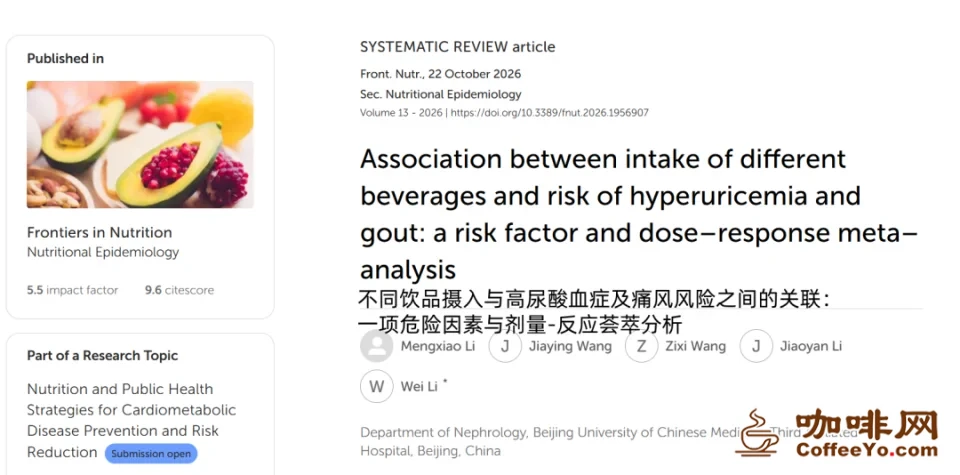
A study based on data from over 130000 people in the UK Biobank showed that people who have a habit of drinking coffee have a reduced risk of gout by about 25%, and there is a clear dose-response effect: for every additional cup consumed per day, the risk of gout further decreases by about 15%. The mechanism is not entirely dependent on caffeine – decaffeinated coffee also shows a similar association, suggesting that polyphenolic substances in coffee (such as chlorogenic acid) may exert their effects by inhibiting the activity of uric acid production related enzymes and improving insulin resistance. At the same time, the diuretic effect of coffee also helps to eliminate uric acid. But one thing must be made clear: this refers to unsweetened black coffee. A cup of 3-in-1 instant coffee or caramel macchiato contains enough sugar and fat to offset this benefit.
The third thing:
Reflux is the most honest "over" for coffee!
Caffeine relaxes the lower esophageal sphincter, the "valve" that prevents acid reflux upwards. The research measurement is very clear: after normal volunteers drink coffee, the lower esophageal sphincter pressure drops from about 19 mmHg to about 14 mmHg; People who already suffer from reflux esophagitis have lower baseline pressure (about 9 mmHg), which further drops to around 5.5 mmHg after drinking coffee, and the impact of low pH coffee is greater and lasts longer. This explains your experience: the sensitivity of reflux individuals to coffee is not a psychological effect, but rather a physiological relaxation of the sphincter muscle. But this does not mean that complete withdrawal is necessary, but a different way of drinking is needed.
Provide you with personalized advice on four things:
Firstly: Quantity
Healthy adults have a daily limit of 400 milligrams of caffeine, which is equivalent to 2-3 cups of standard black coffee. It is recommended for people with reflux to start from a lower starting point, with no more than 1-2 cups per day, and observe the symptoms before adjusting.
Secondly, time
Avoid the early waking period when cortisol is already at a high level. 9:30-11:00 am is a relatively ideal window. Avoid drinking later in the day, allowing time for the esophageal sphincter to recover tension and avoid affecting nighttime sleep – poor sleep quality itself can exacerbate reflux.
Thirdly, choose the right things in the cup
For you, low acid coffee with cold extraction or deep roasting isA more practical choice: Cold brew has lower titratable acidity, and dark roasting significantly reduces acidic compounds compared with light roasting.No sugar added, but a small amount of milk can be added – milk can neutralize some acidity and easily replenish calcium. Avoid drinking on an empty stomach and do not pair with high-fat cream.
Fourth: Use your body as a judge
If you switch to low acidity, reduce intake, and drink in the morning, but reflux still occurs frequently, your esophageal sphincter is more sensitive to caffeine than adjusting how you drink can address. At this point, what needs to be done is not to force it, but to have the digestive department evaluate the actual degree of reflux and decide whether to reduce the coffee to zero or keep a "minimum pleasurable dose" that your body can tolerate.
Coffee is not something that is either black or white. It is uric acid friendly, the threat to calcium is overestimated, and it is indeed not gentle enough for people with reflux. The real determinant of success or failure is never the coffee itself, but the person who drinks it – how much, when, what else is in the cup, and whether the feedback given by the body is taken seriously.
Text | Clinical Nutrition Department by Li Yongjin
Reproduction instructions and disclaimer
- This article is written and compiled byCoffeeyo.com, and reprinted and compiled, reprinted from NetEase (Shunyi District Maternal and Child Health Hospital) "Drinking coffee lacks calcium, raises uric acid, and still burns the heart? The benefits and drawbacks of coffee", the original copyright belongs to NetEase (Shunyi District Maternal and Child Health Hospital) and the original author. The reposting on this website is only for information sharing in the coffee industry and does not represent the position of this website. The data and opinions in the article are subject to the original text. Thank you to the original author for their creation and sharing.
- Original reading:NetEase (Shunyi District Maternal and Child Health Hospital) "Drinking coffee lacks calcium, raises uric acid, and still burns the heart? The pros and cons of coffee"
- If there are any issues related to content authorization, attribution, copyright, or other matters, please contact our website in a timely manner. We will verify and cooperate in handling them as soon as possible; We also welcome coffee companies and industry media to communicate and contribute to us.
- Coffeeyo.com Contact Information: Phone 400-0000-641 (+86-18941000313) Email 478203668@qq.com Address: Jinghong City, Xishuangbanna, Yunnan Province
Related Reading
 Research shows that drinking coffee regularly can reduce the risk of gout
 Why is it said that people with the same weight who drink coffee may be slimmer
 ‘Uric-Acid-Friendly Drink’ Identified: Study Links Regular Coffee Consumption to a 46% Lower Risk of Gout
 Coffee and Health: The 400 mg Daily Caffeine Limit
- Does Coffee Promote Cancer? Harvard Study: One Extra Cup of This Coffee Raises Bladder Cancer Risk
- Study Finds: Drinking Coffee Does Affect People’s Mood


 Liaoning ICP Security No. 21122402000217