


At a Glance (China Coffee Network): The cafes opened by Liangshan Yi youth Jie Hei Ati in the mountains of Guizhou are hot in a way that almost defies reason. The cliffside one took 5 million yuan in investment and paid back in four months; by industry norms, similar projects take about two years to pay back. The cave-waterfall one is even more extreme: opened on 29 January 2026, during the Spring Festival it averaged over 2,000 visitor visits a day and received up to 3,000 people on the peak single day. Since opening it has received over 30,000 visitors in total, with revenue exceeding 2 million yuan.
The cafes opened by Liangshan Yi youth Jie Hei Ati in the mountains of Guizhou are hot in a way that almost defies reason.
The cliffside one took 5 million yuan in investment and paid back in four months. By industry norms, similar projects take about two years to pay back. The cave-waterfall one is even more extreme: opened on 29 January 2026, during the Spring Festival it averaged over 2,000 visitor visits a day and received up to 3,000 people on the peak single day. Since opening it has received over 30,000 visitors in total, with revenue exceeding 2 million yuan.
‘Coffee is just the entry point,’ he says.
From the Daliang Mountains to the mountains of Guizhou
Jie Hei Ati, 28, is Yi from the Daliang Mountains in Sichuan. In the Yi language, ‘Wengbu’ means ‘mountain wilderness’. He describes the entrepreneurial history of himself and his partners with one phrase: ‘bold’.
Before opening the cafes he had sold computers and phones, run a supermarket on campus, done a shared shoe-washing shop and Taobao store operations, and run an outdoor club leading people hiking and climbing. In his own words, ‘I’ve done everything and dared to try everything’.

In 2021 he arrived in Guizhou. First he took over 300-plus mu of lawn in Dazhai Village, Shuanglongshan Subdistrict, Anshun, for a homestay and campsite. It opened in January 2023, and for the first three months almost no one came. In April, a guest posted a note on Xiaohongshu, it went viral, and the work phone was blown up with calls.
A homestay pays back in one to two years. But the campsite experience revealed something to him: the light-asset, fast-return ‘micro-scenic-area’ model is far better value than a heavy-investment homestay.
The ‘wild-path’ logic of site selection
His site selection has no methodology. If one had to name it, it would be ‘love at first sight’.
The first cliff cafe was discovered by chance by a partner. ‘After seeing that place, really it was love at first sight; I just thought, wow, this place is too beautiful.’
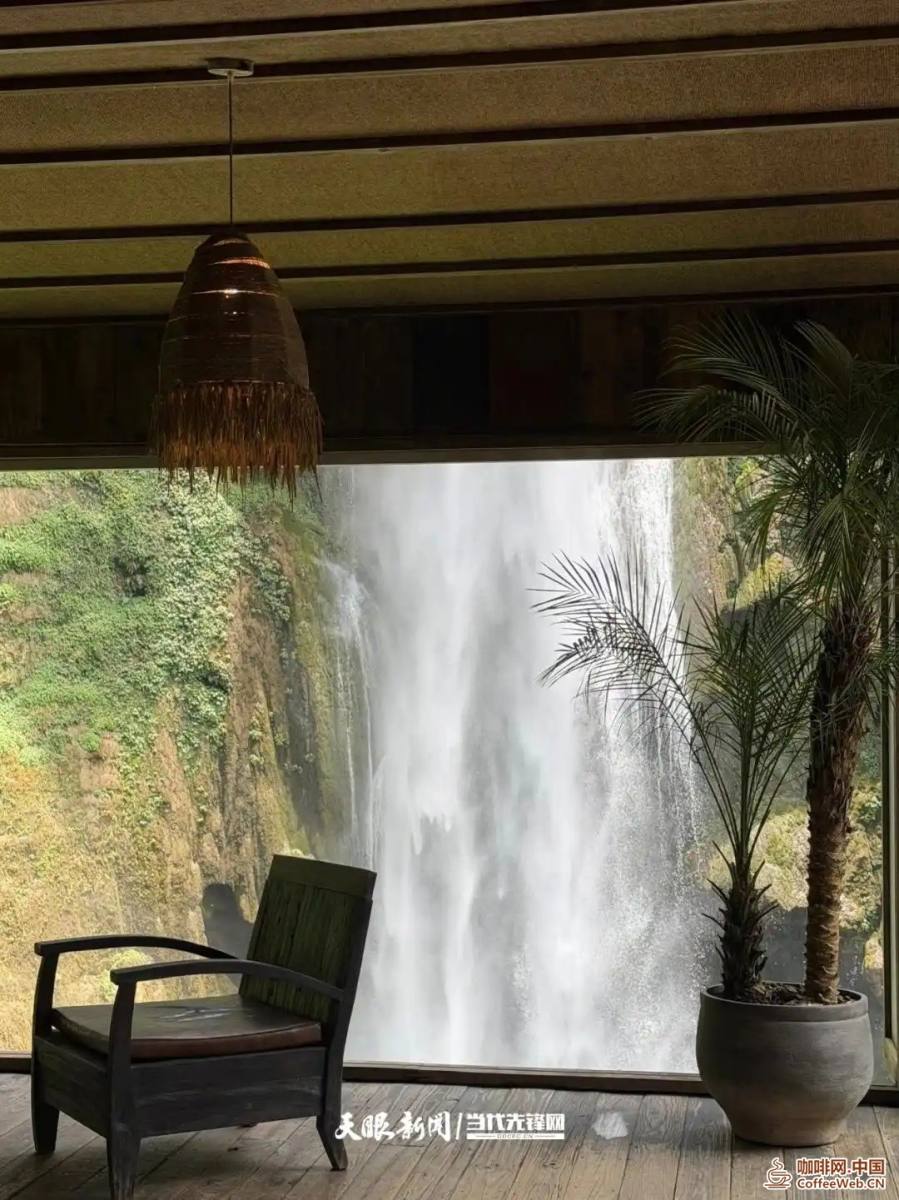
For the second cave-waterfall cafe, he came across a short video on Douyin; the footage was rough, but the shape of the cave and the light and shadow caught his eye. ‘We said, since we’re here anyway, let’s go take a look and have a walk around.’
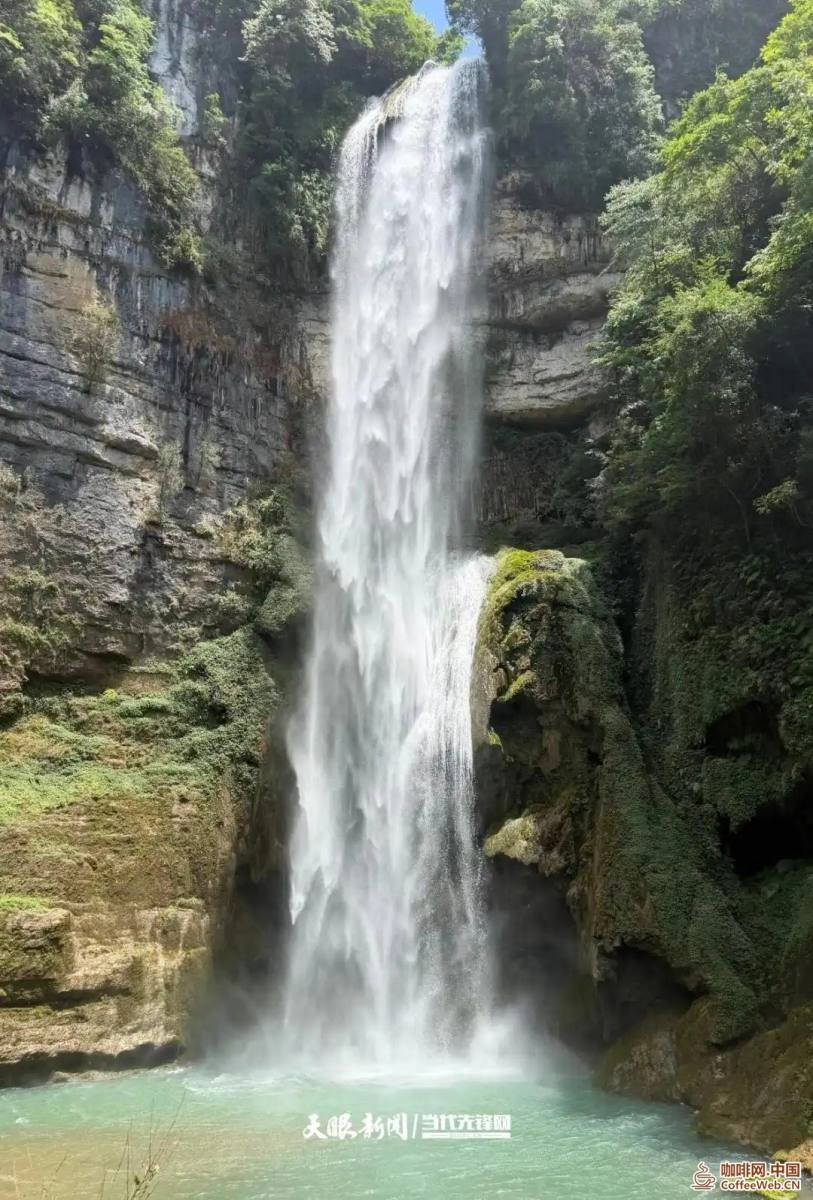
That walk produced a hit. Built on five natural caves including Xiangbi Cave, the project creates a consumption scene combining coffee experience, light dining and creative-product sales. The several-dozen-metre-high cliff waterfall, the Tyndall effect of light beams cutting through mist, and the arc-shaped glass curtain wall embedded in the sheer cliff: every spot is a photo-ready ‘picture-perfect spot’ made for the camera.
Investment beyond expectations and support nobody foresaw
For the first cliff cafe, their original budget was two or three million yuan. In the end, transporting materials became a bottomless pit: supplies first reached the car park, were unloaded and reloaded, then carried piece by piece down the mountain by hand. Labour costs ran 30% over expectations, and they finally poured in 5 million yuan. ‘The cash chain nearly collapsed,’ he says.
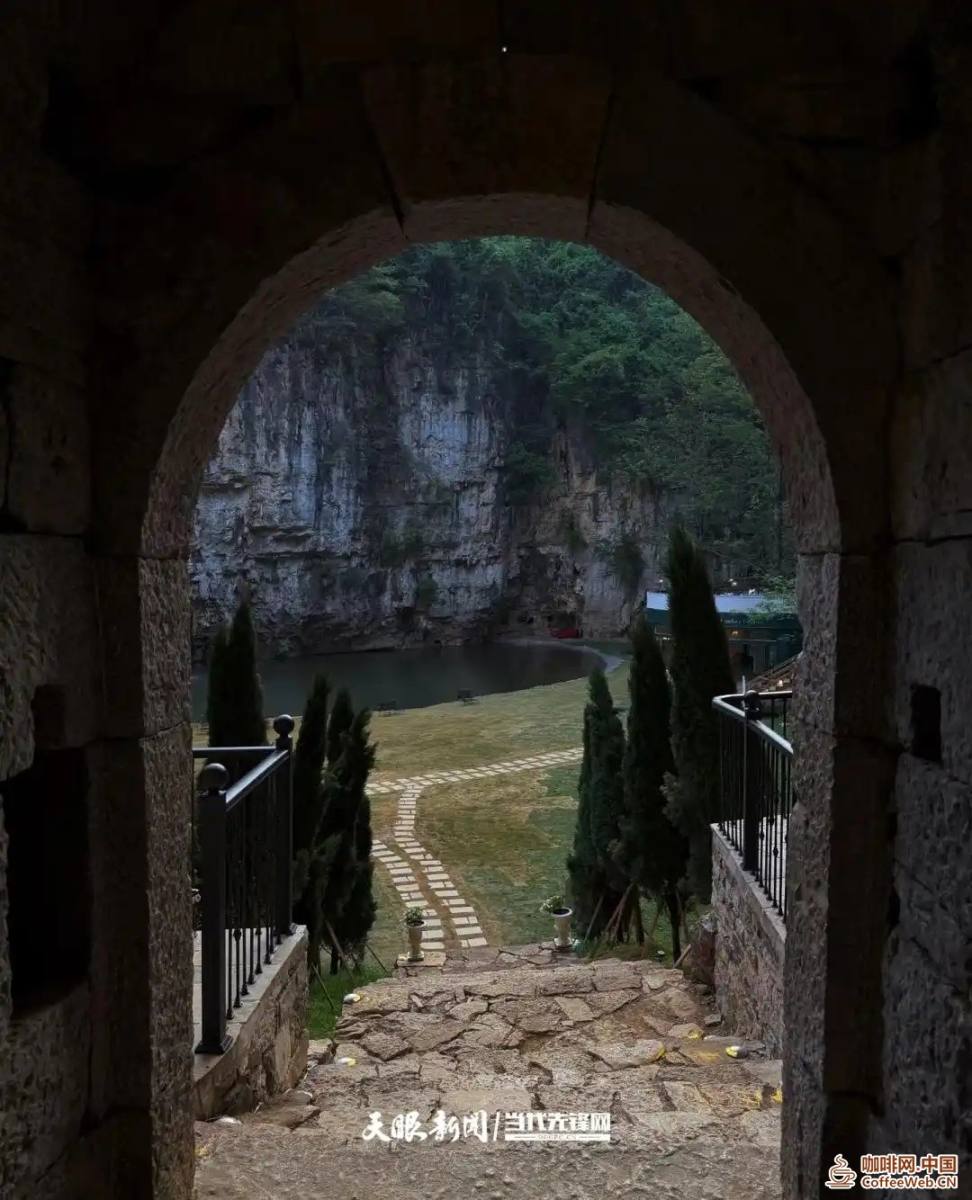
The second cave project was also 5 million yuan. The biggest construction difficulty was again hauling: it takes 20 minutes just to walk to the cafe, and every material had to be carried in a second time by hand.
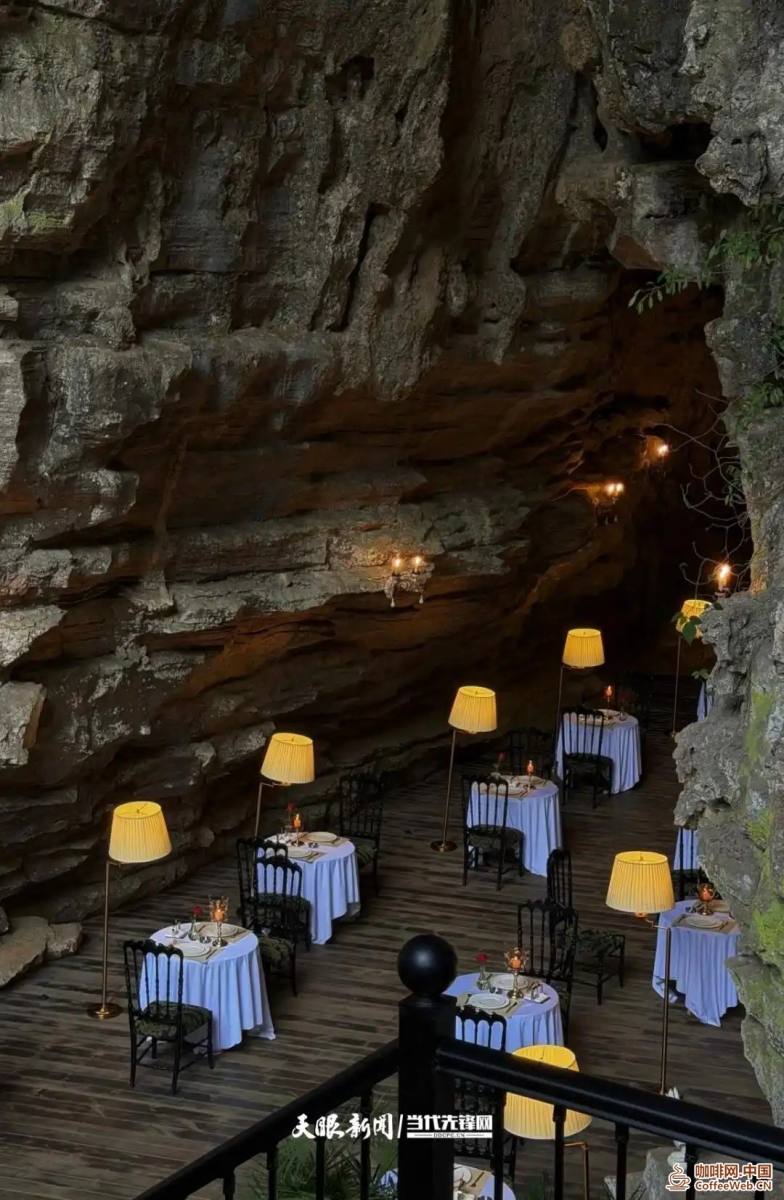
But this time there was government backing. The Jiaozishan Town Government took the initiative to act as a ‘coordination hub’: land ownership involved many villager households, and town and village officials completed the signing of intent agreements within a week; the cave had no electricity, so the power supply department was coordinated to build new facilities.
‘We’re not here to wreck things; we’re here to make use of idle resources on the barren hills, bring footfall to the area and create jobs for villagers,’ he says. The local government and he were ‘of one mind’.
The secret to paying back in four months
The cliff cafe paid back in four months; the cave-waterfall cafe was a hit from day one. How?
First, scarcity. Having grown up in the mountains, he knows city people lack a ‘sense of ease’. ‘Original ecology doesn’t mean poor; it’s the kind of scarcity that hasn’t been spoiled.’
Second, the scene is the product. A 68-yuan ticket includes a coffee plus a cave tour and a hands-on making experience. What visitors buy isn’t coffee, it’s the experience of ‘drinking coffee beside a waterfall’. Golden roxburgh rose and litsea are blended into the coffee; the mountain litsea specialty drink has sold over 30,000 cups.
Third, content-driven growth. The cliff cafe was hot the moment it opened because bloggers came to film on their own; Douyin and Xiaohongshu both went viral with posts, and the road was jammed the next day. The cave cafe was the same, without a cent spent on marketing.
‘We’re not running a coffee shop.’ He repeated this line several times.
‘Cities aren’t short of ordinary cafes; what they lack is an IP rooted in the mountain wilderness, carrying ethnic culture and the landscape and heritage of Guizhou.’
His positioning is a ‘micro scenic area’: light investment, fast returns, replicable. A homestay takes one or two years to pay back; a micro scenic area pays back in three or four months.
Business lessons in the mountain wilderness
In Guizhou, ‘village cafes’ like Wengbu are sprouting up in batches. Cliffs, caves and waterfalls can all become ‘coffee’. Behind this is the upgrading of cultural-tourism consumption: people are no longer content to ‘look at the landscape’, they want to ‘immersively drink the landscape’.
Jie Hei Ati’s story is like a sample: a Yi youth who walked out of the Daliang Mountains used a cup of coffee to bring a stretch of mountain and water to life in Guizhou. His experience is plain to the point of not resembling a business secret: ‘just do it first, then talk’.
But he also says you can’t chase speed, can’t lose your original intention for the sake of quick money. ‘When people first have gains and get pushed to a certain height, that’s when it’s easiest to make mistakes. That’s when it comes down to whether you can hold to your original intention.’
In the Yi language, Wengbu means ‘mountain wilderness’, ‘the source of life and stories’. For him, the mountain itself is root and soul.
That is probably why a ‘village cafe’ can sell for 68 yuan and still draw a queue: what you buy isn’t coffee, it’s one Yi youth’s whole understanding of the mountain wilderness.
Tianyan News reporter
Wang Danling, Mao Xiaocui
Editor: Yang Yu
Second review: Yang Tao
Third review: Qin Lin
Coffee is just an entrance, “he said.
From Daliangshan to Qianshan
The Site Selection Logic of ‘Wild Road’
The secret to recouping costs in four months
Tianyan News reporter
Wang Danling, Mao Xiaocui
Editor Yang Yu
Second instance Yang Tao
Third instance Qin Lin
Reprint Notice & Disclaimer
- This article has been edited and compiled by China Coffee Network. The information and images therein come from public sources and the copyright belongs to the original author. This reprint is intended solely for information sharing within the coffee industry and does not represent the views of this website; all data and opinions are subject to the original article. Our thanks to the original author for creating and sharing it.
- For matters concerning content licensing, attribution, copyright or otherwise, please contact us promptly and we will verify and cooperate in handling them as soon as possible. We also welcome coffee origins, brands and industry media to exchange ideas and contribute articles.
- Contact China Coffee Network: Tel 400-0000-641 (+86-18288016826) | Email 478203668@qq.com
Related Reading
 Jiangxi Wuyuan: Rural Coffee Unlocks New Cultural Tourism Formats
 Jiangxi Wuyuan: Rural Cafes Unlock New Cultural Tourism Formats
 Global quality goods gather at Hongqiao Import Commodity Exhibition Center, setting "Chinese standards" for coffee
- Global premium products gather to set China's coffee standards as Hongqiao Import Commodity Exhibition Center keeps the CIIE spirit alive
- Global quality goods gather as Hongqiao Import Commodity Exhibition Center and CIIE forge lasting partnership to set China's coffee standards.
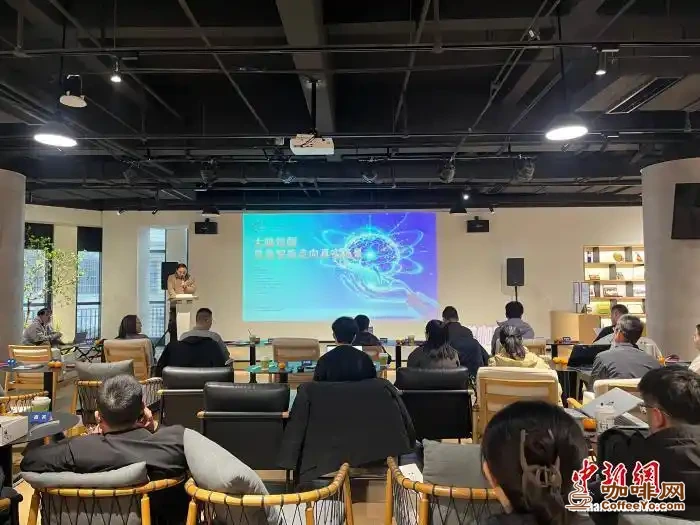 Zhejiang "Science Cafe" Promotes Embodied Intelligence in Real-World Scenarios


 Liaoning ICP Security No. 21122402000217