


At a Glance (China Coffee Network):Guangzhou can grow coffee too! Though not a traditional coffee-producing region, local coffee planting has quietly taken off in Guangzhou: Huangpu District’s coffee planting area.
Guangzhou can grow coffee too! Though not a traditional coffee-producing region, local coffee planting has quietly taken off in Guangzhou: Huangpu District’s coffee planting area has reached 45 mu, over 80% of the city’s total; Conghua District has designated 2026 as its ‘first year of coffee’, with 50,000 coffee seedlings taking root in Lingnan.
How can foreign coffee varieties take root in Lingnan soil and give off a rich Guangzhou ‘flavour’? Kaxiang Roasting Academy, operated on a ‘front courtyard, back workshop’ model, is the first academy in China to build a full-scenario training system for coffee industry-chain talent; in Conghua District, the building of the ‘Liuxi Lixia’ coffee brand, which blends Conghua’s local character, and the application for a national geographical indication are advancing in step.
Liuxi Lixia: letting foreign coffee beans take on a Conghua ‘flavour’
‘The main varieties planted at present are Bourbon, Sarchimor, Catimor and Caturra,’ said Zhang Ruoyu, secretary-general of the Conghua District Coffee Special Committee and curator of the youth rural-cafe workshop at Luodong Craftsman Town. As early as 2021, a Yunnan team trial-planted coffee trees under lychee groves in Conghua. Today Conghua coffee planting has begun to take shape: 1.2 mu of coffee trees under lychee and persimmon trees at Luodong Craftsman Town, a three-mu organic trial field launched in Yinlin Village and Aimi Town in Taiping, and 50,000 coffee seedlings raised by the Conghua District Coffee Special Committee.
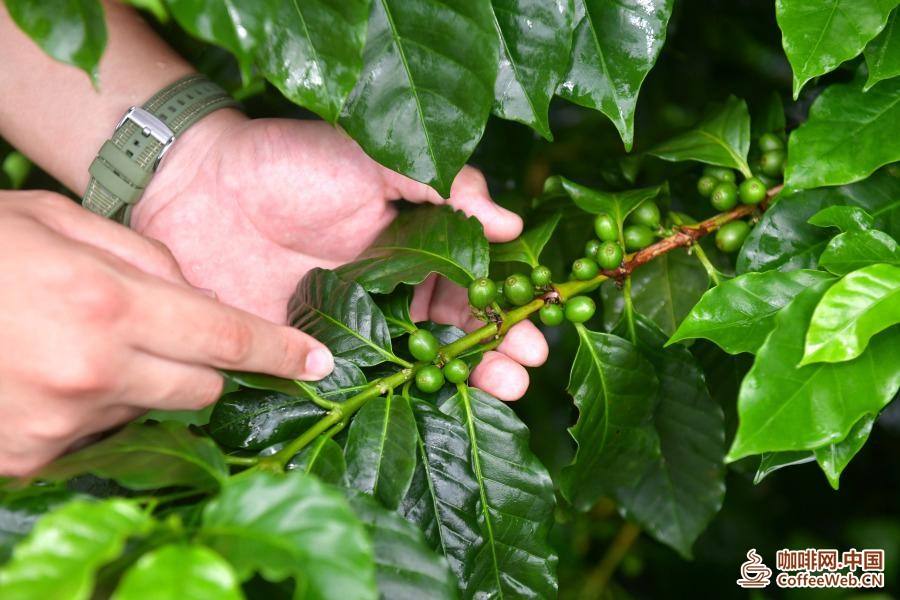
The Hong Baihe Ecological Park Coffee Valley draws on university research resources to study the high-value utilisation of coffee.
How can foreign coffee varieties take root and grow into a Guangzhou ‘flavour’? The answer lies hidden in ‘Liuxi Lixia’. ‘It smells of fresh lychee, with rich layers on the palate: both the mellow body of coffee and a sweet-tart note like lychee,’ Zhang Ruoyu explained. This new coffee variety, whose trademark was registered only in 2026, carries a strong Conghua ‘flavour’ from its naming and planting right through to bean processing.
According to her, the coffee tree is a semi-shade plant that cannot tolerate strong direct sunlight; tall trees providing moderate shade create the best growing environment for it. In Conghua, native tree species such as lychee and longan provide a natural opportunity. Zhang Ruoyu believes that interplanting coffee under lychee groves on the one hand saves land resources and planting costs, and on the other quietly stamps a lychee ‘imprint’ on the foreign coffee trees. She further explains that the unique microclimate and soil under lychee groves, and the ecological community in which lychee and coffee trees coexist harmoniously, together give the beans a distinctive flavour foundation.
‘The processing, roasting and brewing of the beans are also crucial,’ Zhang Ruoyu stressed; the lychee flavour of ‘Liuxi Lixia’ mainly comes from these. From then on, the foreign coffee trees go through seedling raising, planting, picking, bean processing and roasting before turning into ‘Liuxi Lixia’ with its rich Conghua ‘flavour’.
In Zhang Ruoyu’s view, Conghua coffee cannot stop at planting and processing; more important is to connect the full primary-secondary-tertiary industry chain from planting to processing to coffee consumption plus cultural-tourism consumption scenarios, and the key is cultivating a coffee atmosphere and culture. Zhang and her team have upgraded the cafe check-in settings, kept developing related new products, and simultaneously developed coffee study-tour courses. ‘We’ve just launched an integrated course covering the whole process: coffee seedlings, bean identification, bean roasting, bean tasting and pour-over, and it’s been a hit with consumers.’
Notably, the Conghua District Coffee Special Committee, set up at the end of 2025, integrates resources for coffee planting, roasting, consumption and agri-cultural tourism. In coffee daily-chemical products, it has joined with South China University of Technology to put facial masks, scrubs and the like into production in 2026; in coffee foods, it has worked with the Guangzhou High-Tech Medicine and Food Technical School to bring noodles, cookies and bread to market.
Kaxiang Roasting Academy: providing whole-industry-chain talent support for Guangzhou coffee planting
On Changzhou Island in Huangpu District, the unique river-island ecology and mild climate provide natural fertile ground for tropical coffee cultivation. The Hong Baihe Ecological Park Coffee Valley, home to a 40-mu specialty coffee planting zone, is Guangzhou’s largest coffee ecological landscape belt. This 120-mu ecological park is no ordinary picking garden: it is a ‘coffee seed-industry chip’ built on the back of a national-level research institution, the Yunnan Dehong Tropical Agricultural Science Research Institute. Hong Baihe Coffee Valley is its only cooperative demonstration base in Guangzhou. According to statistics, the park has introduced and planted nearly 20 quality Chinese and foreign coffee varieties and cultivated 100,000 quality coffee seedlings.
Pacamara, Red Bourbon, Catimor… coffee trees of different varieties have taken root in the park. ‘We are screening for the coffee seedlings best suited to Guangdong’s climate and soil, and have already achieved phased results,’ said Wang Hongxing, technical director of Hong Baihe Coffee Valley.
Hong Baihe Ecological Park Coffee Valley also draws on university research resources such as South China University of Technology to study the high-value utilisation of coffee. ‘In 2022 I transplanted the coffee trees used for classes on campus to Changzhou Island, and also brought Yunnan arabica seedlings from Yunnan to plant on the island,’ said Chen Rong, technical expert at Hong Baihe Coffee Valley and senior engineer at South China University of Technology. So far derivative products such as the ‘Ka Guo Ka Mei’ brand green-coffee drip bags, coffee steamed buns and coffee cookies have been developed, and construction of a micro smart coffee estate has begun, with digital management such as smart irrigation to come in future.
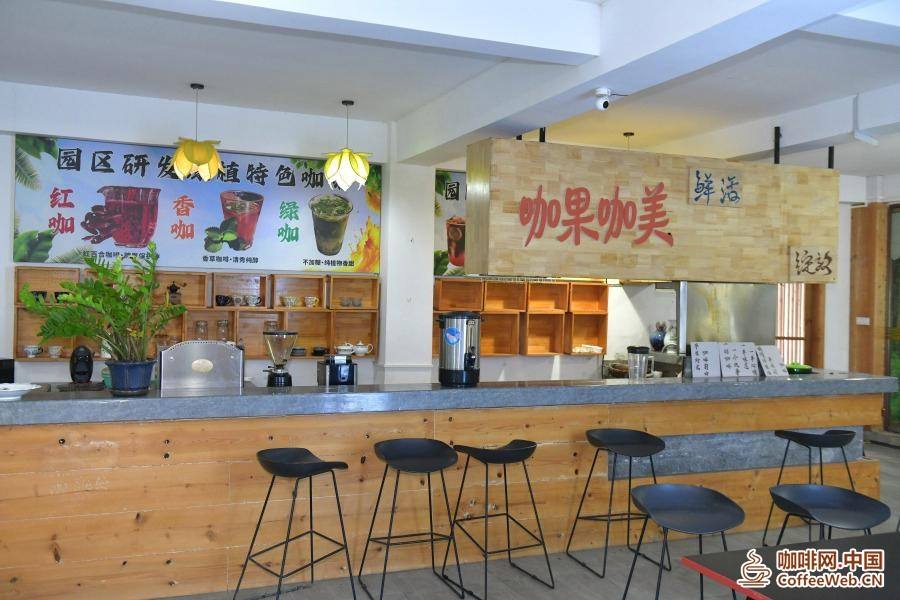
Besides screening for the coffee seedlings best suited to Guangdong, the arrival of Kaxiang Roasting Academy, operated on a ‘front courtyard, back workshop’ model, has also provided whole-industry-chain talent support for Guangzhou coffee planting. Kaxiang Roasting Academy covers 2,300 square metres, is equipped with advanced roasting equipment and testing instruments, and is the first academy in China to build a full-scenario training system for coffee industry-chain talent. In addition, the academy regularly opens free coffee courses and themed tastings to the public, and invites residents to make ‘warm-light coffee’ by hand to give to community workers.
Huangpu District’s coffee planting map is expanding rapidly. According to statistics, the district currently plants 45 mu of coffee, over 80% of the city’s total planting area, ranking first in the city. Besides Hong Baihe Ecological Park, the Lingtou Black Tea Creative Park in Changling Subdistrict has opened a five-mu planting zone, deeply blending into the ecological fabric of the ‘Huangpu Red’ thousand-mu tea hills without disturbing the existing mountain-forest vegetation pattern, creating a near-natural composite ecological landscape of ‘tea and coffee coexisting, one garden with two aromas’; Xinlong Town is expected to plant 50 mu this year and reach 200 mu next year. By then, the district’s coffee seedling scale will grow exponentially: 100,000 in 2026, 300,000 in 2027, and a push toward 2 million quality coffee seedlings in 2028, creating an under-forest economy model with distinctive Lingnan character.
Text / Guangzhou Daily Xinhuacheng reporters: Xia Qiang, He Ruiqi
Photos / Guangzhou Daily Xinhuacheng reporter: Yang Yaoye
Guangzhou Daily Xinhuacheng editor: Li Fenghe
Guangzhou Daily Xinhua City Editor: Li Fenghe
Reprint Notice & Disclaimer
- This article has been edited and compiled by China Coffee Network. The information and images therein come from public sources and the copyright belongs to the original author. This reprint is intended solely for information sharing within the coffee industry and does not represent the views of this website; all data and opinions are subject to the original article. Our thanks to the original author for creating and sharing it.
- For matters concerning content licensing, attribution, copyright or otherwise, please contact us promptly and we will verify and cooperate in handling them as soon as possible. We also welcome coffee origins, brands and industry media to exchange ideas and contribute articles.
- Contact China Coffee Network: Tel 400-0000-641 (+86-18288016826) | Email 478203668@qq.com
Related Reading
 Tim Hortons China Q3: System Sales Up 6.3% Quarter on Quarter
- CRH Plans OATLY Exit, Nayuki Leaves Wenzhou | Tea & Coffee Weekly
 The 2026 Asian Coffee Association Annual Meeting will be held in Dehong, Yunnan, and the Asia ABODY Coffee System Standard will be officially released
 The President of Brazil's Victoria Coffee Business Center (CCCV) led a delegation of four people to Pu'er, Yunnan to conduct a special inspection of the coffee industry
 Behind the 1836 yuan "King of Brands": The Full Industry Chain and Offline Layout of Xinlu Coffee
 From a raw bean to a fragrant cup, Xiamen International Coffee Exhibition unlocks a new picture of the entire industry chain


 Liaoning ICP Security No. 21122402000217