


At a Glance (China Coffee Network): In recent years, Guizhou’s cultural-tourism market has kept growing in scale and its visitor mix has steadily improved.
In recent years, Guizhou’s cultural-tourism market has kept growing in scale and its visitor mix has steadily improved. In step with this, coffee consumption in Guiyang has risen as a new force, producing several national coffee competition champions and a number of leading local brands. Coffee culture has become deeply embedded in urban consumption and tourism scenarios, and the young consumer base keeps expanding, laying an industrial and market foundation for the deep integration of coffee and tourism. Traditional landscape tourism urgently needs younger, differentiated upgrading, and coffee, as a carrier of trendy lifestyles, has become an important breakthrough for filling the gaps in cultural-tourism consumption and enriching immersive experiences.
Recently, the Guizhou “Coffee-Tourism Integration” Matchmaking Conference, jointly hosted by the Guizhou Provincial Department of Culture and Tourism and the Guizhou Provincial Department of Commerce, was held in Guiyang. Twenty-two owners of leading national coffee brands gathered with representatives of 16 key scenic areas, 6 boutique homestays, and 8 sojourn enterprises from within the province for in-depth matchmaking around themes such as “coffee plus scenic areas,” “coffee plus homestays,” “coffee plus study tours,” and “coffee plus mountain resorts,” injecting youthful, trendy, quality-driven new momentum into Guizhou tourism.
Yang Xiangdong, Party Secretary and Director of the Guizhou Provincial Department of Culture and Tourism, said that Guizhou’s cultural tourism and the coffee business empower each other for mutual benefit and win-win growth. The huge tourism market provides broad space for the coffee industry, while trendy coffee formats can effectively enrich consumption scenarios and fill the gap in youth-oriented offerings. He stressed that coffee-tourism integration must stay pragmatic and advance steadily, following the principle of “easy first, hard later; light first, heavy later,” giving priority to lightweight, low-cost cooperation models such as mobile coffee trucks, themed pop-up stores, and specialty markets, while supporting quality scenic areas and sojourn venues in developing coffee businesses for deeper growth.
The conference built an efficient matchmaking platform. On the industry side, several owners who are national competition champions bring mature full-chain experience in store operations, scenario design, and traffic management. On the tourism supply side, key scenic areas and national tourist resorts including Huangguoshu, Xiaoqikong, and Xijiang Qianhu Miao Village, along with sojourn enterprise representatives such as Gemei Group, bring together strengths in ecological resources, ethnic culture, and visitor channels. At the meeting, a number of key homestay enterprises raised diverse needs such as format upgrading, scenario innovation, study-tour product development, and IP collaborations. Drawing on Guizhou’s distinctive resources such as karst landforms, waterfall terraces, and Miao and Dong villages, the coffee owners proposed differentiated, localized implementation plans.
Many practitioners are full of expectations for the future. Lei Ming, owner of Heishi Coffee, hopes to use scenic-area spaces to promote Guizhou’s “five refinements culture” of fine coffee, craft beer, exquisite cultural-creative products, delicate snacks, and refined lodging, “letting visitors understand Guizhou’s unique local customs through a single cup of coffee.” Liu Bo, founder of Xunmeili Qingyin Shanju, believes that only by breaking the impression that cafes exist solely in cities and opening them in mountains and homestays can guests be persuaded to stay.
“Since April this year we have already connected with two local coffee brands for cooperation, finding distinctive entry points to build composite cultural-tourism formats.” Qiang Hua, vice president of the Guiyang Coffee Industry Association and owner of Wujie Coffee, is optimistic about the potential of quality venues such as homestays around Chishui, Fanjing Mountain, and Jiaxiu Tower, and proposes that beyond selling coffee, coffee-themed cultural-creative souvenirs could be developed, using tourism channels to raise added value and connect the whole industrial chain so the coffee experience appears in more scenarios. “The association will also keep playing a bridging role, linking government, businesses, and practitioners to make coffee an expression of urban cultural life,” Qiang Hua said.
After free negotiation and precise matchmaking, a number of scenic areas, homestays, and leading coffee brands reached preliminary cooperation intentions, achieving complementary resources and mutual traffic. Next, the Guizhou Provincial Department of Culture and Tourism will include “coffee-tourism integration” in the province’s key cultural-tourism format cultivation system, working with commerce departments on policy support, matchmaking, and follow-up services, striving to cultivate a batch of distinctive, experience-rich, sustainably operated demonstration projects, summing up replicable and scalable integrated development models, and pushing Guizhou’s coffee-tourism integration industry toward large-scale, quality development.
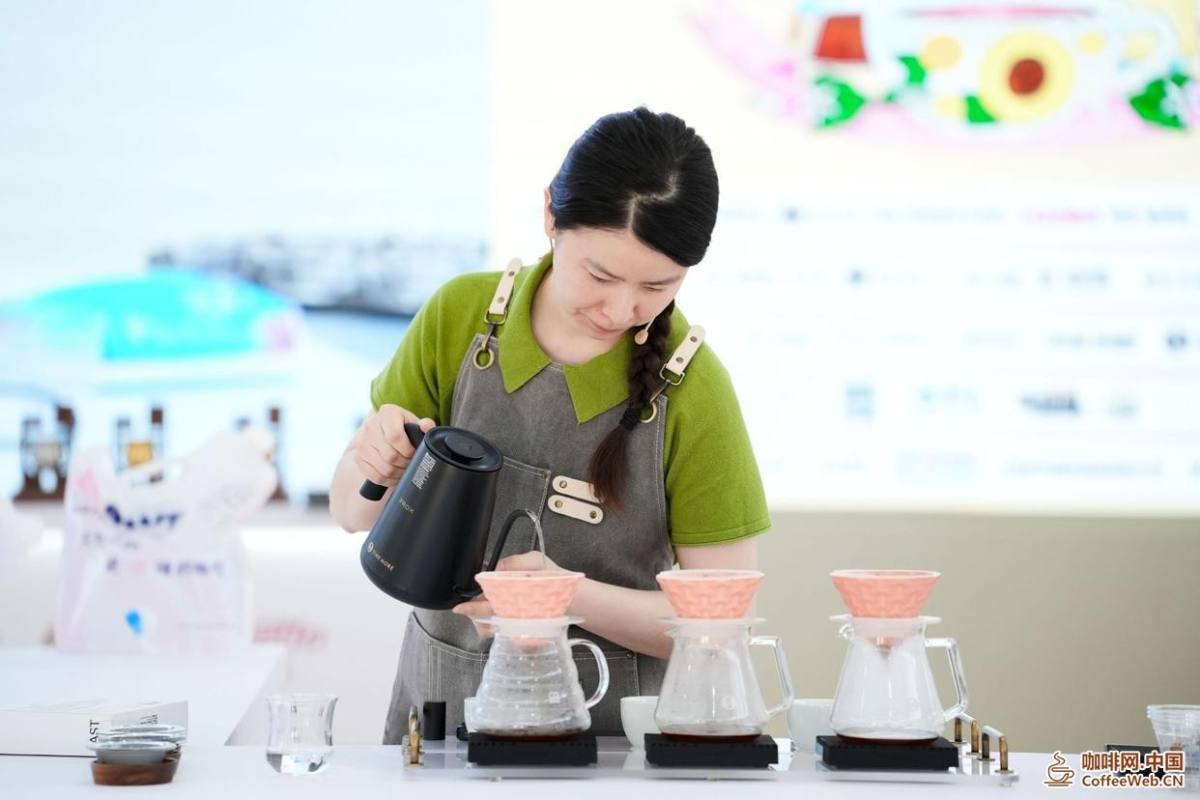
The 2026 World Brewers Cup China Finals. Photo provided by the organizer
Reprint Notice & Disclaimer
- This article has been edited and compiled by China Coffee Network. The information and images therein come from public sources and the copyright belongs to the original author. This reprint is intended solely for information sharing within the coffee industry and does not represent the views of this website; all data and opinions are subject to the original article. Our thanks to the original author for creating and sharing it.
- For matters concerning content licensing, attribution, copyright or otherwise, please contact us promptly and we will verify and cooperate in handling them as soon as possible. We also welcome coffee origins, brands and industry media to exchange ideas and contribute articles.
- Contact China Coffee Network: Tel 400-0000-641 (+86-18288016826) | Email 478203668@qq.com
Related Reading
 Jiangxi Wuyuan: Rural Coffee Unlocks New Cultural Tourism Formats
 Jiangxi Wuyuan: Rural Cafes Unlock New Cultural Tourism Formats
 Global quality goods gather at Hongqiao Import Commodity Exhibition Center, setting "Chinese standards" for coffee
- Global premium products gather to set China's coffee standards as Hongqiao Import Commodity Exhibition Center keeps the CIIE spirit alive
- Global quality goods gather as Hongqiao Import Commodity Exhibition Center and CIIE forge lasting partnership to set China's coffee standards.
 Zhejiang "Science Cafe" Promotes Embodied Intelligence in Real-World Scenarios


 Liaoning ICP Security No. 21122402000217