


At a Glance (China Coffee Network):Literally coffee made from unroasted green beans, ‘shengka’ in fan culture is a space, and also a ritual.
Literally coffee made from unroasted green beans, ‘shengka’ in fan culture is a space, and also a ritual.
As a space, it is a cafe decorated around someone’s birthday theme; as a ritual, it is a fan gathering built on the idea of “your birthday, our joy.”
In May I tried one myself: ‘I’ve been to a birthday cafe now, ask me anything.’ Even though I did not know a single person around me, I still had a full, satisfying time from two in the afternoon until six.
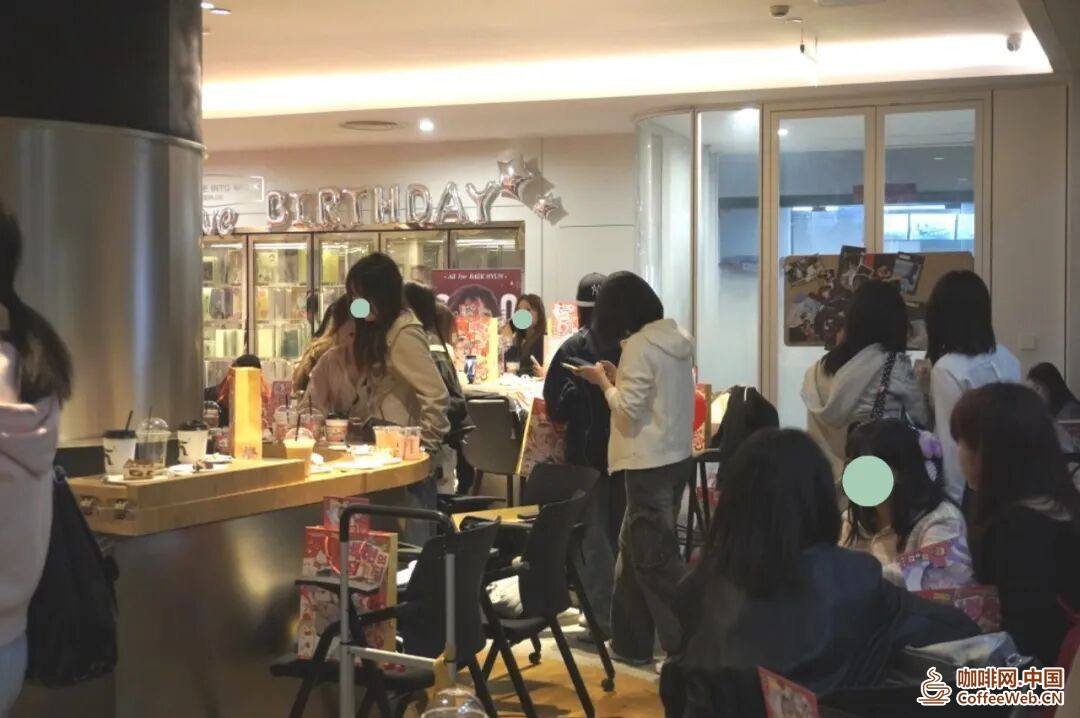
In Chengdu, events like this happen almost every weekend, with anywhere from a dozen to several hundred people at each one. Booking out a coffee shop so fans can celebrate an idol’s birthday seems to have become a phenomenon. So how did this birthday-cafe trend take off, and what has it turned coffee shops into?
Birthday cafes:
Meeting the demand to ‘celebrate an idol’s birthday’
When a group of people who love the same idol dress up on that person’s birthday, bring gifts and good cheer into the same cafe, take photos, swap fan merchandise and meet new friends, the essence of a birthday cafe comes into focus: it is a ritual about ‘liking,’ a happy carnival in which people give one another a sense of recognition and companionship.
Trace birthday cafes back to their roots and you cannot avoid K-pop. Over the past two decades South Korea’s entertainment industry has matured, and the fan-support models that grew alongside it have kept evolving; birthday cafes sprouted from this soil. In South Korea, dozens of idols may share a birthday on the same day, and a single idol can have dozens of birthday cafes.
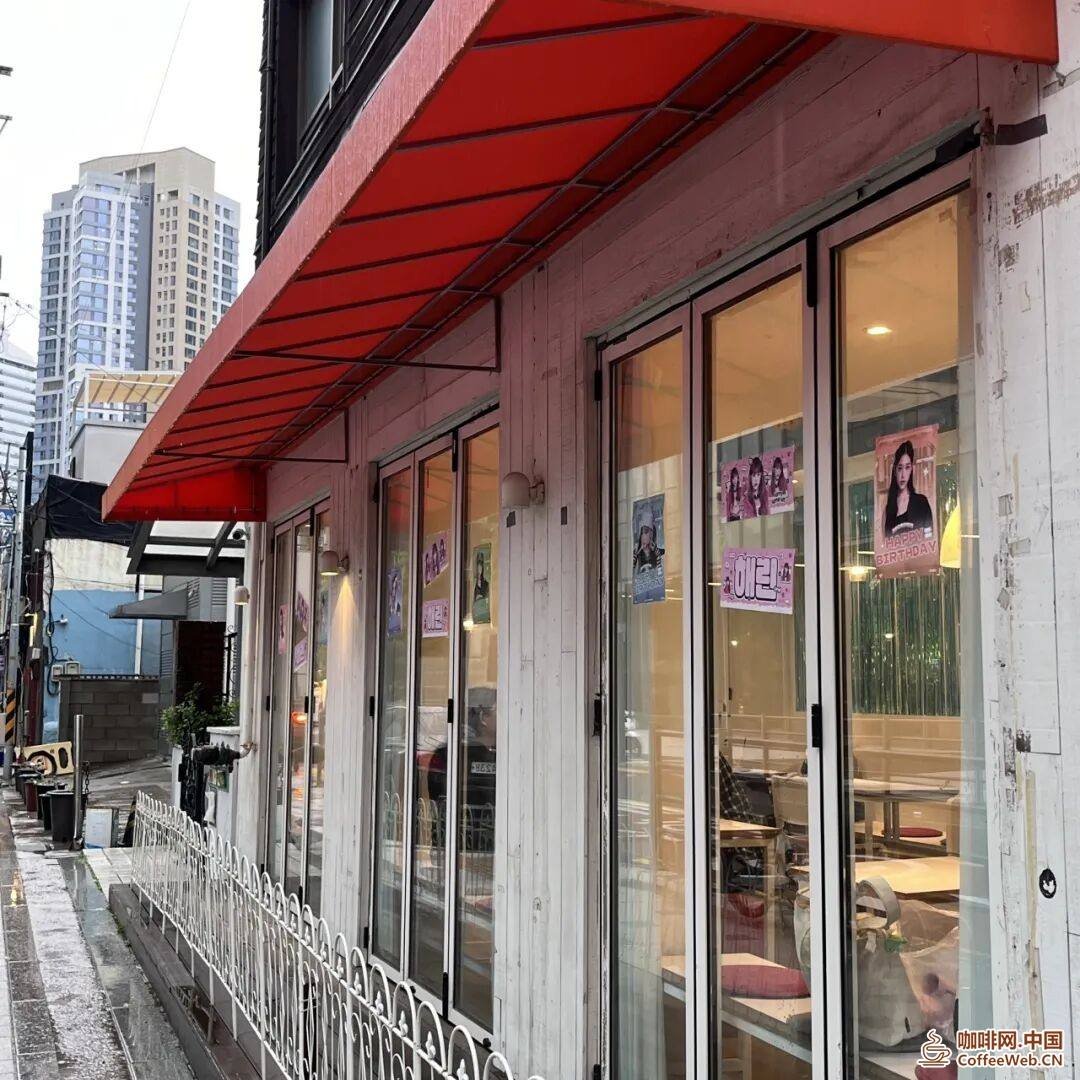
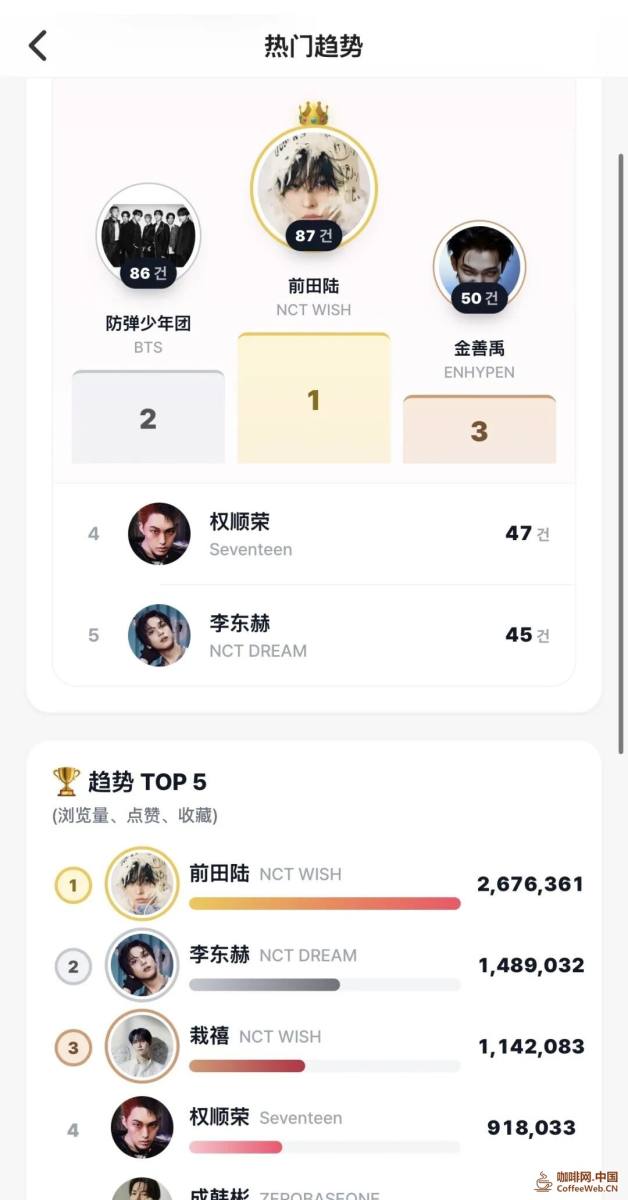
The related industry chain has grown more complete too. South Korea even has apps dedicated to birthday-cafe events, where fans can find times, addresses and other details, as well as book venues and place ads.
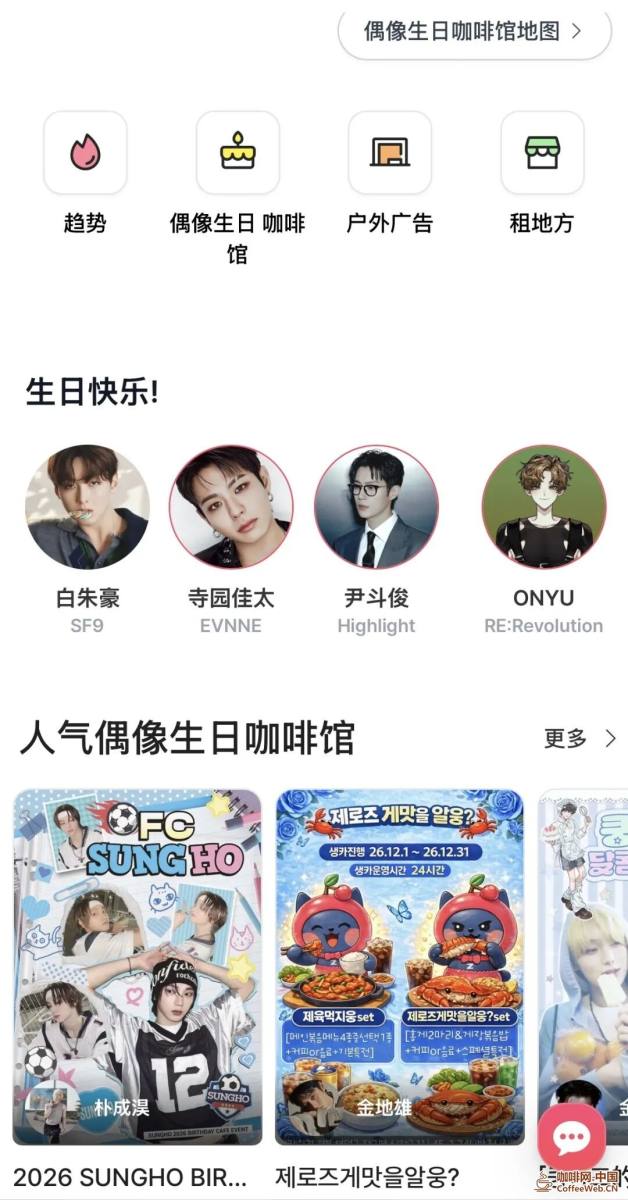
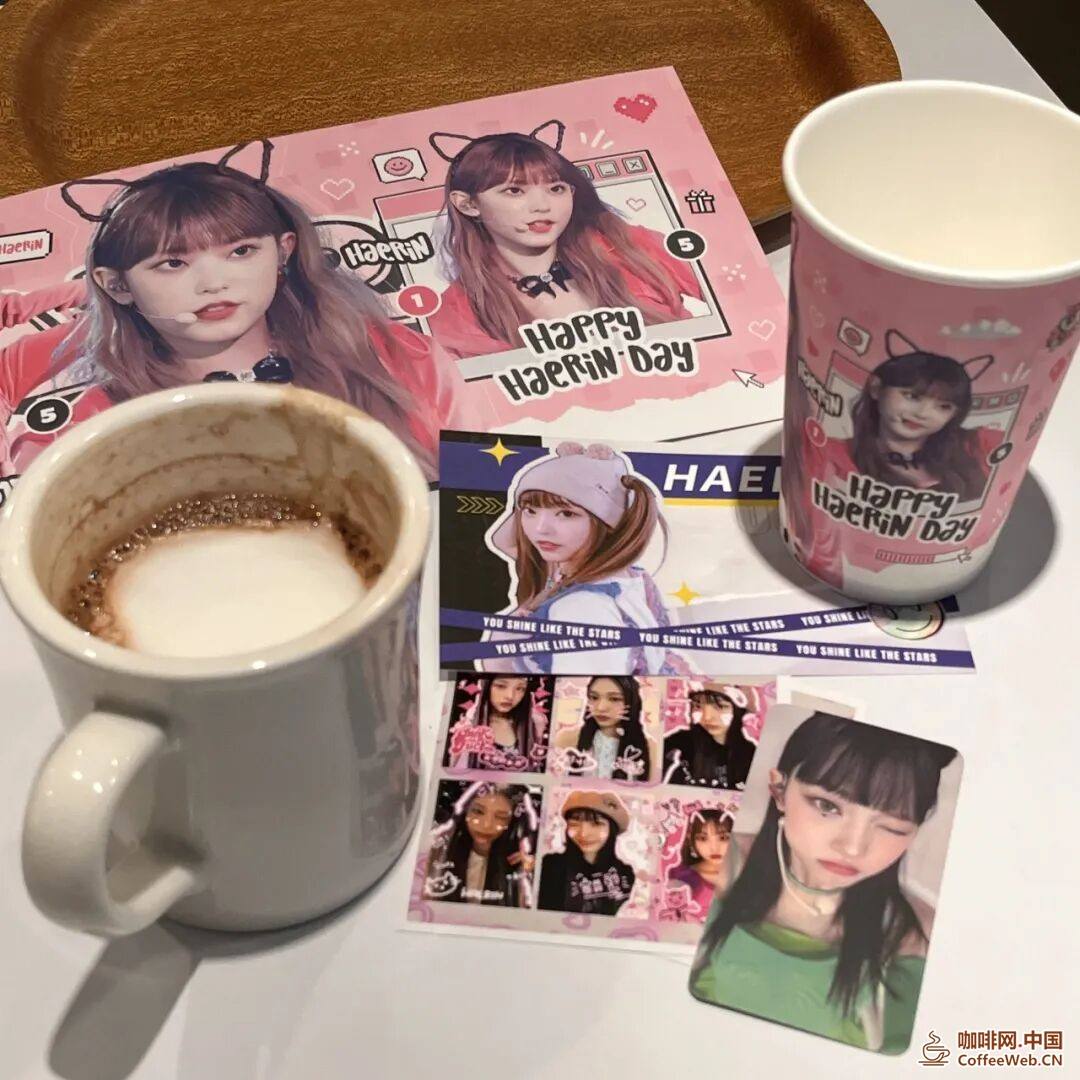
From my own experience and from friends studying in South Korea, I found that Korean birthday cafes are closer in nature to ‘photo check-in spots,’ mostly centered on taking photos, collecting fan merchandise and entering prize draws.
On one trip to Seoul I happened upon a birthday cafe for a NewJeans member below an entertainment company’s offices. The shop looped her dance videos on a projector, displayed her photos on the cabinets, and laid out support merchandise such as cup sleeves and slogan banners on the tables, all available simply by ordering a drink. The fans who came were of all genders, but most ordered a drink alone, took their photos, picked up the gifts and left.
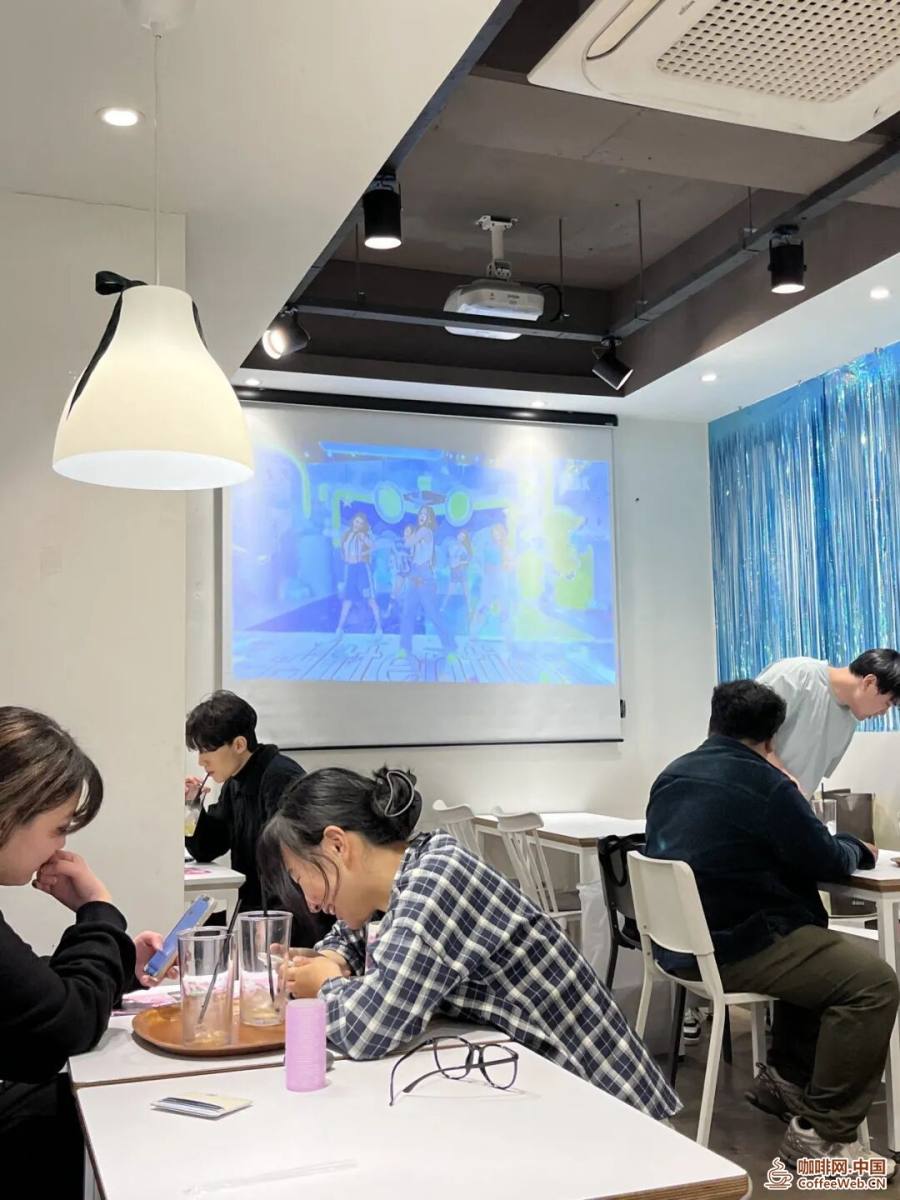
That differs in form from birthday cafes in China.
By contrast, Chinese birthday cafes can be seen as fan parties. Beyond the basic check-in and socializing, organizers arrange screenings, sing-alongs, games, and collective, participatory activities such as random dance, birthday songs and cake cutting. Many attendees may not know one another at all when they arrive, yet by the end of an event they have exchanged contacts and promised to meet at next year’s birthday cafe.
Although birthday cafes only became popular in recent years, fans gathering on their own to celebrate an idol’s birthday is nothing new in Chengdu — it even made the newspapers twenty years ago.
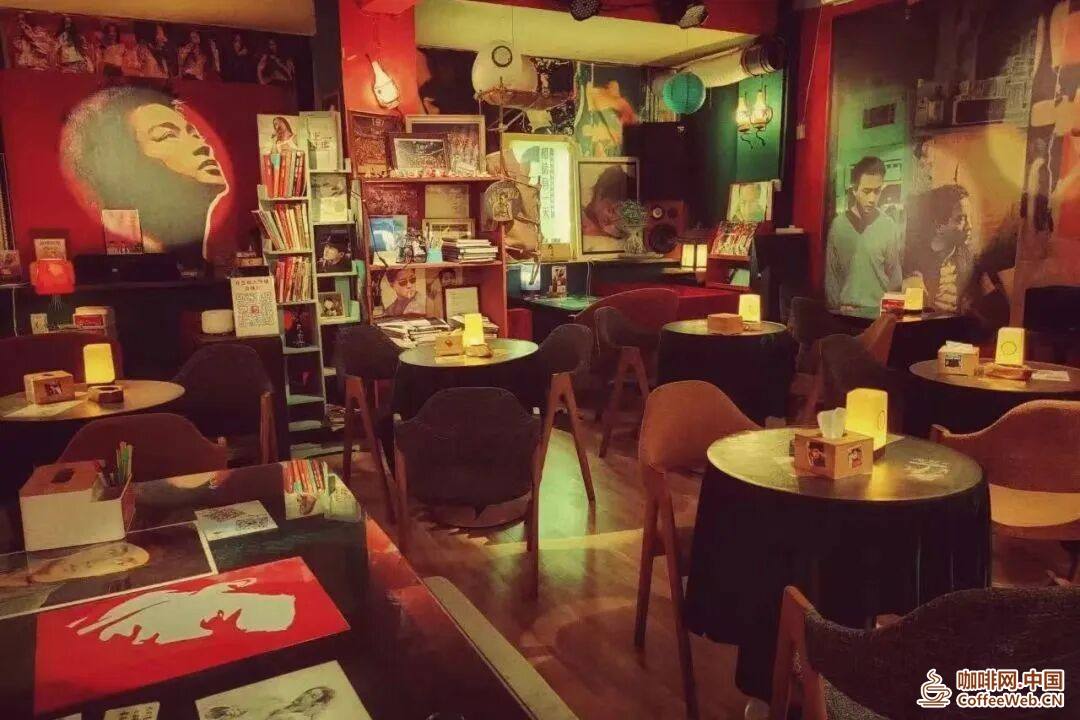
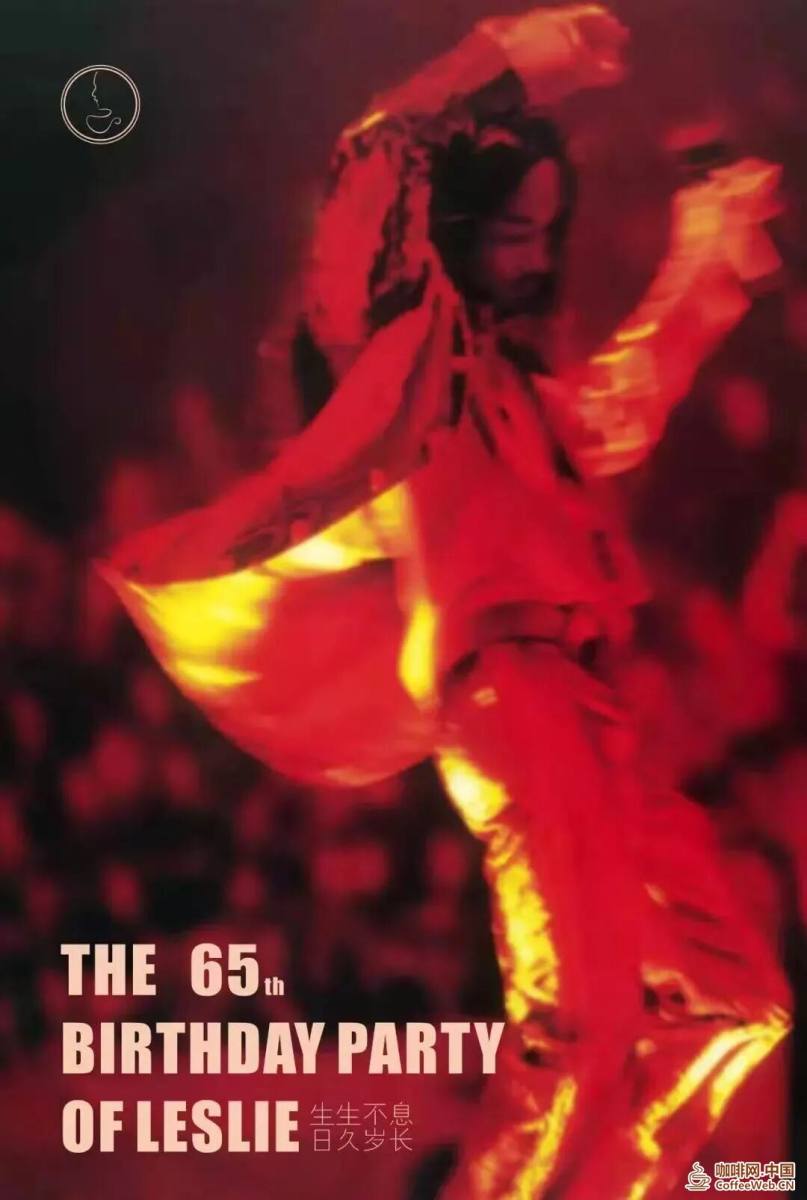
In 2007, a fan of Leslie Cheung opened a themed coffee shop on Chunxi Road, filled with memorabilia related to him. Customers called it ‘a little world for Cheung’s fans,’ and the shop held special events on anniversaries and birthdays. The owner kept it going for nearly two decades.
Also in 2007, on an August evening, fans of Michael Jackson gathered at a bar near Jiuyan Bridge, copying his look, singing his songs and dancing his moves to celebrate his 49th birthday.
In May 2010, Wang Leehom’s Chengdu fans organized a ‘charity birthday party’ at Yigou Trendy Plaza, splitting up to visit welfare homes and donate blood, marking their idol’s birthday through public service.
So why are birthday celebrations gradually moving into independent coffee shops?
Part of it is the influence of Korean birthday-cafe culture, and part is that cafes are better able to meet the new demands of Chinese fans.
The age range of people keen on celebrating idols’ birthdays keeps widening: the older ones may be parents with children, the younger ones still primary or middle school students. Compared with bars and similar venues, coffee shops are clearly better suited to fans of different ages.
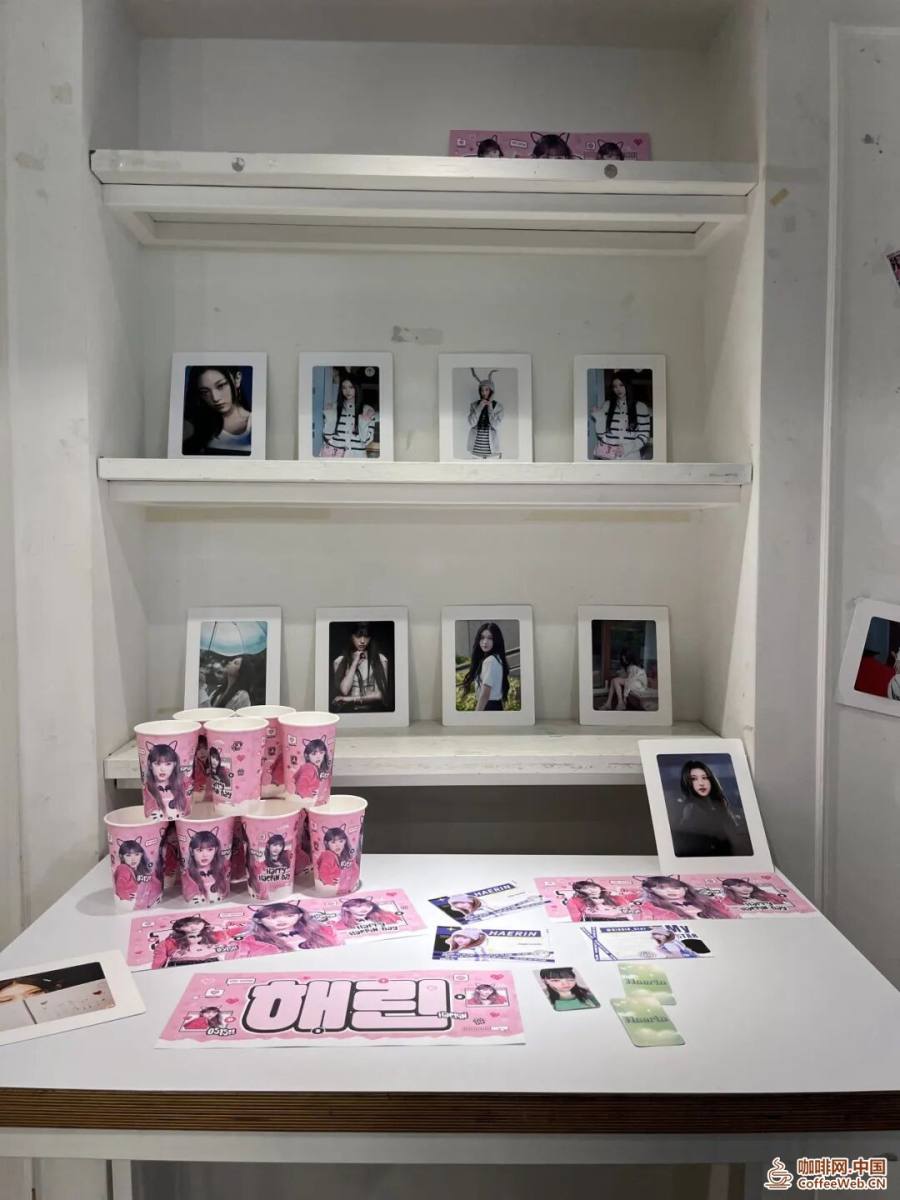
The focus of birthday gatherings has quietly shifted too. In the past, birthday support stressed ‘letting more passers-by see the idol’; today, fans often simply want to enrich their own experience, and care more about interaction within the fan community than about displaying themselves in public outdoor spaces.
Down to more practical matters, a birthday cafe usually includes screenings and games, with a stay of at least two or three hours; it is also a chance for ‘good photos,’ and spatial details such as backdrops, lighting and decor are exactly what fans want.
And coffee shops can satisfy almost all of these needs.
Why did Chengdu get picked for birthday cafes?
In most cases, hosting a birthday cafe requires some form of qualification: either a national fan vote first selects a few host cities and the official fan club then recruits organizers, or organizers apply to the fan club and may host only after meeting standards — for example, the number of fans in that city intending to join must reach a certain threshold.
So why is Chengdu so often chosen, so often one of the cities allowed to host a birthday cafe?
The answer may start with Chengdu’s fan-community economy. Thanks to the city’s openness, however small or niche a circle may be, you can almost always find like-minded people there; seemingly obscure interests tend to grow their own communities in this city, and birthday cafes plug directly into that fan-community economy.
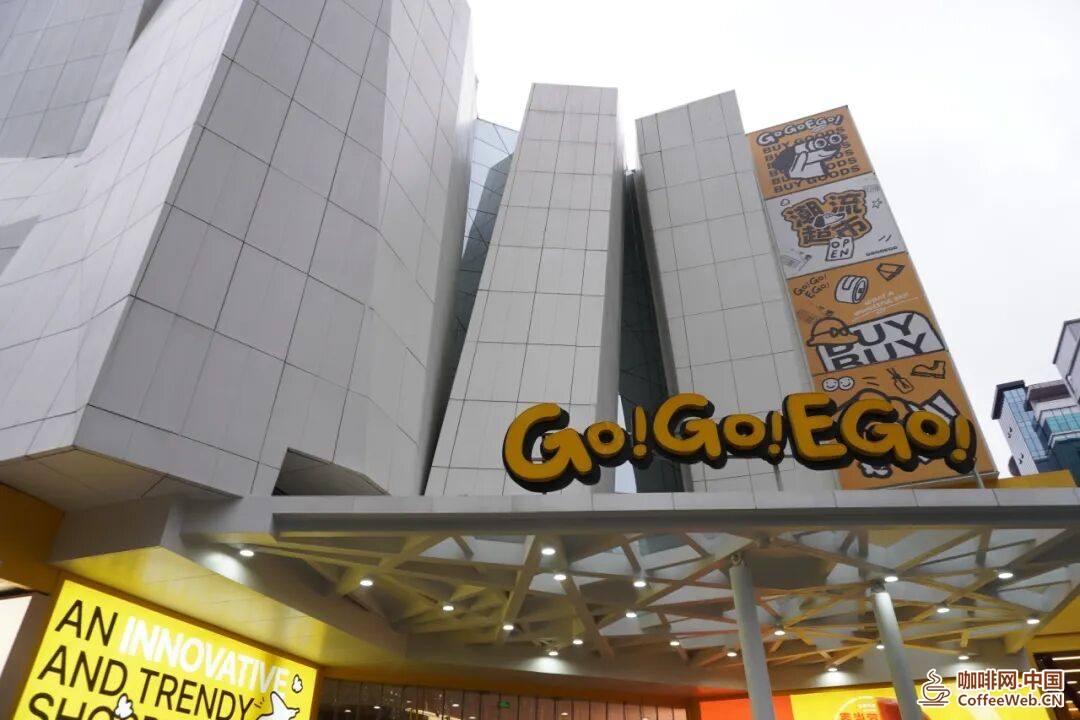
There is no direct count of how many fan communities Chengdu has, but the transformation of complexes like GOGO EGO and Tianfu Red is perhaps a footnote, and concert-market data offers another slice for observation: in 2025 Chengdu hosted 134 large-scale concerts, driving 6.3 billion yuan in combined spending.
Around those concerts, malls also host support events, which brings us naturally to the fan-support culture behind them.
·Check-in spot for the 2026 Wang Sulong concert at East Suburb Memory
Although the term ‘fan support’ only became popular in recent years, similar behavior showed up on Chengdu’s streets long ago, when it was known locally as ‘backing someone up.’
One cannot skip the summer of 2005, when ‘Super Girl’ exploded onto the scene. On Taisheng South Road, Chunxi Road and Zhongshan Square, fans canvassed votes for the contestants they backed, unfurling banners, holding up posters and chanting slogans through megaphones.
Before Li Yuchun’s 2015 concert, fans paid out of their own pockets to promote her: a full-page ad in the Chengdu Evening News, a screen reading ‘Corn worldwide wish the concert success’ looping for seven days on the LED display at the Far Eastern Department Store on Tianfu Square, and the LED at Fuli Tianhui showing classic moments from her concerts over the previous decade right up to the day of the show.
Those were the support methods of ‘Generation Y.’ For ‘Generation Z,’ fan support has changed in form.
Alongside traditional outdoor big-screen support, they also decorate a mall with standees, roll-up banners and other installations during an idol’s birthday week, turning it into a giant tribute display for that person.
So in a city like Chengdu, where support culture is so active, there is never a shortage of people to attend a birthday cafe, nor of people willing to step up and organize one.
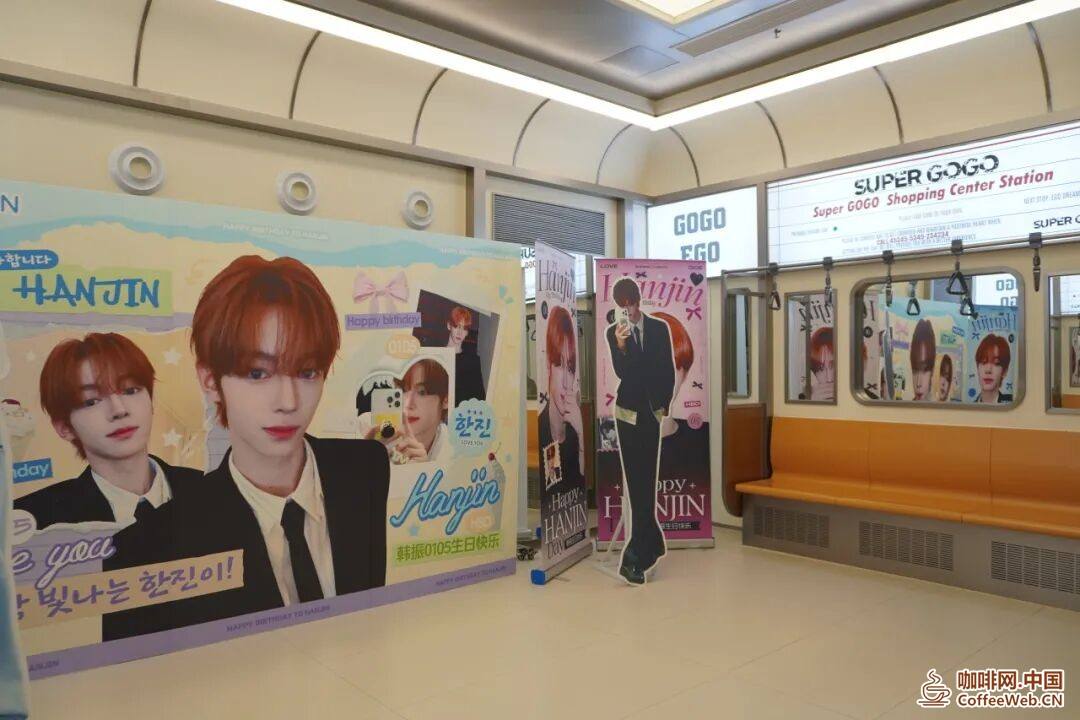
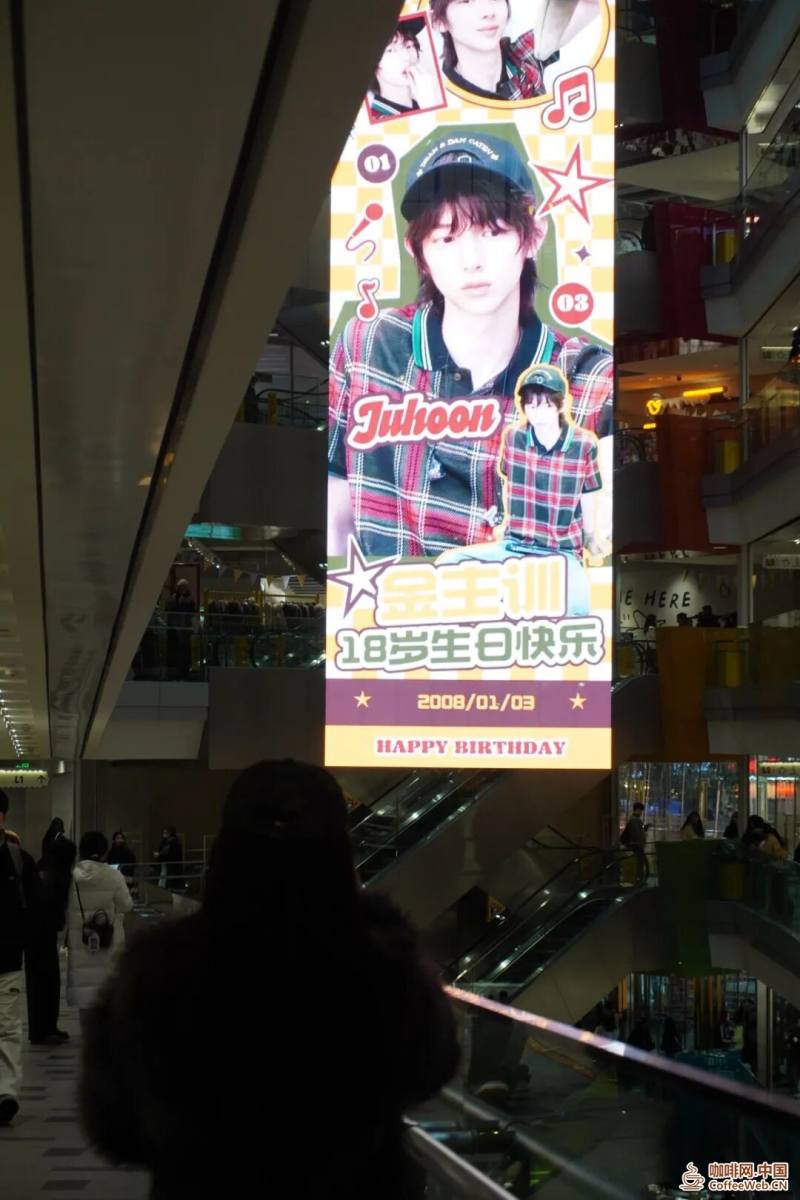
If the fan economy and support culture explain why birthday cafes exist in Chengdu on an emotional level, the city’s mature coffee-shop ecosystem explains them on a practical one.
Birthday cafes break away from dimension-themed complexes like Tianfu Red and GOGO EGO, because they need a venue where people can sit, hold events and enjoy a degree of privacy; as a result they are scattered across districts all over Chengdu.
Figures show that in 2025 Chengdu had more than 7,000 coffee shops; among independent cafes, over half occupy more than 40 square meters, and those above 120 square meters account for 7.41 percent — just enough to meet the most basic spatial needs of a fan gathering.
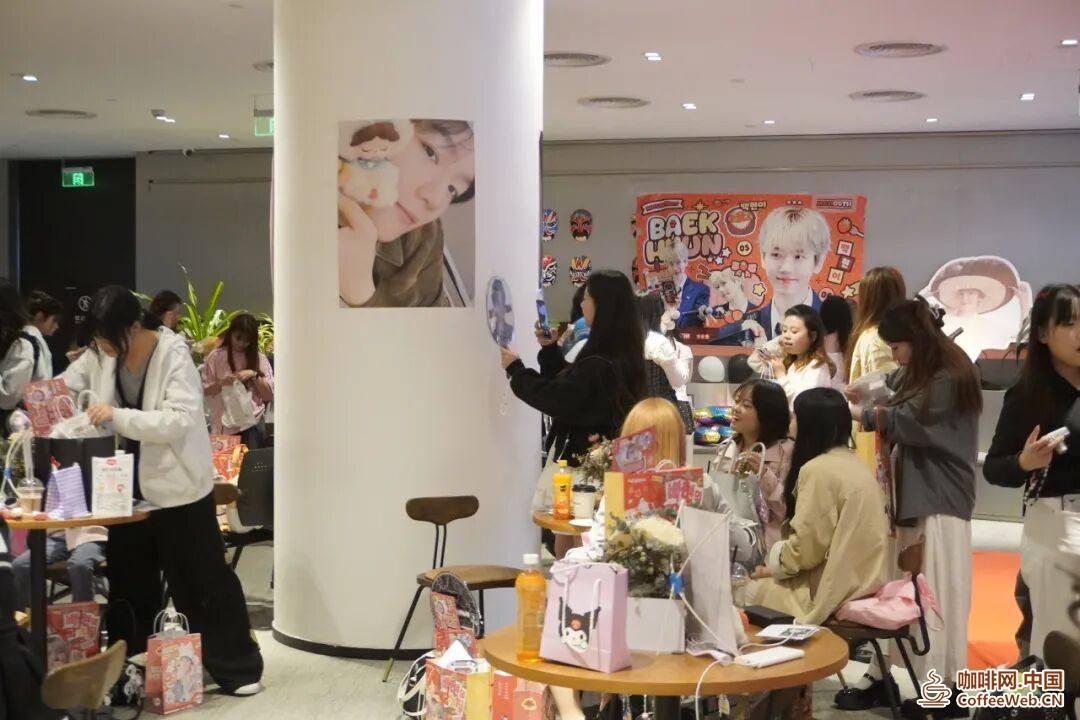
More and more coffee shops are proactively taking on birthday-cafe events, driven both by their owners’ business instincts and by their personal interests.
Many cafe owners today have wide-ranging hobbies. They understand the appeal of support-driven socializing and fan culture, and are sometimes fans themselves; since they have a physical space, they are naturally happy to let other fans fill it with the things they love.
What’s more, besides socializing, an important part of a birthday cafe is ‘merch swapping’ — fans exchanging the support items they made themselves — and behind that lies another player in the birthday-cafe industry.
In the past, support merchandise usually required an order of several hundred or thousand pieces before production could start. As the printing industry has developed, small personal custom runs are now possible: items like keychains and charms can be ordered in quantities as low as ten, produced and shipped within 48 hours. Fans can buy ready-made products directly from manufacturers, or design their own and have a factory make them.
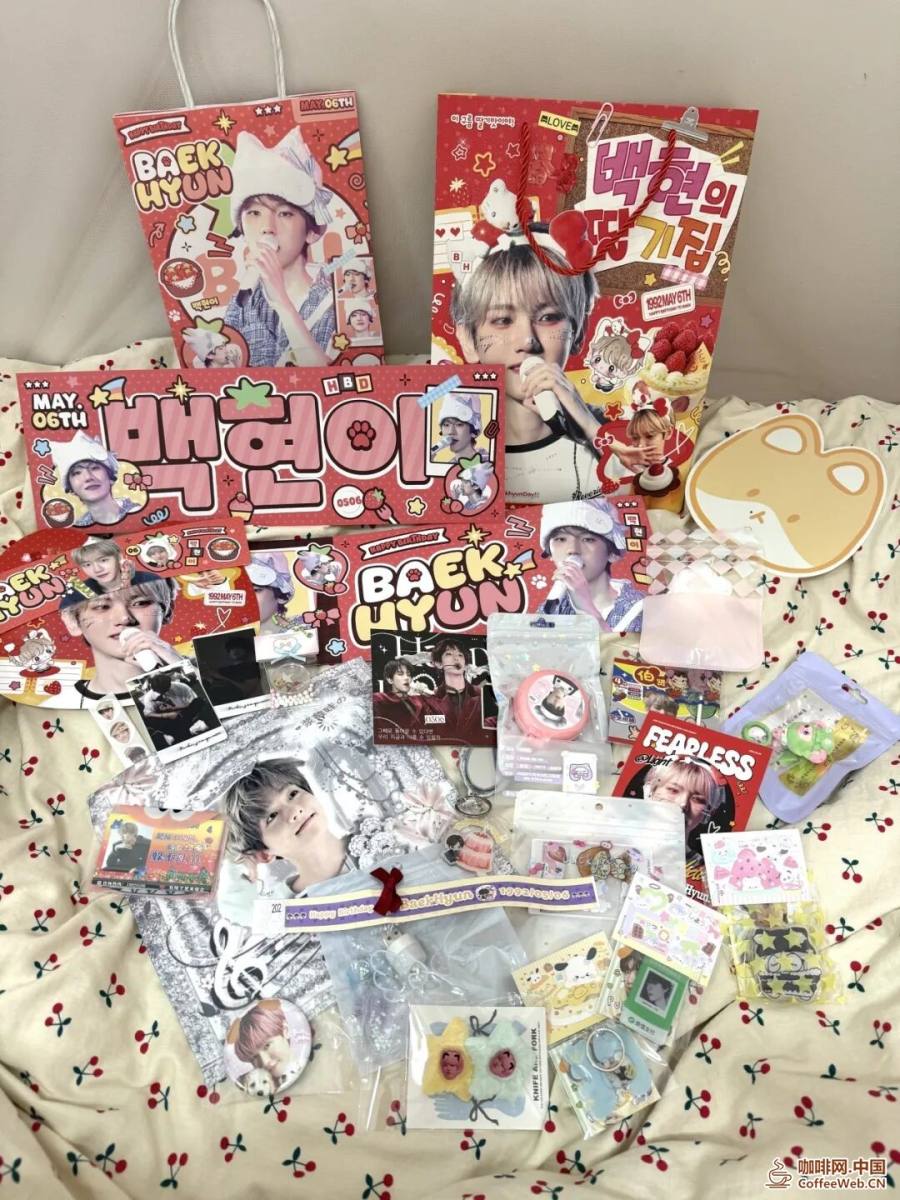
Printing has also grown more specialized and refined. Beyond basic support merchandise such as photocards, slogan banners and posters, it can produce custom combs, night lights, bath towels… it seems the only limit is what you can imagine.
Just search ‘support merchandise production’ on Taobao, set the shipping location to Chengdu, and the results page seems to scroll on forever. A mature local printing supply chain makes small-batch custom orders far more convenient for Chengdu fans.
That is why every participant in a birthday cafe gets to experience ‘merch swapping.’ These gifts are not expensive, but in the exchange people deepen their emotional investment in the idol while gaining companionship and satisfaction through interacting with others, building shared memories around symbols both sides recognize.
Coffee shops:
From ‘selling drinks’ to ‘selling emotion’
Gatherings are nothing new — you could simply rent a hotel banquet hall or a performance hall and organize one. But when you weigh headcount, budget and atmosphere together, a coffee shop is the best fit for a birthday cafe.
It need not be large — room for a few dozen or a hundred people is enough — and it need not be formal; the relaxed vibe of a cafe is exactly what supports the ‘carnival’ of a birthday cafe.
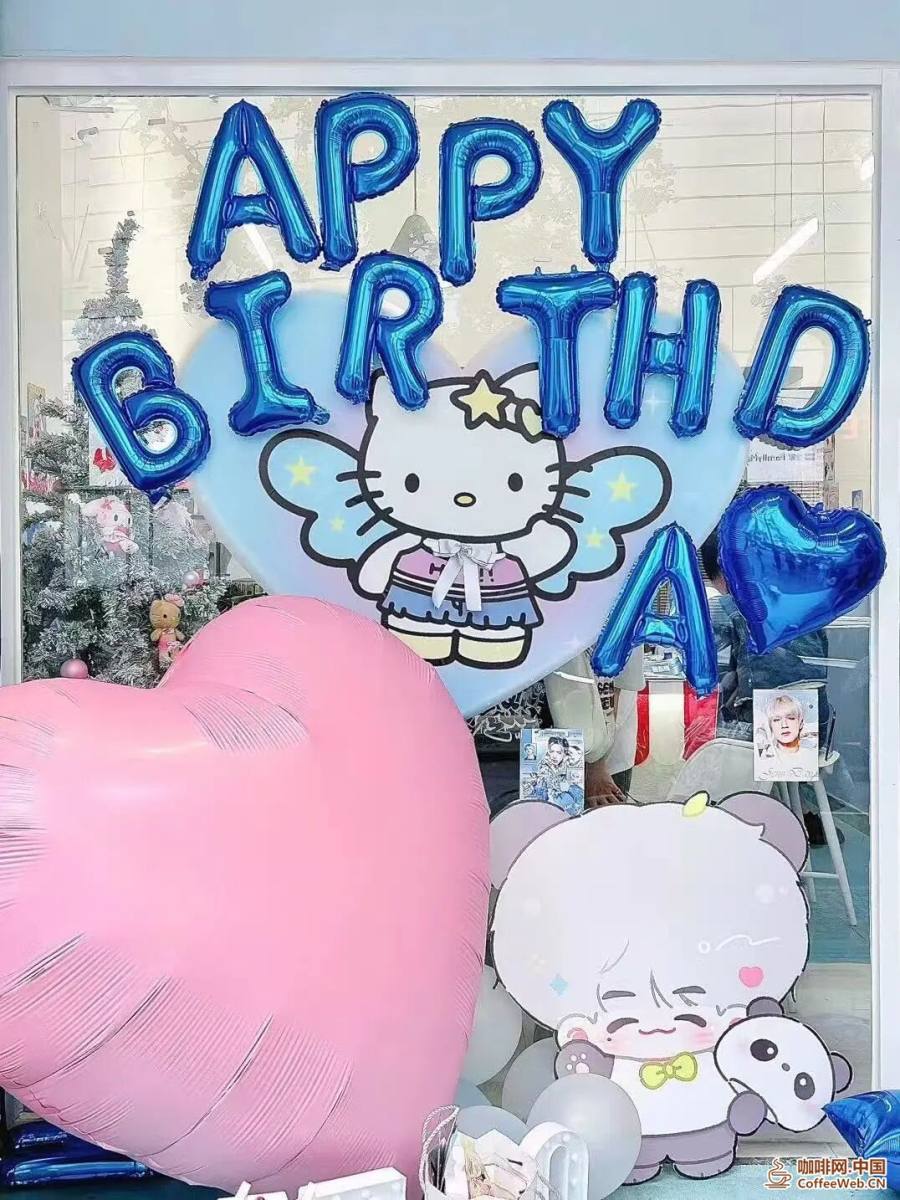
More importantly, the cooperation model between fan groups and coffee shops is usually a ‘consumption offset’: the shop provides the venue for free, while the fan group buys drinks and desserts at regular prices or through a birthday-cafe set menu.
For organizers, this is a ‘zero-cost venue booking’ plan.
One birthday-cafe organizer, @Caramel Clock, told me: ‘Last time we went fairly lavish and spent 4,000 yuan; usually 2,000 is enough.’ That money goes to custom merchandise, commissioned artwork and on-site decoration, split among several organizers — purely ‘powered by love.’ For organizers who have to cover other costs themselves, waiving the venue fee greatly eases their financial burden.
This model benefits the coffee shop as well.
Competition in the coffee industry only keeps growing, and many shops are layering new offerings onto their business in search of fresh possibilities — consignment sales with cultural-creative brands, record sales that turn them into music spaces — and birthday cafes are another direction worth trying.
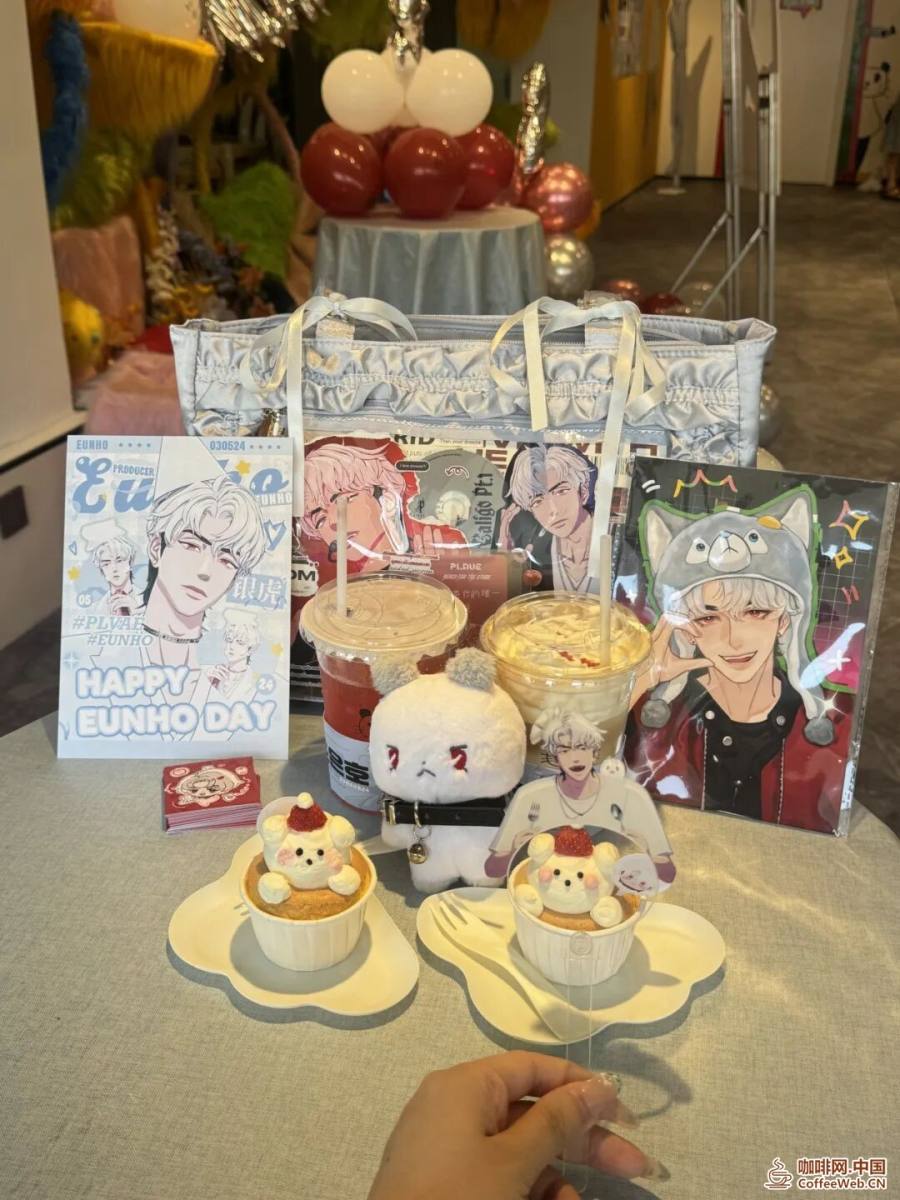
Hosting a birthday cafe takes up half a day of business hours but brings steady foot traffic, spending and exposure. Take ‘Jiaozi & BEEPLUS COFFEE’ on Jinke North Road: on weekdays it serves office workers, and on weekends it hosts birthday-cafe events. With about 1,000 square meters of space, it is roomy enough to draw well over a hundred fans at a time, at 50 yuan per person for the set menu — one can imagine what the final takings look like.
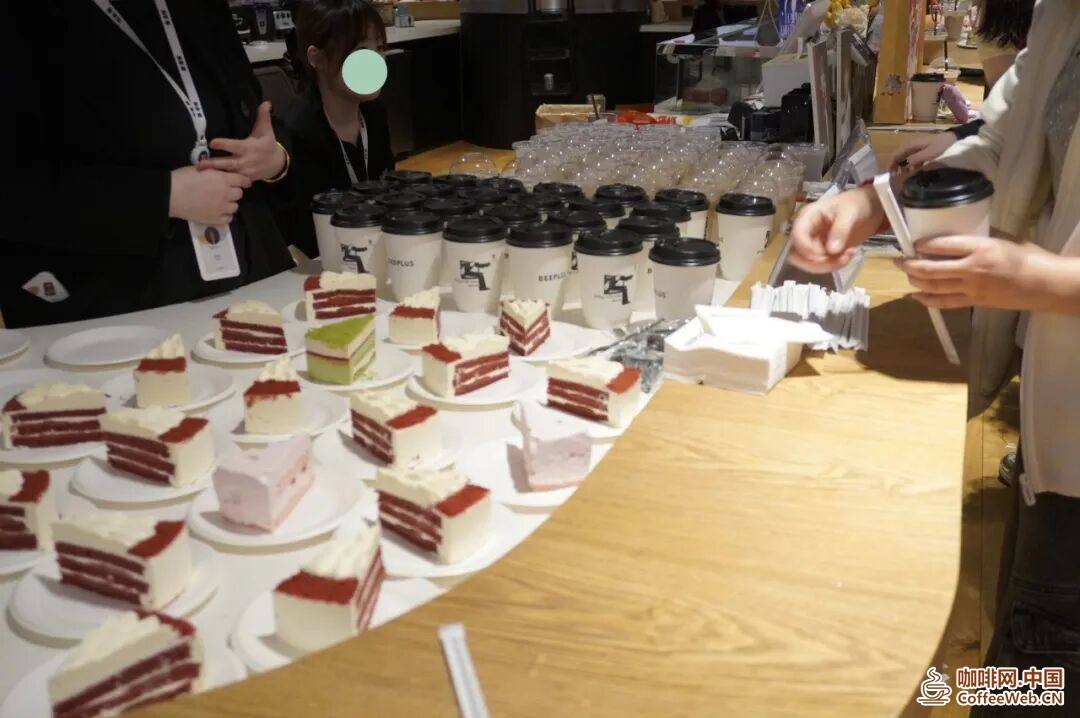
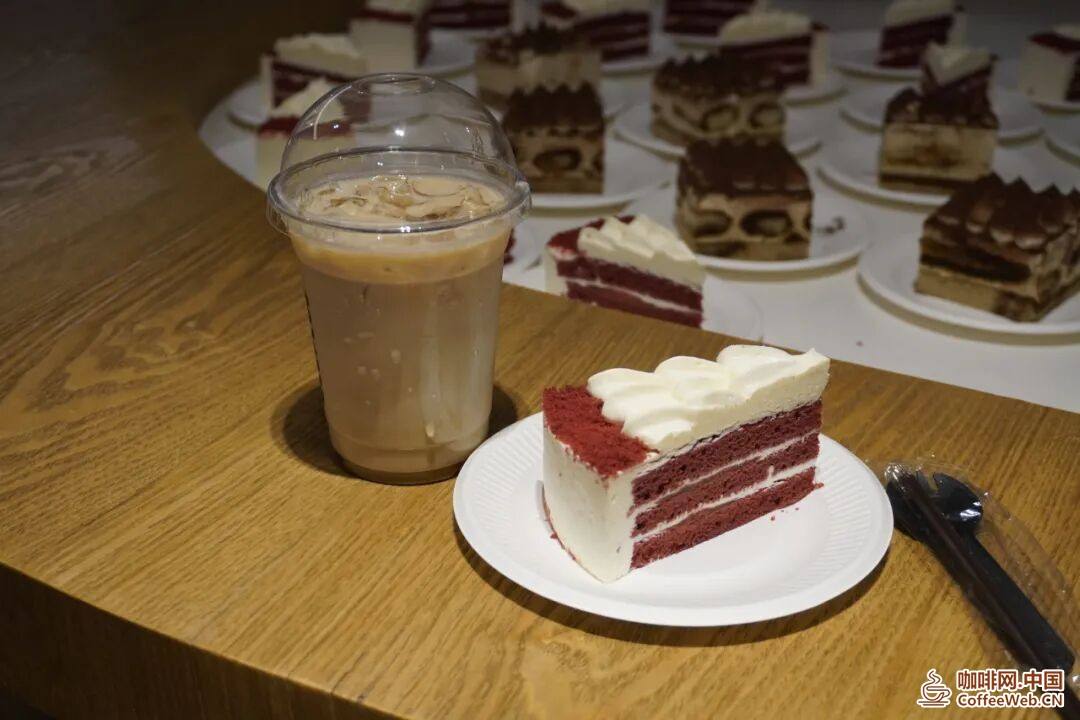
The birthday idol’s reach can also amplify the shop’s own visibility: when attendees post photos on social platforms, the comments always include ‘Where is this?’ and ‘I want to go.’
And so more and more coffee shops are actively advertising that they can host ‘birthday cafes.’
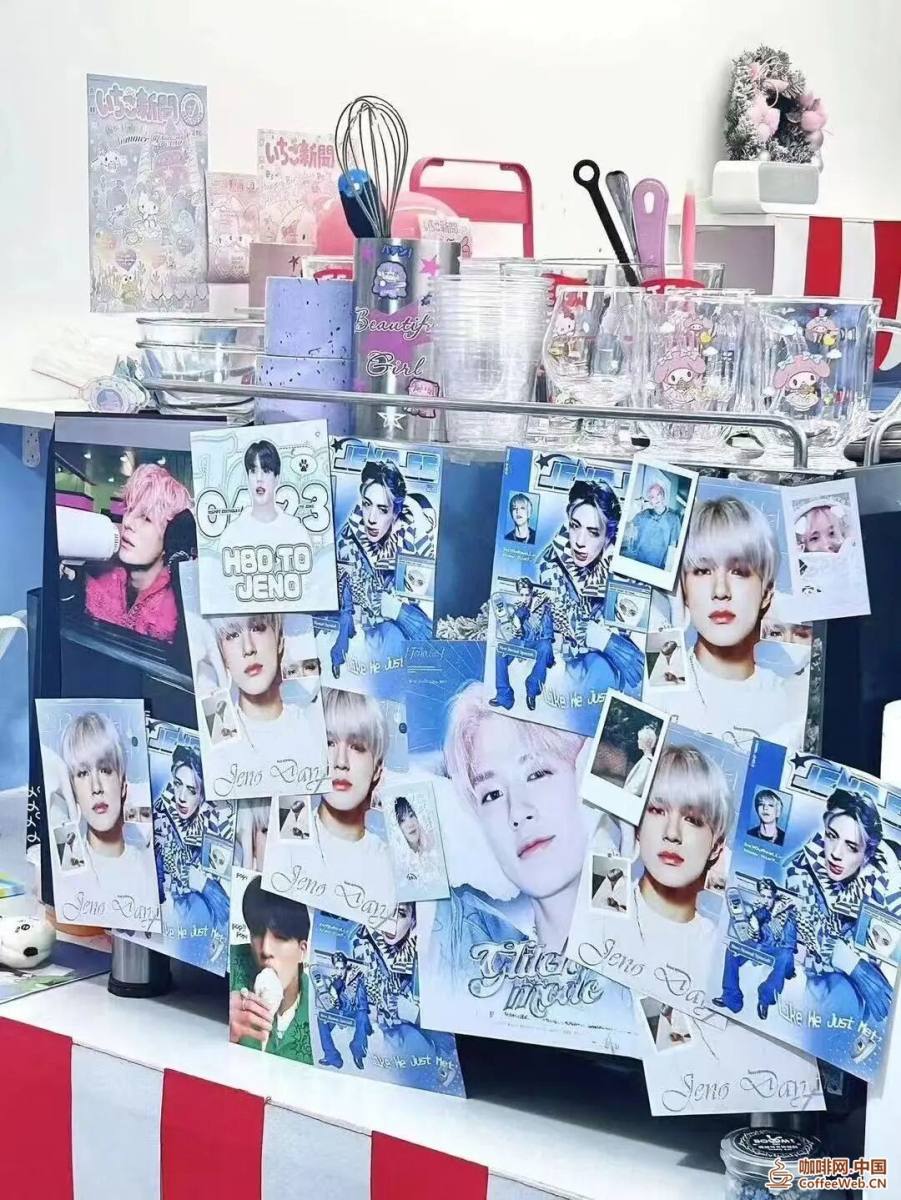
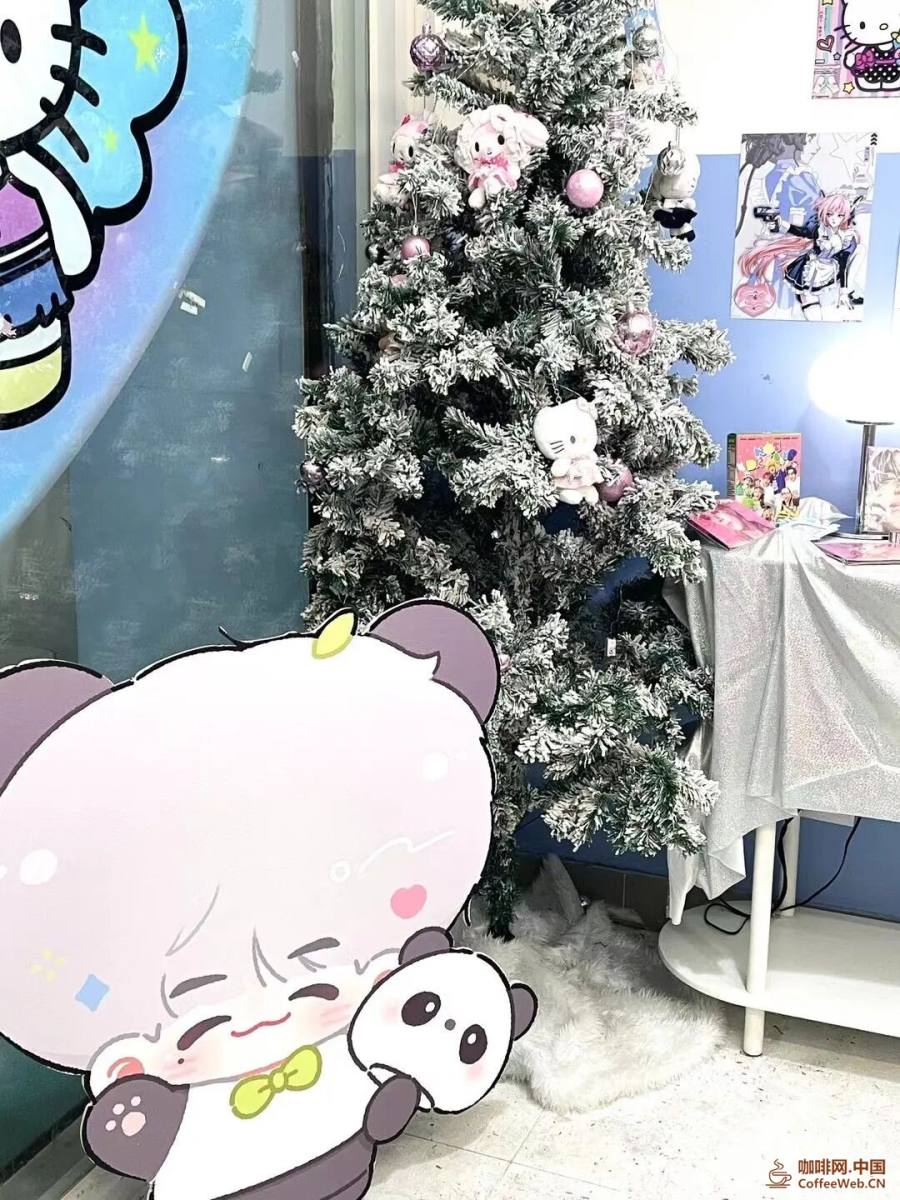
Before a birthday cafe begins, every coffee shop goes through a flash-mob-style, large-scale makeover. Organizers are free to arrange the decorations they have prepared, replanning and reinterpreting the shop’s style and functional zones so the cafe takes on an emotional dimension.
For example, big posters cover the shop’s original wall decor, a table at the entrance becomes a check-in desk, installations in open space become photo zones, areas where many can stand become social zones, and tables and chairs become rest areas…
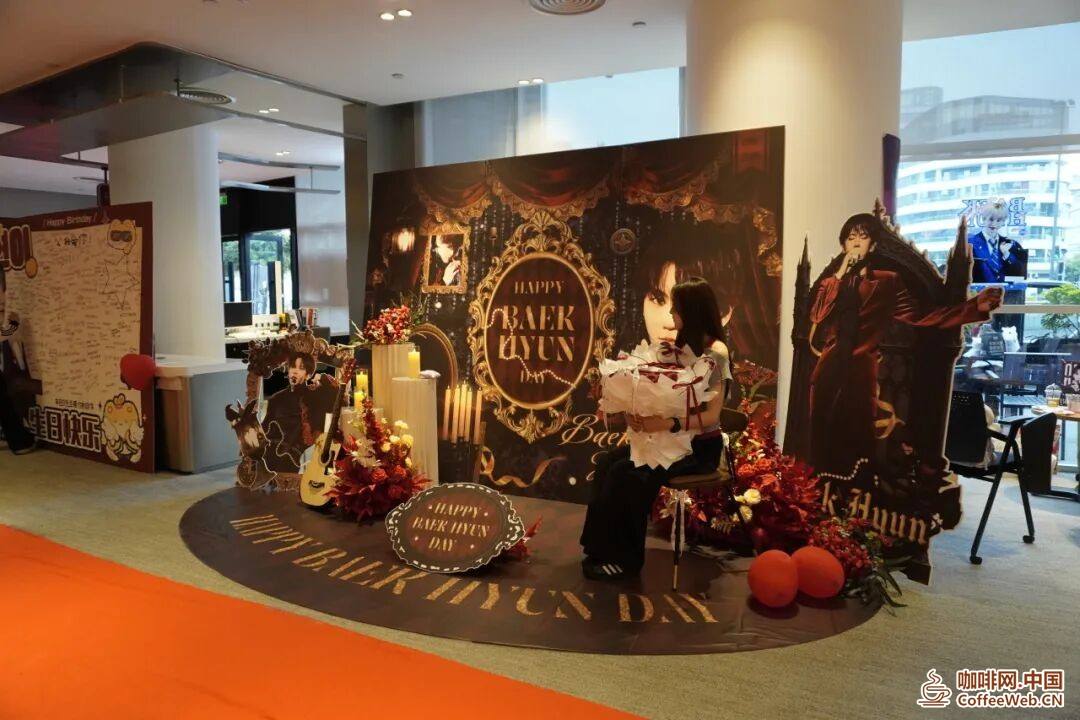
The coffee shop provides the space, while fans fill it with content and emotion; the same cafe can look completely different depending on whose birthday is being celebrated.
For most organizers and fans, the taste of the drinks is the last thing considered at a birthday cafe — the venue and service rank higher — so coffee shops are working to sharpen their competitiveness on exactly those fronts.
For instance, ‘Zhaojidi Cafe,’ which has hosted many birthday cafes, states in its venue guide that it can provide projectors, sound systems, microphones and other equipment; the person in charge has event-planning experience and can help organizers run activities; and its location near Gouciyuan K88 means the outdoor big screen is another usable resource.
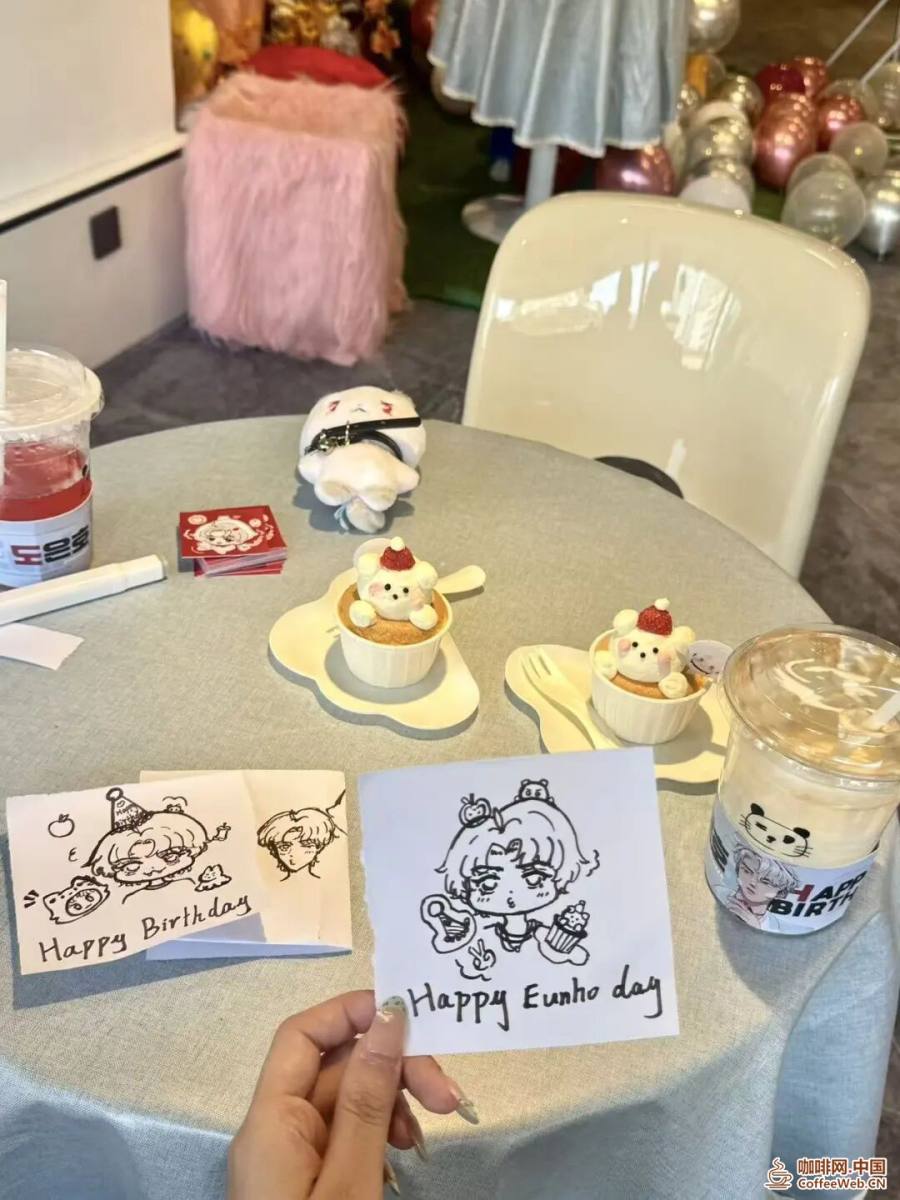
The two sides’ needs clearly fit: fans need a space that can hold emotion, while coffee shops need content that keeps drawing people in; spending is driven by the fan community, and the shop actively supports the event — only then does the cooperation model reach its best outcome.
The model is also sustainable and repeatable, because there is always some idol having a birthday and always fans to celebrate it. One birthday cafe may barely have ended before the space is cleared for another the next day, and scheduling conflicts are common; and someone attending Idol A’s birthday cafe today may be a fan of Idol B, so if they become an organizer next time, they may well choose the same place.
And so the birthday-cafe trend blew up, circulating internally while spreading outward.
Birthday cafes turn public space into emotional space, move the online ‘Super Topic’ fan forums offline, and reinterpret the ‘third place’ value of the coffee shop.
The meaning of ‘shengka’ keeps expanding too. ‘Sheng’ no longer refers only to a birthday; it can be an anniversary or a debut anniversary. The honoree need not even be a real person — it can be a game or anime character, or a series or a character within one; someone once celebrated Severus Snape’s birthday from Harry Potter at a cafe in Wenjiang.
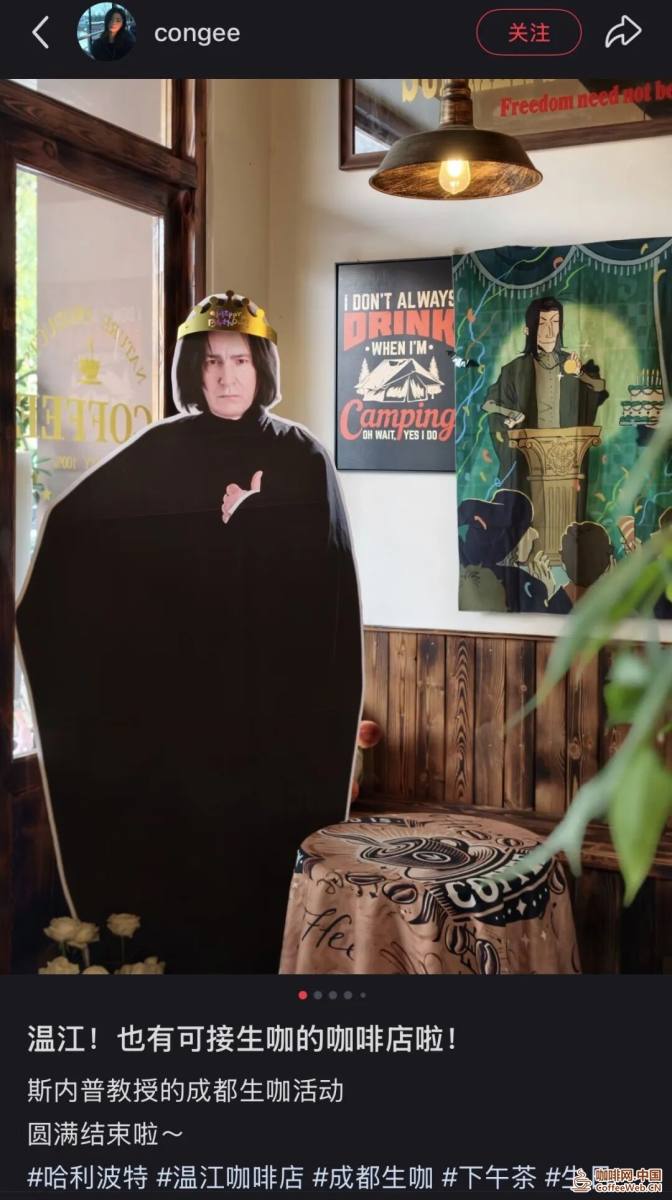
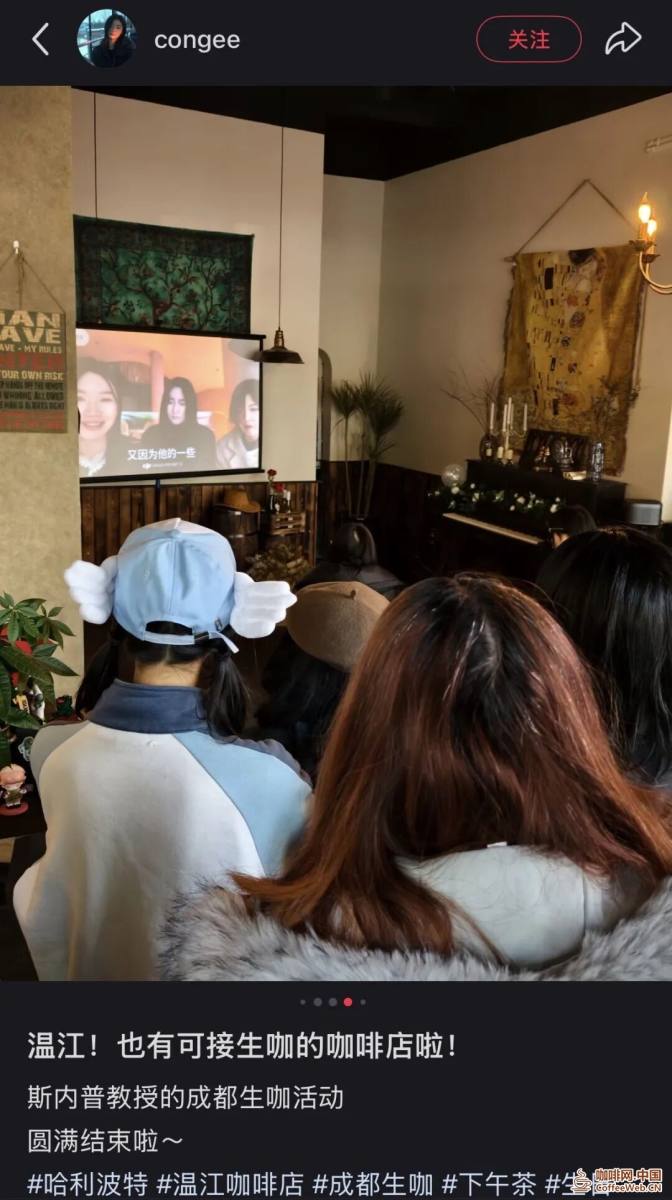
‘Ka’ is no longer limited to coffee shops either: flower shops, dessert shops, McDonald’s… any space that can provide a venue and service could host the next birthday cafe.
When it comes down to it, fans are not looking for a cup of coffee because of an idol’s birthday; they are looking for a place where they can safely share their feelings with one another.
Today it happens to be a coffee shop; tomorrow it could be something new.
Written by / Xiaoyu
Images / Xiaoyu, Roxy, roesi
Original title: ‘Trading Space for Foot Traffic? Coffee Shops Are Getting into the Fan Business’
Fresh coffee:
Catch the demand for ‘living for idols’
Why was Chengdu chosen by the coffee industry?
coffee shop:
From ‘selling drinks’ to’ selling emotions’
Writing/Xiaoyu
Image source/Xiaoyu Roxy,roesi
Reprint Notice and Disclaimer
- This article was compiled and edited byCoffee Network coffeeyo.com; the materials and images in the text come from public sources, and the copyright belongs to the original authors. This reprint is solely for sharing information within the coffee industry and does not represent the position of this site; all data and views are as in the original. We thank the original authors for their work and for sharing.
- For matters involving content authorization, attribution, copyright or other issues, please contact this site promptly; we will verify and cooperate at the first opportunity. We also welcome coffee-growing regions, brands and industry media to exchange ideas and contribute articles.
- Coffee Network contact: Tel 400-0000-641 (+86-18288016826) | Email 478203668@qq.com | Address: Jinghong, Xishuangbanna, Yunnan Province / Tieling, Liaoning Province
Related Reading
 Jiangxi Wuyuan: Rural Coffee Unlocks New Cultural Tourism Formats
 Jiangxi Wuyuan: Rural Cafes Unlock New Cultural Tourism Formats
 Global quality goods gather at Hongqiao Import Commodity Exhibition Center, setting "Chinese standards" for coffee
- Global premium products gather to set China's coffee standards as Hongqiao Import Commodity Exhibition Center keeps the CIIE spirit alive
- Global quality goods gather as Hongqiao Import Commodity Exhibition Center and CIIE forge lasting partnership to set China's coffee standards.
 Zhejiang "Science Cafe" Promotes Embodied Intelligence in Real-World Scenarios


 Liaoning ICP Security No. 21122402000217