


At a Glance (China Coffee Network): In midsummer July, at the Xinhua Agricultural Base in Tanjiao Village, Naji Town, Enping City, Jiangmen.
In midsummer July, at the Xinhua Agricultural Base in Tanjiao Village, Naji Town, Enping City, Jiangmen. Oil-tea trees spread a patch of dense shade, and 20,000 coffee seedlings stretch out tender leaves, growing better than expected. This is a new move in Jiangmen’s “Qiaodu Coffee” industrial layout, and also a “cross-border” attempt by Naji, this traditional tea township.
Recently, Jiangmen issued the “Jiangmen City Action Plan for Promoting High-Quality Development of the ‘Qiaodu Coffee’ Industry (2026-2028)”, explicitly proposing to build a “1+2+5” coffee industry system, namely one Tianlu Mountain specialty coffee planting industrial belt, two major industry platforms and five county-level distinctive coffee industry bases.
Among them, the Tianlu Mountain specialty coffee planting industrial belt is jointly built by Kaiping and Enping, relying on the Guangdong Jiangmen National Agricultural Science and Technology Park to create a core area for specialty coffee planting in the hometown of overseas Chinese and a demonstration site for coffee agriculture-culture-tourism integration.
Writing a “New Article” in “One Leaf”
Naji Town is located at the southwestern end of Enping, surrounded by mountains; its forested hills are warm, humid and rainy with loose soil, and its climatic conditions are uniquely favorable, so it has long been a producing area of high-quality tea. In recent years, Naji Town is no longer satisfied with growing only tea, and has turned its gaze to the broader under-forest space; taking the strengthening of “one leaf” as the lever, it explores the composite planting of “tea, medicine and coffee” and accelerates the building of an eco-agricultural sightseeing park.
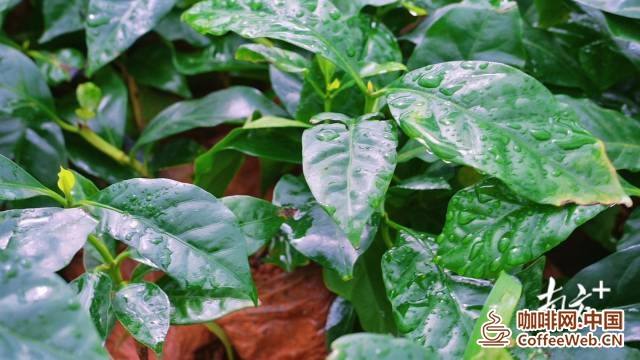
“Tea and coffee co-cultivation” is precisely the core proposition of this exploration. Naji Town took the lead in piloting at the Xinhua Agricultural Base in Tanjiao Village, interplanting coffee with oil-tea trees under shade – the oil-tea trees form a natural “sunshade” in the upper layer, while coffee grows quietly in the lower layer. At present, the base has planted about 20,000 coffee seedlings of the Sarchimor and Catimor varieties from Yunnan.
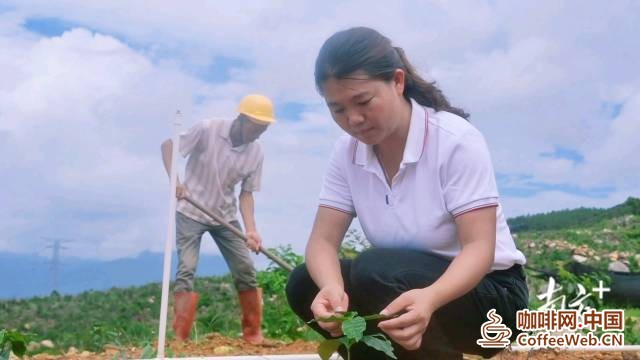
“Under a full-shade planting model, coffee seedlings grow faster – this is a pleasant surprise we discovered in practice,” introduced Lu Linying, head of the Xinhua Agricultural Base. “Naji’s climatic conditions and altitude are very suitable for coffee growth; only one month since planting, the seedlings’ growth has already exceeded expectations.” This three-dimensional planting model of “oil-tea above, coffee below” does not affect the returns of the original economic forest, while providing coffee seedlings with a natural half-day-sun environment.
One mu of forest land, two harvests – both ecological and economic benefits are gained.
From “Not Daring to Plant” to Being the First to Try
The people of Naji are skilled at growing tea, but facing coffee, this “outsider”, at first they were not at ease. In recent years, local coffee estates in Jiangmen have successively achieved mass-production breakthroughs, letting the people of Naji see the possibility that “we can grow it too”.
The Jiangmen City conference on further implementing the “Hundred Counties, Thousand Towns and Ten Thousand Villages High-Quality Development Project” to promote coordinated urban-rural and regional development was held recently, explicitly proposing to deeply cultivate distinctive modern agriculture, thoroughly work on the “local specialties” article, and build the “1+2+5” coffee industry system. This deployment pointed out the direction for the development of Naji Town’s distinctive agriculture and strengthened confidence in coffee trial planting.
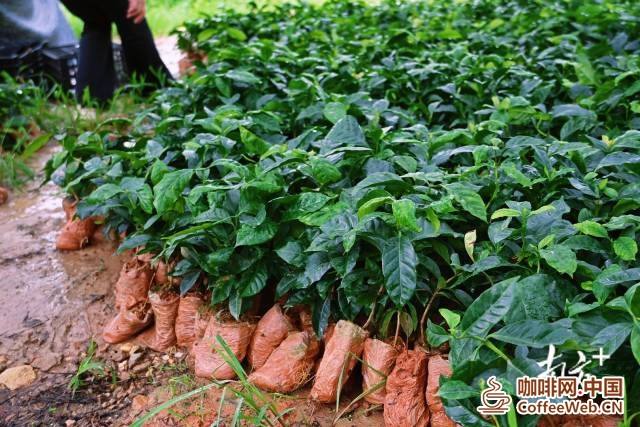
“Once this batch of coffee seedlings is successfully trial-planted and farmers see tangible benefits, their enthusiasm for planting will rise,” said Xue Fushen, the person in charge of agriculture in Naji Town. Next, Naji Town will closely follow the deployment requirements of the “Hundred Counties, Thousand Towns and Ten Thousand Villages High-Quality Development Project” and the rural revitalization industry development plan; once trial-planting data stabilizes, it will steadily expand the planting scale, improve supporting facilities, and explore an “enterprise + farmer” order-based cooperation model, letting the tiny coffee become a “golden bean” that enriches the people and revitalizes the village.
Plant Coffee, Grow Hope
Lu Linying looked at the patch of green seedlings before her, eyes full of expectation. “In two or three years when they bear fruit, if the harvested coffee beans can be roasted and processed locally and then labeled ‘Made in Naji’, that would truly give a sense of belonging.”
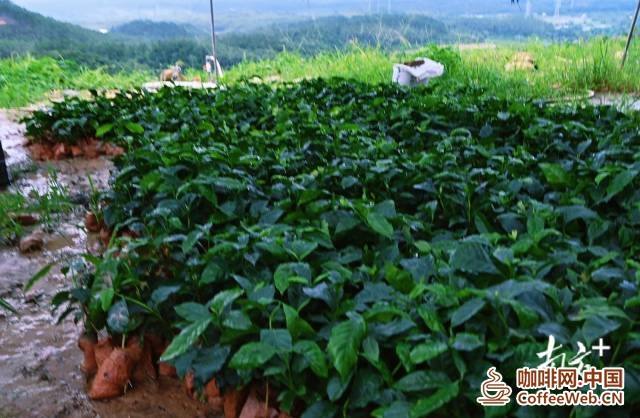
From tea to coffee, from single planting to the co-cultivation of “tea, medicine and coffee”, the value of this land goes far beyond tea – under-forest space and four-season landscapes are all resources that can be revitalized.
In the more distant blueprint, this agricultural base will also incorporate elements such as eco-sightseeing, letting tourists view flowers and pick tea in spring, pick oil-tea fruits in autumn, and taste coffee in all four seasons, turning the plantation into a “check-in spot” integrating agriculture and tourism, accumulating valuable experience for the large-scale development of Enping City’s coffee industry.
As the mountain breeze passes, oil-tea leaves rustle, and coffee seedlings under the shade sway gently with the wind. What these seedlings carry is not only the dream of traditional agriculture transforming into a high-value-added industry, but also the hope of an industry growing from nothing to something, and from something to something better.
Reported by: Nanfang+ reporter Zhang Jingyuan
Correspondents Yuan Jiawei and Huang Cuiping
Photography/Video: Feng Yijin
Editor: Wang Ziyu Responsible editor: Liu Jingyu
Create a ‘new article’ in ‘One Leaf’
From ‘dare not plant’ to ‘try first’
Planting coffee, hoping to grow it out
Reported by: Southern+Reporter Zhang Jingyuan
Correspondent Yuan Jiawei and Huang Cuiping
Photography/Video: Feng Yijin
Reprint Notice & Disclaimer
- This article has been edited and compiled by China Coffee Network. The information and images therein come from public sources and the copyright belongs to the original author. This reprint is intended solely for information sharing within the coffee industry and does not represent the views of this website; all data and opinions are subject to the original article. Our thanks to the original author for creating and sharing it.
- For matters concerning content licensing, attribution, copyright or otherwise, please contact us promptly and we will verify and cooperate in handling them as soon as possible. We also welcome coffee origins, brands and industry media to exchange ideas and contribute articles.
- Contact China Coffee Network: Tel 400-0000-641 (+86-18288016826) | Email 478203668@qq.com
Related Reading
 Tim Hortons China Q3: System Sales Up 6.3% Quarter on Quarter
- CRH Plans OATLY Exit, Nayuki Leaves Wenzhou | Tea & Coffee Weekly
 The 2026 Asian Coffee Association Annual Meeting will be held in Dehong, Yunnan, and the Asia ABODY Coffee System Standard will be officially released
 The President of Brazil's Victoria Coffee Business Center (CCCV) led a delegation of four people to Pu'er, Yunnan to conduct a special inspection of the coffee industry
 Behind the 1836 yuan "King of Brands": The Full Industry Chain and Offline Layout of Xinlu Coffee
 From a raw bean to a fragrant cup, Xiamen International Coffee Exhibition unlocks a new picture of the entire industry chain


 Liaoning ICP Security No. 21122402000217