


At a Glance (China Coffee Network): Text/Yangcheng Evening News All-Media Reporter Liang Yitao, Correspondent Haixuan; Photos/Provided by the correspondent. Factory buildings left behind by industrial relocation have been transformed into creative parks, which not only attract emerging industries to settle in but also make it convenient for the local area to host all kinds of events. On August 12, the reporter learned from Ruibao Subdistrict in Haizhu District, Guangzhou, that the subdistrict recently joined hands with O2PARK Maker Park and Hong Kong Youth Innovation as organizers, together with the District Market Supervision Administration, the Ruibao Subdistrict Chamber of Commerce, Bolan Coffee and other organizations, jointly at O2PARK Maker Park
Text/Yangcheng Evening News All-Media Reporter Liang Yitao, Correspondent Haixuan
Photos/Provided by the correspondent
Factory buildings left behind by industrial relocation have been transformed into creative parks, which not only attract emerging industries to settle in but also make it convenient for the local area to host all kinds of events. On August 12, the reporter learned from Ruibao Subdistrict in Haizhu District, Guangzhou, that the subdistrict recently joined hands with O2PARK Maker Park and Hong Kong Youth Innovation as organizers, together with the District Market Supervision Administration, the Ruibao Subdistrict Chamber of Commerce, Bolan Coffee and other organizations, to jointly host the “Rui Coffee Enjoyment · Coffee Encounter Season” 2026 Ruibao Subdistrict Coffee Culture Life Festival at O2PARK Maker Park. Local residents, workers and visiting tourists felt the new vitality brought about by the community’s industrial upgrading amid the aroma of coffee.
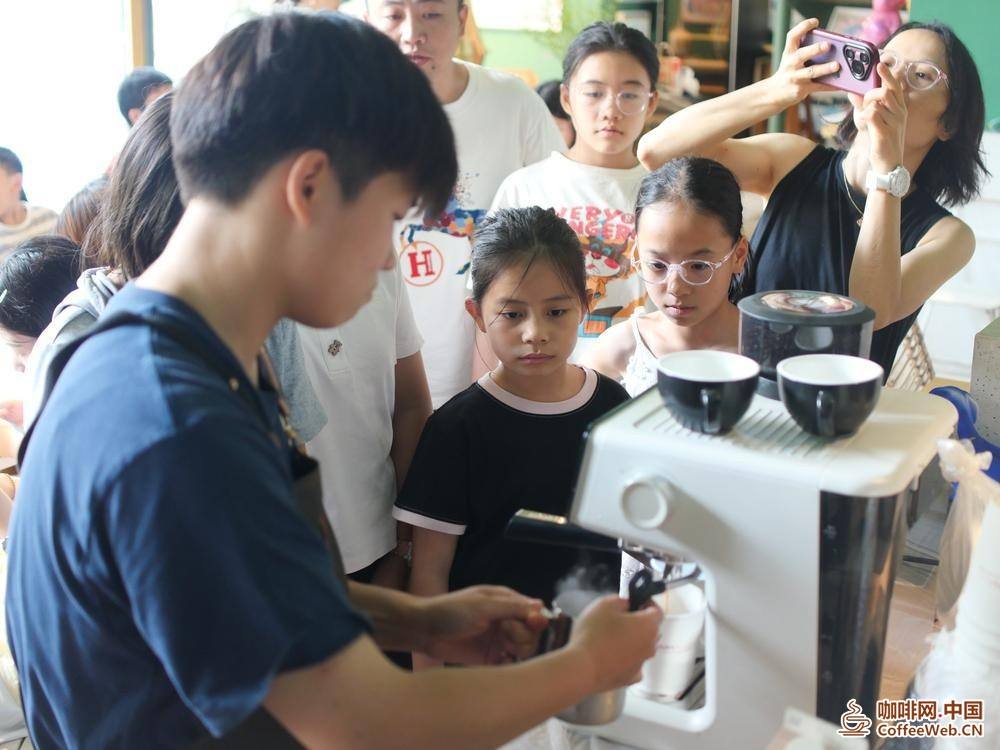
Ruibao Subdistrict Coffee Culture Life Festival Photo provided by the correspondent
It is reported that in recent years, with the overall relocation of printing enterprises and industrial transformation, Ruibao Subdistrict has released a great deal of valuable development space. A number of technology innovation and cultural creative parks, such as Fashion Left Bank and Dongli Innovation Valley, have emerged one after another, providing an ideal physical space for the vigorous growth of the coffee business. Among them, O2PARK Maker Park, transformed from the former Guangzhou Chemical Factory, has introduced several themed coffee shops into the park, becoming a vivid benchmark for the coffee business on Ruibao Street. From the very beginning when the shops settled in, the subdistrict took the initiative to offer proactive services, precisely handling settlement and compliance matters, so that this “seed” of coffee culture could take firm root. At present, Ruibao Subdistrict has gathered 32 coffee business entities covering more than ten communities, initially forming an embryonic coffee business model of “product sales + scene experience”, and has become the warmest node in the “15-minute convenient living circle”.
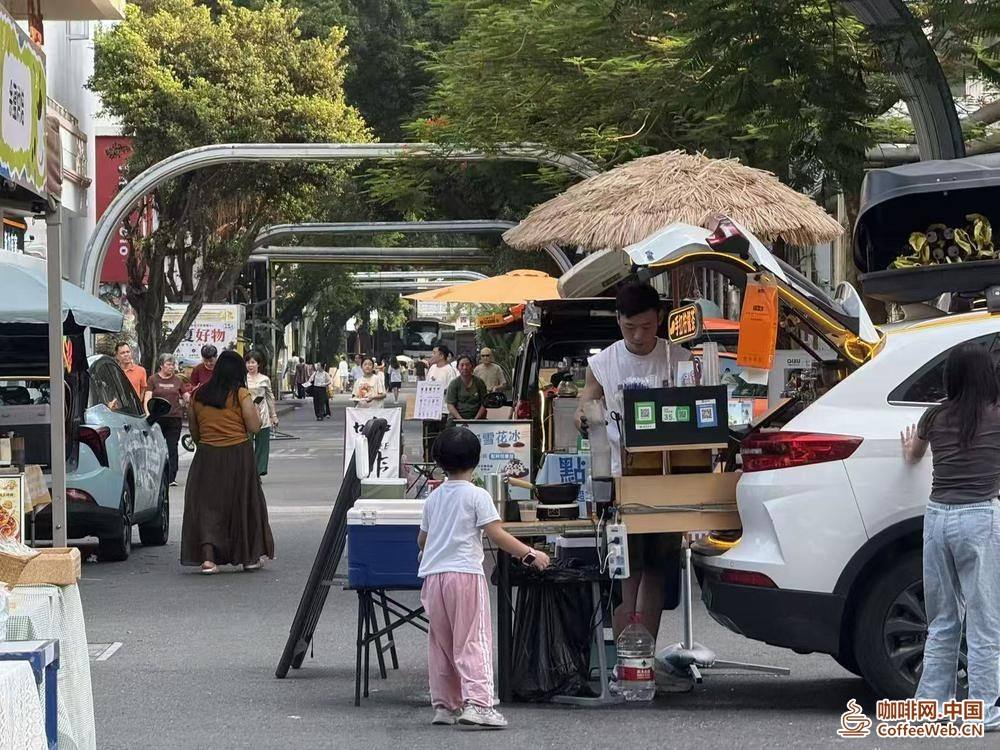
Old factory buildings transformed into a maker park not only bring in emerging industries but also provide venue space for the subdistrict to host events Photo provided by the correspondent
At the event site of the Ruibao Subdistrict Coffee Culture Life Festival, senior baristas brought their classes into the park, teaching citizens and tourists on site how to brew pour-over coffee and make latte art, and helping them understand how to choose good coffee beans and how to brew them. Brewing coffee produces a large amount of coffee grounds, which are worth recycling. At the coffee grounds creative workshop at the event site, staff provided citizens and tourists with plant-based glue, canvas and paintbrushes, guiding everyone to mix pigments with coffee grounds to make paintings; other staff instructed citizens and tourists in composting with discarded coffee grounds. Through this event, citizens and tourists not only experienced the aroma of coffee, but also learned about the zero-waste concept through coffee.
Zeng Yiguo, head of the Comprehensive Administrative Law Enforcement Team of Ruibao Subdistrict, said that the subdistrict is currently trying to redefine community life with a cup of coffee, and will continue to integrate resources and build platforms to encourage merchants in the area to create more new coffee culture scenes that can be tasted, played with and felt, so that coffee culture becomes a new bond for neighborhood interaction and the neighborhood economy gains more quality and warmth.
Image/provided by the correspondent
Reprint Notice & Disclaimer
- This article has been edited and compiled by China Coffee Network. The information and images therein come from public sources and the copyright belongs to the original author. This reprint is intended solely for information sharing within the coffee industry and does not represent the views of this website; all data and opinions are subject to the original article. Our thanks to the original author for creating and sharing it.
- For matters concerning content licensing, attribution, copyright or otherwise, please contact us promptly and we will verify and cooperate in handling them as soon as possible. We also welcome coffee origins, brands and industry media to exchange ideas and contribute articles.
- Contact China Coffee Network: Tel 400-0000-641 (+86-18288016826) | Email 478203668@qq.com
Related Reading
 Jiangxi Wuyuan: Rural Coffee Unlocks New Cultural Tourism Formats
 Jiangxi Wuyuan: Rural Cafes Unlock New Cultural Tourism Formats
 Global quality goods gather at Hongqiao Import Commodity Exhibition Center, setting "Chinese standards" for coffee
- Global premium products gather to set China's coffee standards as Hongqiao Import Commodity Exhibition Center keeps the CIIE spirit alive
- Global quality goods gather as Hongqiao Import Commodity Exhibition Center and CIIE forge lasting partnership to set China's coffee standards.
 Zhejiang "Science Cafe" Promotes Embodied Intelligence in Real-World Scenarios


 Liaoning ICP Security No. 21122402000217