


Brief (coffeeyo.com): A personal memoir of Kongqing, a small café at No. 439 Lushan South Road that became an adopted home and a community for a generation of young people — until it changed hands and the gatherings drifted apart.
By Xia Qi (initiator of the Lushan South Plan)
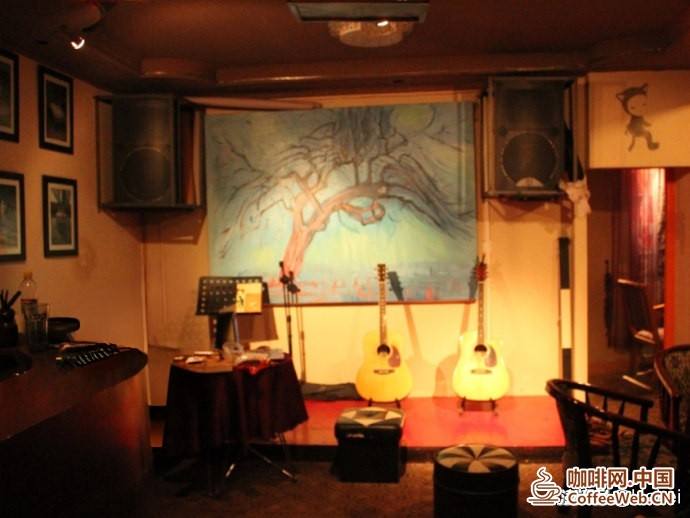
Many years later, I will still remember Kongqing, remember No. 439 Lushan South Road, remember a colorful staircase, the dim light, and some of the people I once met there.
The first time I walked into Kongqing was in the autumn of 2012. Before that, I had passed its door many times — taking the bus to the south campus of the Normal University or Central South, I would always go past it.
Lushan South Road is long; shops and pedestrians stretch along the street, and Kongqing sits in an inconspicuous corner by the roadside.
What truly made me push open that door was looking for a venue for our radio station’s listener meet-up. Xiaoxiong said she knew the owner of Kongqing and we could go take a look.
So, after passing it countless times, I walked into Kongqing.
What I remembered first was the staircase — colorful steps, paintings on the wall, light falling from upstairs. Later, every time I went, I would pause a while at the stairway.
Tang Jian, the owner of Kongqing, studied fine art and can play guitar. At our first meeting I even specially printed a few A4 planning proposals, wearing a shirt, serious to the point of being stiff.
We talked about events, about university, about life, about the things along the way.
The sky gradually darkened. Streetlights outside lit up, cars passed along Lushan South Road, the light in the room was dim, people sat in a circle, saying aimless things.
Sometimes, a place is remembered with just such an evening.
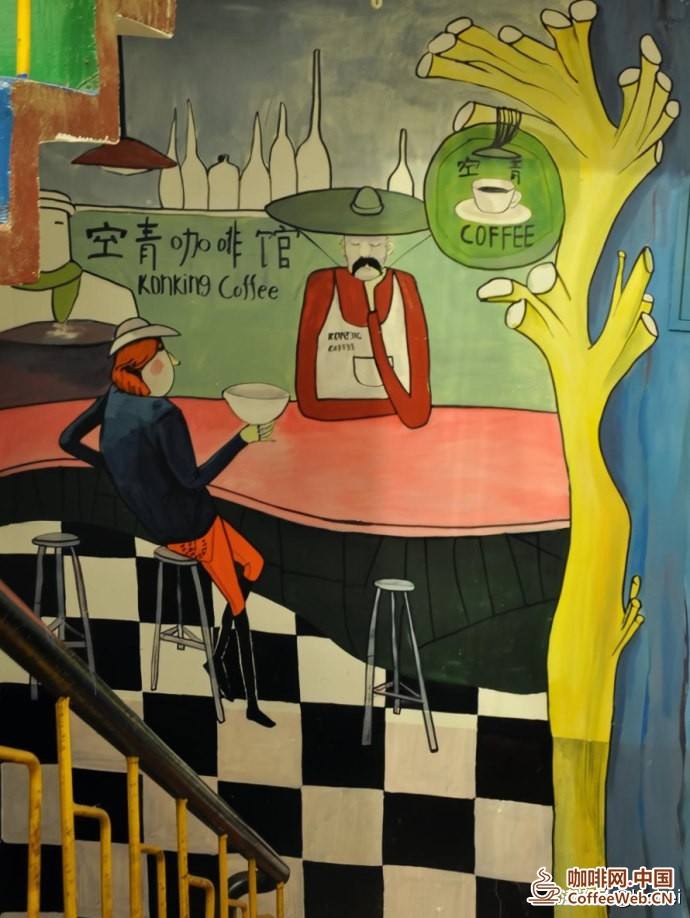
On October 27, 2012, MINEFM’s first offline event was held at Kongqing as scheduled. Later, the café’s large private room became our stronghold — a wooden sign hung on the door, photos on the wall, and paintings we left behind.
Kongqing was sometimes very quiet, sometimes packed with people. It had no real staff; most who helped out were the owner’s friends. After school, after work, people came here to make coffee, chat, play guitar, and spend an evening with a group of people they knew or had just met.
Over time, many people stayed.
Xiaoxiong told me that for a while Kongqing felt a lot like her home; probably many people, like her, had walked alone in their own lives for a long time before arriving at Kongqing.
Then, at the foot of Yuelu Mountain, they found a café.
At Kongqing, I successively got to know Tiankai, Yueyue, Xiaoxuanzi… That is how encounters happen — push open a door, sit down, drink something, exchange a few words. Strangers then stay in your memory.
Once, while writing in a corner, it suddenly occurred to me to ask a question I had never asked: why is it called Kongqing?
The owner let me guess. I guessed many answers, but finally he said, Kongqing is a color — so that was all it was.
Thinking about it many years later, Kongqing is hard to be just a color anymore. It is a stretch of light at No. 439 Lushan South Road, a door pushed open at midnight, a group of people’s names.
It is also, in some period of days, a corner we jointly owned.
Back then, every time I left Kongqing, the street was lit, Yuelu Mountain was in the distance, pedestrians passed by, and the city seemed a little more familiar.
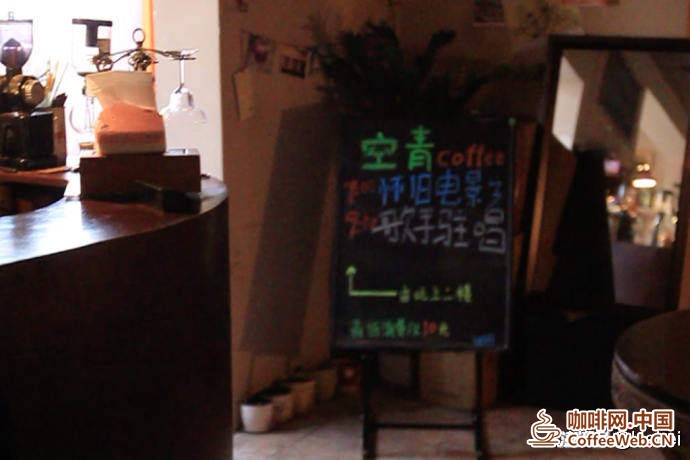
Later Kongqing changed hands; the old sign was taken down and a new café opened there.
But I never went in again, and that group of people who had gathered because of Kongqing gradually lost their common place to go. At first we would occasionally mention someone, ask about someone; later contact grew rarer, and still later, everyone went to different places.
Human encounters sometimes need a concrete “place.” While Kongqing was still there, we always felt we could meet again tomorrow. Once it changed its name, many relationships also came to a stop there.
Later, I also left Lushan South.
Over these years I have been to many cities, met many people, and walked into many cafés. Occasionally encountering dim light, hearing someone play guitar, or seeing on some street a café leading up to a second floor, I still think of Kongqing.
I think of those evenings spent sitting together, of a group of originally strangers who, because of one café, gained each other’s names. And then, because of that café’s disappearance, slowly walked back into their own lives.
Lushan South keeps moving forward; summer passes year after year, and at the foot of Yuelu Mountain, new young people always walk by.
Source: Xia Qi (initiator of the Lushan South Plan).
Reprint Note & Disclaimer
- This article is reprinted from Chinese media for information and cultural exchange. The views expressed are those of the original author and do not necessarily reflect the position of coffeeyo.com.
- All trademarks, brand names and logos mentioned belong to their respective owners.
- For cooperation, reprint or correction requests, please contact coffeeyo.com.
Reprint Notice & Disclaimer
- This article has been edited and compiled by China Coffee Network. The information and images therein come from public sources and the copyright belongs to the original author. This reprint is intended solely for information sharing within the coffee industry and does not represent the views of this website; all data and opinions are subject to the original article. Our thanks to the original author for creating and sharing it.
- For matters concerning content licensing, attribution, copyright or otherwise, please contact us promptly and we will verify and cooperate in handling them as soon as possible. We also welcome coffee origins, brands and industry media to exchange ideas and contribute articles.
- Contact China Coffee Network: Tel 400-0000-641 (+86-18288016826) | Email 478203668@qq.com | Address: Jinghong, Xishuangbanna, Yunnan Province / Tieling, Liaoning Province
Related Reading
 Jiangxi Wuyuan: Rural Coffee Unlocks New Cultural Tourism Formats
 Jiangxi Wuyuan: Rural Cafes Unlock New Cultural Tourism Formats
 Global quality goods gather at Hongqiao Import Commodity Exhibition Center, setting "Chinese standards" for coffee
- Global premium products gather to set China's coffee standards as Hongqiao Import Commodity Exhibition Center keeps the CIIE spirit alive
- Global quality goods gather as Hongqiao Import Commodity Exhibition Center and CIIE forge lasting partnership to set China's coffee standards.
 Zhejiang "Science Cafe" Promotes Embodied Intelligence in Real-World Scenarios


 Liaoning ICP Security No. 21122402000217