


Brief (coffeeyo.com): The Zhejiang Provincial Consumer Rights Protection Committee commissioned a comparative test of 30 ready-made coffee products from 19 brands sold in Hangzhou. Results showed sharp differences in caffeine, sugar and fat levels across black, milk and fruit coffees — and how you drink matters more than which brand you pick.
Chaoxing News client — Reporter Ma Yan, Correspondent Ren Qianying
A cup in the morning to wake up, another in the afternoon to recharge — coffee is no longer just a refined symbol of the office tower. It has become an everyday staple on the commute, on the desk and at the corner shop. From “occasional treat” to “daily necessity,” the health indicators behind it — caffeine, sugar, fat and more — are drawing growing attention from consumers.
To address these concerns, the Zhejiang Provincial Consumer Rights Protection Committee entrusted the Zhejiang Gongzheng Inspection Center Co., Ltd. to conduct a comparative test on ready-made coffee sold on the market. The test collected 30 samples in the Hangzhou area, covering 19 brands including Starbucks, Luckin, Cotti and Guming. The findings: the health indicators of different coffee categories vary enormously, and choosing the right category matters more than choosing the right brand.
Caffeine: Black Coffee Is the Strongest Pick-Me-Up; Fruit and Milk Coffees Are Relatively Milder
The comparative test showed that the caffeine content of the 30 samples ranged from 171 mg/kg to 702 mg/kg, equivalent to a volumetric concentration of 17.6 mg/100 mL to 70.6 mg/100 mL (see Figure 1). Overall the distribution followed a stepwise pattern of “black coffee > milk coffee > fruit coffee.” Black coffee had the highest concentration and is the top choice for a caffeine boost; milk and fruit coffees, with the addition of milk, fruit and flavored syrups, taste relatively milder. Although there is no standard specifically for ready-made coffee, referencing GB/T 30767-2014 “Coffee Beverages,” which requires caffeine content of ≥200 mg/kg for coffee drinks and concentrated coffee drinks, three samples fell below this reference value.
The “Scientific Consensus on Coffee and Health (2024),” jointly issued by the National Institute for Nutrition and Health of the Chinese Center for Disease Control and Prevention and four other institutions, recommends that healthy adults consume no more than 400 mg of caffeine per day. Measured against this test, when converted to the common 350 mL standard cup or 450 mL large cup, the single-cup caffeine content of all 30 samples fell within this limit.
Figure 1: Caffeine test results for the 30 samples
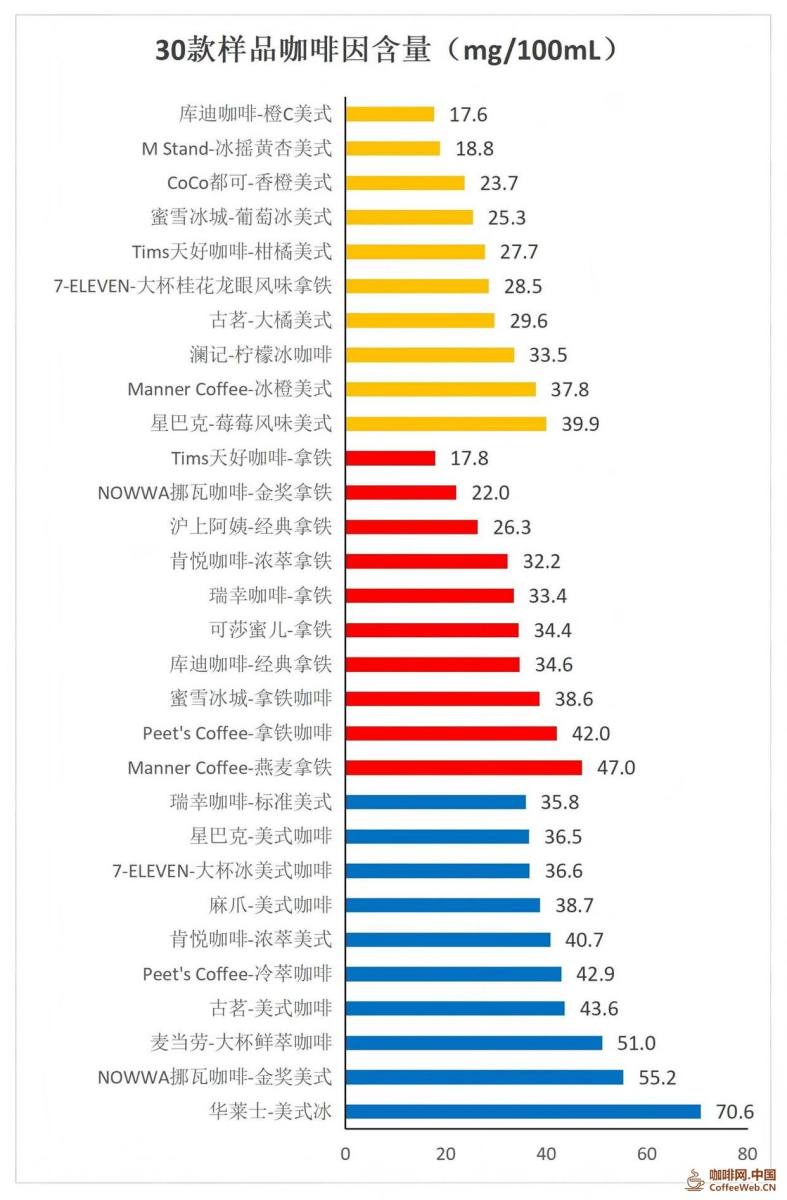
Note: The orange bars represent fruit coffee; the red bars represent milk coffee; the blue bars represent black coffee.
Sugar Content: “No Extra Sugar Added” Does Not Mean Sugar-Free — Beware Hidden Sugar in Fruit Coffee
With samples preferentially selected at “no extra sugar added” or the lowest available sugar level, the test showed: none of the 10 black coffee samples had detectable sugar content (sum of fructose, glucose, sucrose, maltose and lactose); the 10 milk coffee samples had sugar content between 1.6 g/100 mL and 4.0 g/100 mL, with the sugar in all but the oat latte mainly coming from lactose in the milk; among the fruit coffee samples, apart from one Starbucks Berry-Flavored Americano with no detectable sugar, the other nine samples had sugar content of 3.2 g/100 mL to 7.7 g/100 mL (see Figure 2).
It should be noted that the “Dietary Guidelines for Chinese Residents (2022)” recommends that adults consume no more than 50 g of added sugar per day, preferably under 25 g. According to the test results, when converted to a common 350 mL standard cup, the average sugar content of a single fruit coffee cup was 18.0 g, with two samples exceeding 25 g and the highest reaching 27.0 g; when converted to a 450 mL large cup, the average rose to 23.2 g, with five samples exceeding 25 g and the highest reaching 34.7 g.
Figure 2: Sugar content test results for the 30 samples
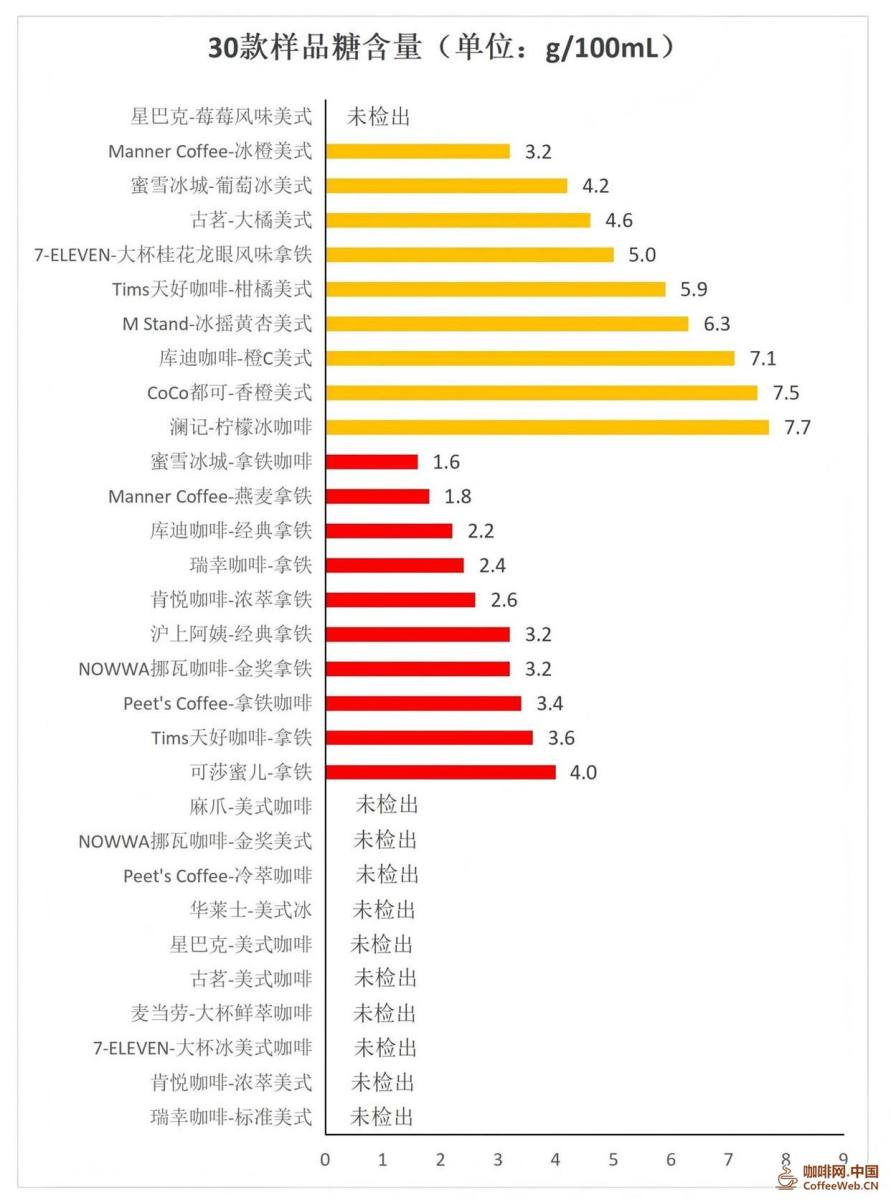
Note: The orange bars represent fruit coffee; the red bars represent milk coffee.
Fat and Energy: Milk Coffee Has Relatively High Energy; Fruit Coffee’s Energy Comes Mainly from Sugar
Except for one fruit coffee sample based on a latte, the other 19 black and fruit coffee samples all had fat content ≤0.1 g/100 mL, below the threshold of “fat-free or low-fat” for pre-packaged foods (≤0.5 g/100 mL); while the milk coffee samples, due to the addition of milk and oat milk, had an average fat content of 2.26 g/100 mL (see Figure 3).
Figure 3: Fat content test results for the 30 samples
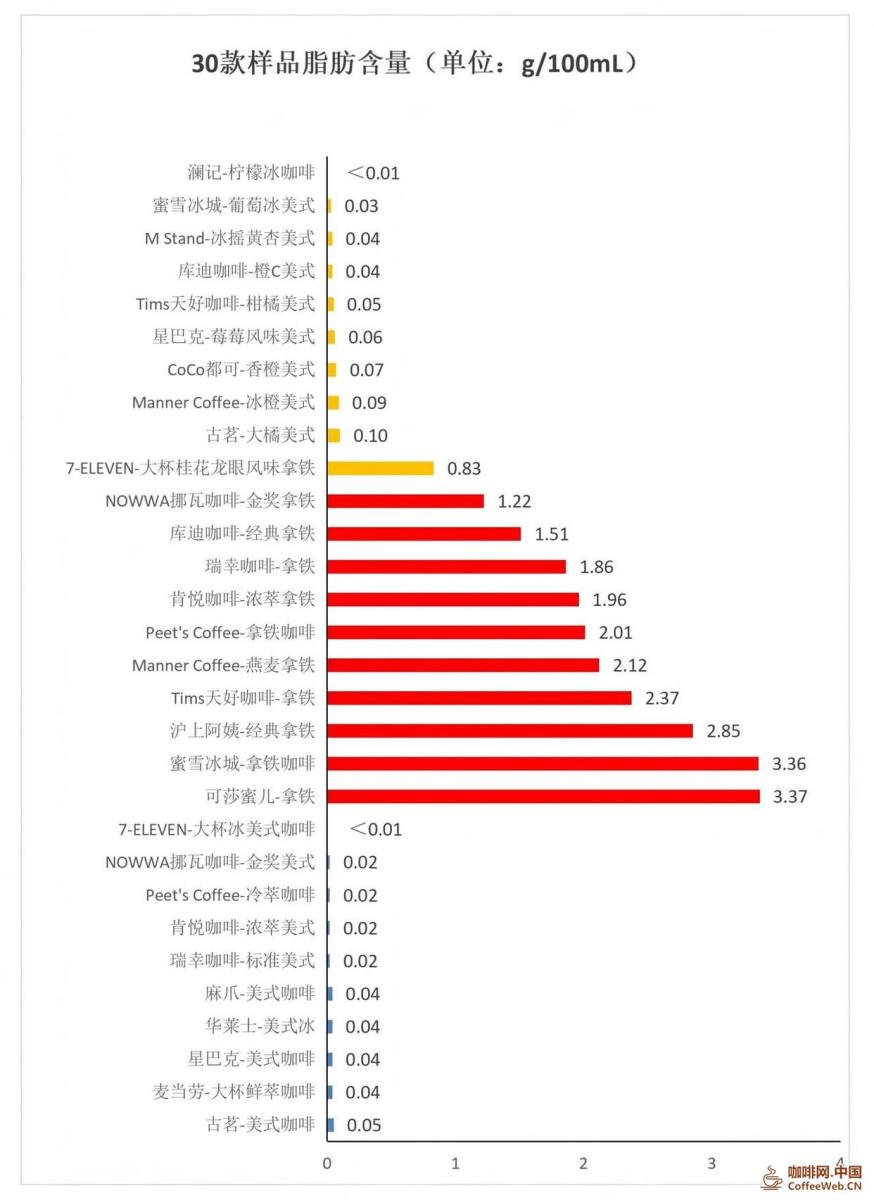
Note: The orange bars represent fruit coffee; the red bars represent milk coffee; the blue bars represent black coffee.
In terms of energy, the three categories overall showed “black coffee < fruit coffee < milk coffee.” The energy of the 10 black coffee samples ranged from 14 kJ/100 mL to 30 kJ/100 mL, the 10 fruit coffee samples from 24 kJ/100 mL to 206 kJ/100 mL, and the 10 milk coffee samples from 162 kJ/100 mL to 305 kJ/100 mL (see table below). Calculated per cup of 350 mL to 450 mL, the average energy of a single black coffee cup was about 18 kcal to 23 kcal, a fruit coffee cup about 126 kcal to 162 kcal, and a milk coffee cup about 183 kcal to 235 kcal.
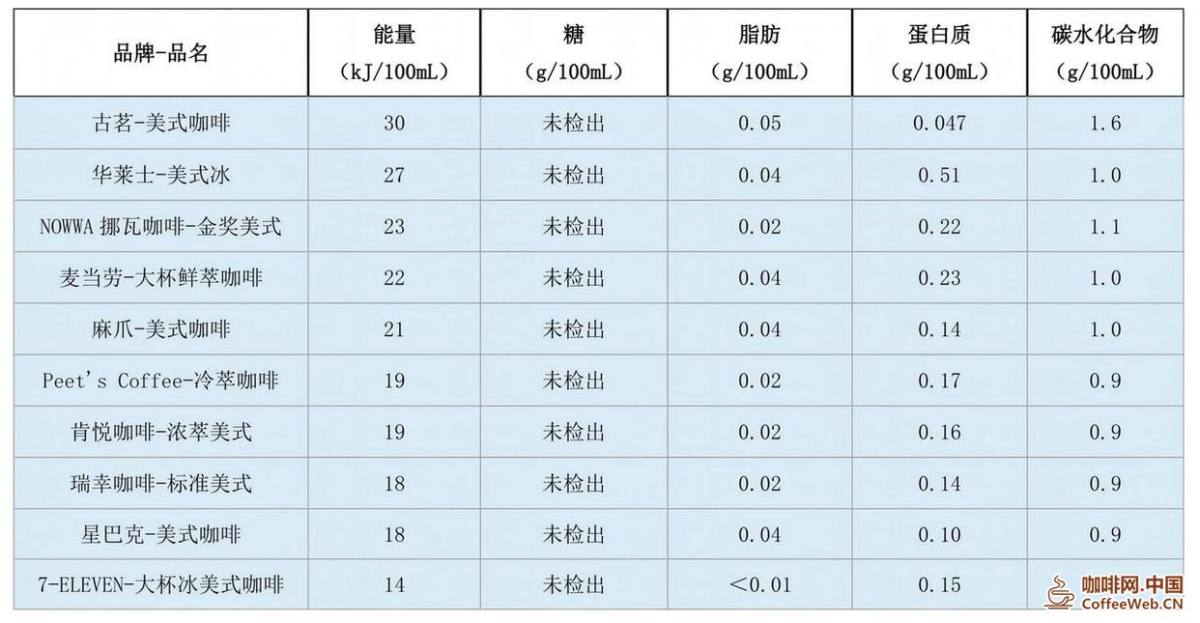
Table 1: Energy test results for the 10 black coffee samples
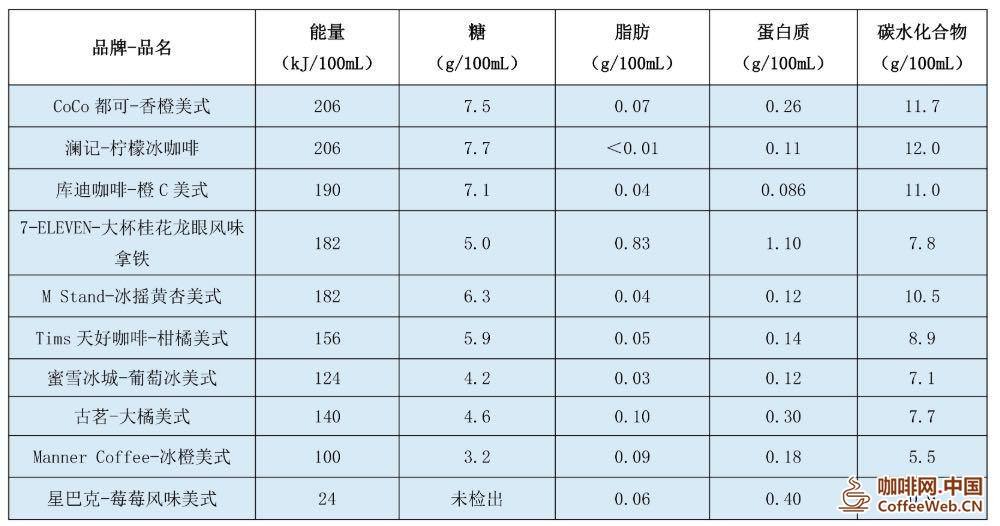
Table 2: Energy test results for the 10 fruit coffee samples
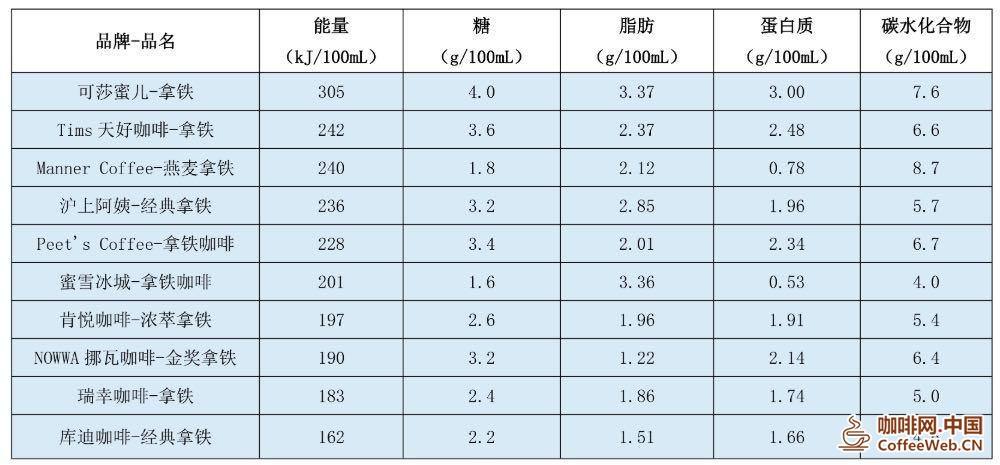
Table 3: Energy test results for the 10 milk coffee samples
Consumer Tips: Drink This Way for Better Health
Combining the test results with related research, the following tips are issued to consumers:
1. Control total intake: Healthy adults are advised to keep daily caffeine intake within 400 mg, and drinking no more than two cups of coffee per day is safer.
2. Beware of high sugar in fruit coffee: Fruit coffee has relatively high sugar content and should not be over-consumed; choose products without extra sugar where possible. People who are sensitive to blood sugar or need to control their weight are advised to opt for sugar-free black coffee.
3. Mind the timing: Caffeine has a stimulating effect on the central nervous system, and its impact on sleep varies greatly between individuals. People sensitive to caffeine are advised to avoid coffee after lunch.
4. Caution for special groups: Certain groups — such as children, adolescents, and pregnant or breastfeeding women — are advised not to drink coffee.
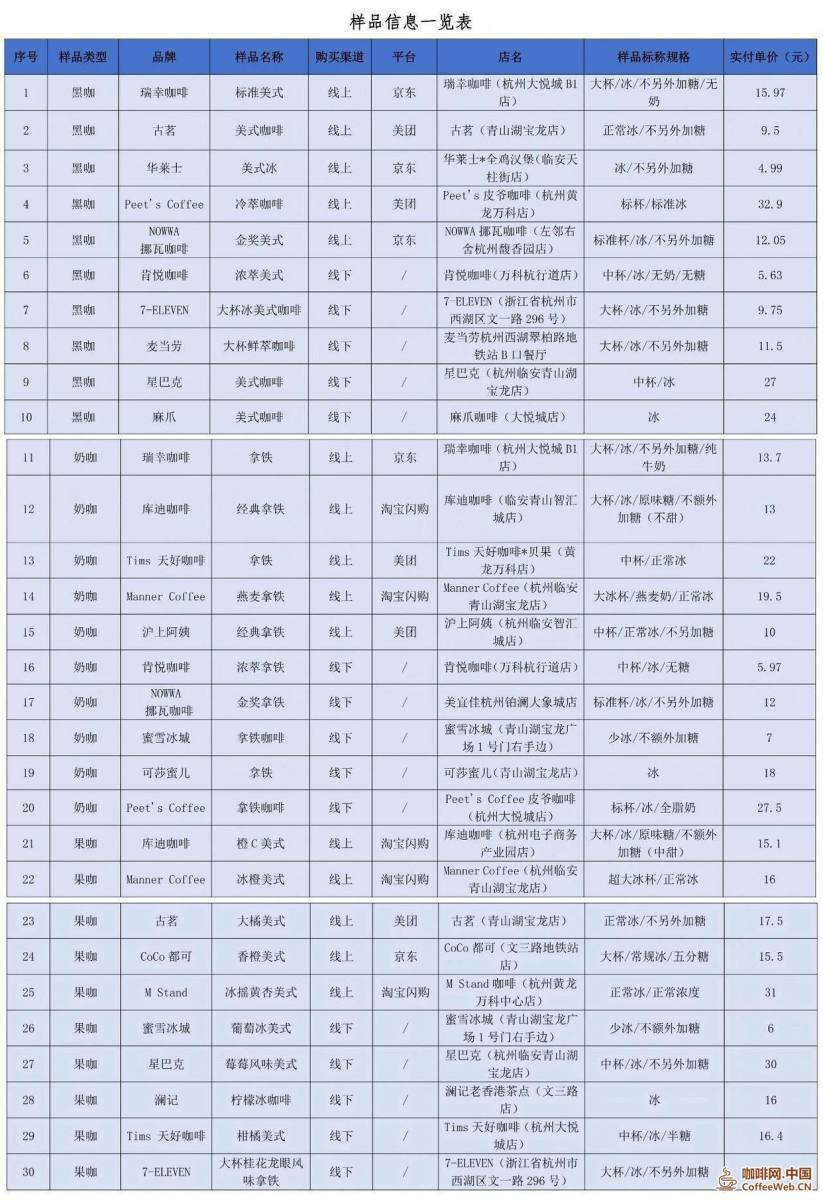
Supplement: The samples were collected from 30 ready-made coffees at 23 physical stores in Hangzhou, covering the three mainstream categories of black, milk and fruit coffee, with actual paid prices ranging from 4.99 yuan to 32.9 yuan per cup. To ensure objectivity, all samples were uniformly selected in the iced specification, and within the available options “no extra sugar added” or the lowest sugar level was prioritized. See the “Sample Information Table” for details. Note: The results of this comparative test are only responsible for the tested samples and do not represent the quality of products from different stores or batches of the same brand.
Source: Chaoxing News client — Reporter Ma Yan, Correspondent Ren Qianying.
Reprint Note & Disclaimer
- This article is reprinted from Chinese media for information and cultural exchange. The views expressed are those of the original author and do not necessarily reflect the position of coffeeyo.com.
- All trademarks, brand names and logos mentioned belong to their respective owners.
- For cooperation, reprint or correction requests, please contact coffeeyo.com.
Reprint Notice & Disclaimer
- This article has been edited and compiled by China Coffee Network. The information and images therein come from public sources and the copyright belongs to the original author. This reprint is intended solely for information sharing within the coffee industry and does not represent the views of this website; all data and opinions are subject to the original article. Our thanks to the original author for creating and sharing it.
- For matters concerning content licensing, attribution, copyright or otherwise, please contact us promptly and we will verify and cooperate in handling them as soon as possible. We also welcome coffee origins, brands and industry media to exchange ideas and contribute articles.
- Contact China Coffee Network: Tel 400-0000-641 (+86-18288016826) | Email 478203668@qq.com | Address: Jinghong, Xishuangbanna, Yunnan Province / Tieling, Liaoning Province
Related Reading
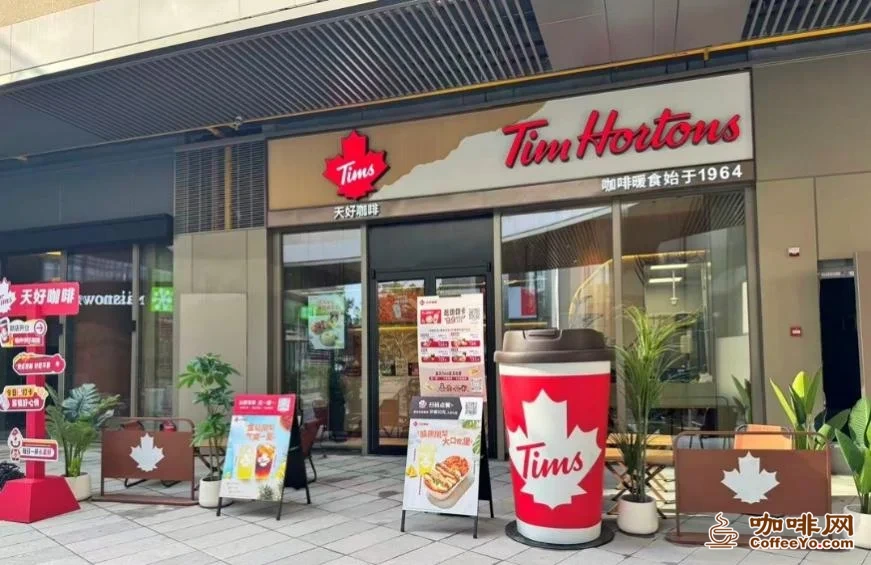 Tim Hortons China Q3: System Sales Up 6.3% Quarter on Quarter
- CRH Plans OATLY Exit, Nayuki Leaves Wenzhou | Tea & Coffee Weekly
 The 2026 Asian Coffee Association Annual Meeting will be held in Dehong, Yunnan, and the Asia ABODY Coffee System Standard will be officially released
 The President of Brazil's Victoria Coffee Business Center (CCCV) led a delegation of four people to Pu'er, Yunnan to conduct a special inspection of the coffee industry
 Behind the 1836 yuan "King of Brands": The Full Industry Chain and Offline Layout of Xinlu Coffee
 From a raw bean to a fragrant cup, Xiamen International Coffee Exhibition unlocks a new picture of the entire industry chain


 Liaoning ICP Security No. 21122402000217