


Brief (coffeeyo.com): A large Finnish population study suggests daily coffee drinkers tend to have less body fat and more muscle, and show distinct sex-hormone and endocrine patterns — hinting that hormones may be one bridge behind coffee’s health benefits.
This article is from the WeChat public account “ChestnutMates,” editor: Hawthorn, author: ChestnutMates; original title: “Daily Coffee Drinkers vs. Never-Drinkers: How Big Is the Body Difference?”
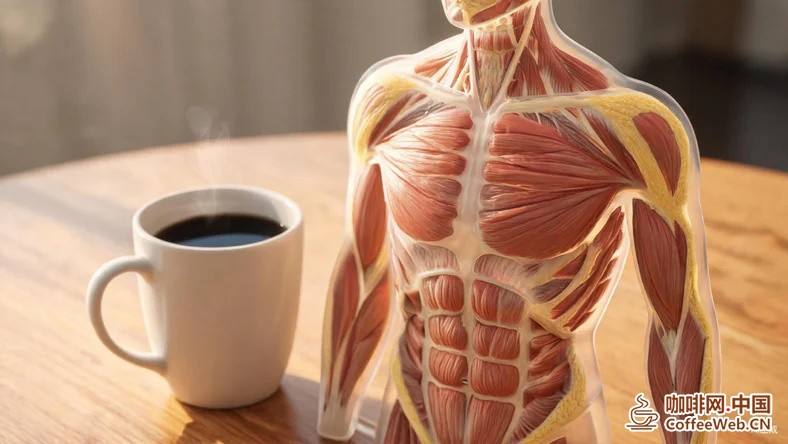
As everyone knows, coffee is a “health star.”
Beyond keeping you awake, a large body of epidemiological research links coffee drinking to lower risks of type 2 diabetes, Parkinson’s disease, liver disease and death.
Yet coffee contains hundreds of bioactive compounds, and science is still piecing together the vast mechanistic puzzle of how these compounds affect the human body to produce those benefits.
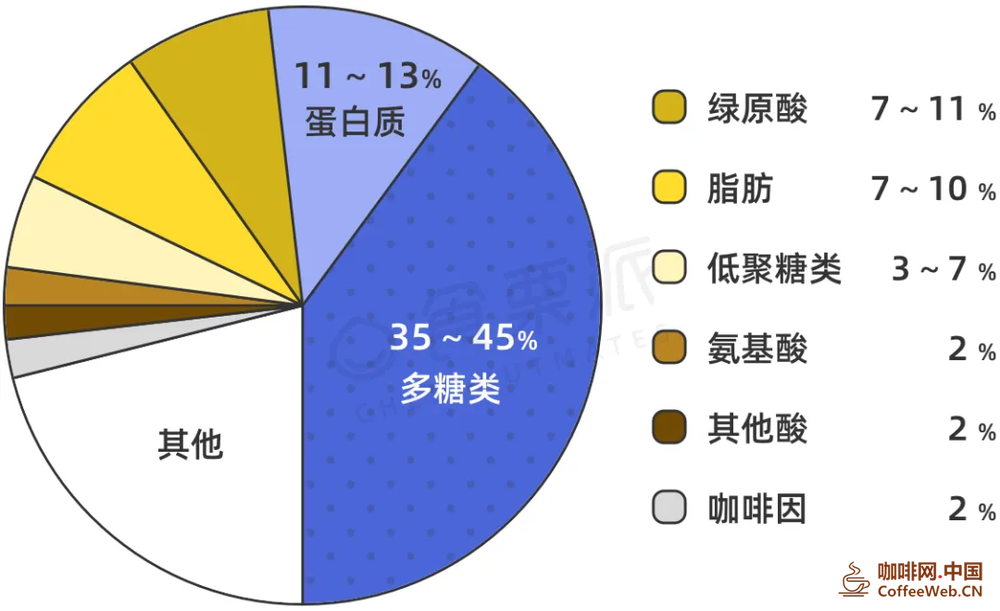
▲ Coffee bean composition, reference: Isao Kashiwaki’s “You Don’t Understand Coffee.”
A recently published large Finnish population study offers a new clue to understanding this: behind coffee’s various health benefits may hide a bridge built by “sex-hormone and endocrine” pathways [1].
Coffee Lovers: Less Fat, Relatively More Muscle
Researchers from the University of Oulu in Finland analyzed data from 2,264 participants in the “Northern Finland 1966 Birth Cohort” (average age 46, 47% male).
The researchers not only asked how much coffee they drank but also ran fairly comprehensive physical exams — body composition, blood pressure, blood lipids, fasting glucose and insulin, an oral glucose tolerance test, and hormone markers including total testosterone, free testosterone and sex hormone-binding globulin.
The results showed that, by traditional metrics, BMI, waist circumference and waist-to-hip ratio showed no clear difference across coffee-intake groups. But higher-precision analysis revealed that people who drank more coffee had:
- lower body-fat percentage;
- less total fat mass;
- smaller visceral-fat area;
- higher skeletal-muscle mass.
That is, even if two people have exactly the same weight and BMI, the regular coffee drinker likely has “less fat, more muscle” inside.
The study also found that, in both male and female participants, higher coffee intake was linked to lower circulating branched-chain amino acid levels.
Many past studies have found that chronically elevated blood branched-chain amino acids are associated with higher risks of obesity, insulin resistance, type 2 diabetes and fatty liver [2]. This suggests coffee may safeguard blood-sugar stability by influencing amino-acid metabolism.
Drinking Coffee, Even Hormones Change
The more striking discovery lies in coffee’s regulation of the sex-hormone network.
This difference is more pronounced in men.
The study found that, among male participants, the higher the coffee intake:
- the more favorable the insulin response and insulin sensitivity;
- the higher the total and bioavailable testosterone levels;
- the higher the sex hormone-binding globulin (SHBG) concentration;
- with free testosterone and free androgen index slightly lower.
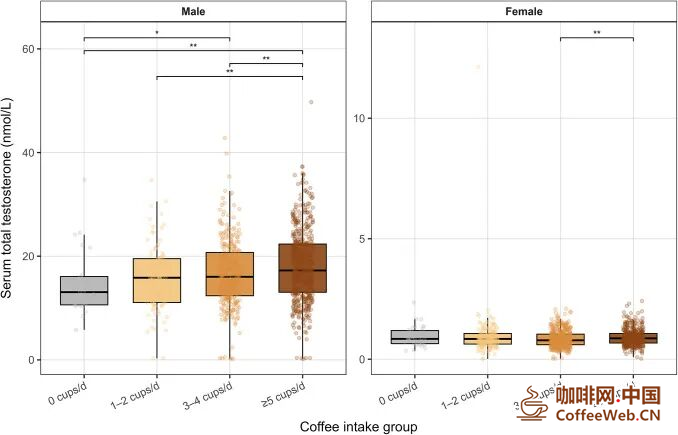
▲ In men, serum total testosterone rises with increasing coffee intake. Compared with non-drinkers, men with moderate (p<0.05) and high (p<0.01) intake had significantly higher testosterone. Source: ref [1].
The changes in women were less obvious.
Among female participants, higher coffee intake was mainly associated with elevated SHBG and lower free sex-hormone levels.
After subtracting the effects of lifestyle factors such as BMI, exercise, smoking and diet, this hormonal imprint remained solid. That means people with higher coffee intake show a very distinctive endocrine profile.
Why Is Coffee Healthy? Hormones Offer a New Clue
Here we need to understand a frequently recurring marker: sex hormone-binding globulin.
Simply put, it is like a “hormone courier” in the blood, mainly made by the liver, specialized at grabbing and transporting sex hormones such as testosterone and estrogen and regulating their activity in the body.
But this “courier’s” role is far more than transport. Research finds it is also an “early-warning device” for the body’s metabolic health.
Past studies found that low total testosterone and SHBG in men often appear together with obesity, insulin resistance and metabolic syndrome; and in both men and women, lower SHBG is also linked to higher type 2 diabetes risk [3,4].
The researchers speculate that antioxidant compounds rich in coffee, such as chlorogenic acid, may quietly stimulate the liver to produce more of this “courier,” making the body’s hormone distribution more reasonable, thereby indirectly improving body-fat and blood-sugar health.
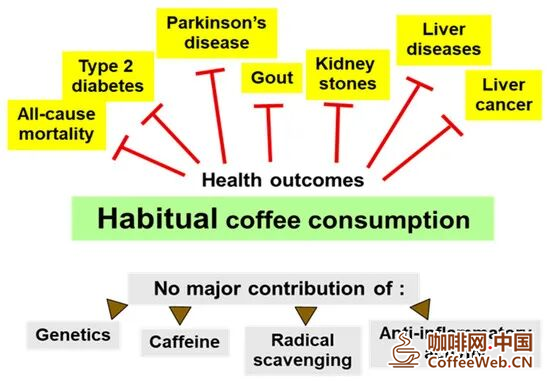
▲ Prospective epidemiological studies consistently find that habitual coffee drinking is linked to lower risk of multiple clinical outcomes and all-cause mortality, including lower incidence of type 2 diabetes, Parkinson’s, gout, liver fibrosis, non-alcoholic fatty liver disease, cirrhosis, liver cancer and chronic liver disease. Source: ref [5].
One reminder, though: this is an observational study. What it found is a “healthy coincidence” (correlation), not proof that drinking coffee directly cures disease or forcibly changes hormones (causation).
So don’t treat it as a miracle cure and guzzle it. For most people, as long as it doesn’t cause palpitations or disrupt sleep, drinking a moderate 1–2 cups a day of unsweetened, lightly-milked black coffee — enjoying this metabolic dividend while staying alert — is the most comfortable and healthiest choice!
Source: ChestnutMates (WeChat) / China Coffee Network.
Reprint Note & Disclaimer
- This article is reprinted from Chinese media for information and cultural exchange. The views expressed are those of the original author and do not necessarily reflect the position of coffeeyo.com.
- All trademarks, brand names and logos mentioned belong to their respective owners.
- For cooperation, reprint or correction requests, please contact coffeeyo.com.
Reprint Notice & Disclaimer
- This article has been edited and compiled by China Coffee Network. The information and images therein come from public sources and the copyright belongs to the original author. This reprint is intended solely for information sharing within the coffee industry and does not represent the views of this website; all data and opinions are subject to the original article. Our thanks to the original author for creating and sharing it.
- For matters concerning content licensing, attribution, copyright or otherwise, please contact us promptly and we will verify and cooperate in handling them as soon as possible. We also welcome coffee origins, brands and industry media to exchange ideas and contribute articles.
- Contact China Coffee Network: Tel 400-0000-641 (+86-18288016826) | Email 478203668@qq.com | Address: Jinghong, Xishuangbanna, Yunnan Province / Tieling, Liaoning Province
Related Reading
 Jiangxi Wuyuan: Rural Coffee Unlocks New Cultural Tourism Formats
 Jiangxi Wuyuan: Rural Cafes Unlock New Cultural Tourism Formats
 Global quality goods gather at Hongqiao Import Commodity Exhibition Center, setting "Chinese standards" for coffee
- Global premium products gather to set China's coffee standards as Hongqiao Import Commodity Exhibition Center keeps the CIIE spirit alive
- Global quality goods gather as Hongqiao Import Commodity Exhibition Center and CIIE forge lasting partnership to set China's coffee standards.
 Zhejiang "Science Cafe" Promotes Embodied Intelligence in Real-World Scenarios


 Liaoning ICP Security No. 21122402000217