


Brief (coffeeyo.com): In Xiamen, Fujian — a city that grows almost no coffee beans — coffee has nonetheless spawned a hundred-billion-yuan-scale industry, with new local flavors pulling on a global supply chain and showcasing the diverse vitality of the consumer end.
In Xiamen, Fujian, the density of cafes ranks among the highest in the country, with more than 2,000 coffee shops of all kinds. A city that grows almost no coffee beans has nonetheless drunk its way to an industrial chain worth over 100 billion yuan. Where does the vitality of the consumer end come from?
Twenty years ago, Yuandang Road was Xiamen’s earliest coffee street. Today there are on average seven cafes per square kilometer across the city. In Xiamen, just how many ways can a cup of coffee be enjoyed?
Within Xiamen Island, cafes are everywhere. More than 20 years ago, the Xiti Villa coffee shop opened by Yuandang Lake. Back then a cup cost 25 yuan, when a Xiamen worker’s monthly wage was only 800 or 900 yuan.
Liu Lijuan, the cafe’s deputy general manager, explained that in the beginning foreign customers were very numerous, and the target clientele was returnees, white-collar workers and private-business owners.
This was the “origin” of Xiamen’s coffee consumption — starting from a high-end niche. But today coffee is far more than “something foreigners drink,” and certainly not just a high-end consumer good. Xiamen’s cafes are using every means to give this “imported beverage” a local flavor.
In Shipaiwei, a coffee shop that started as an experiment by a traditional supermarket has put the satay sauce familiar to Minnan people into its lattes, and many young people make a special trip to check it out.
Zhu Sisi, the shop’s manager, said they have been searching for Minnan flavors, turning childhood tastes into coffee to appeal to young and old alike.
Localizing the flavor, the scene is also changing. In Jimei Dashi, inside the nearly century-old overseas-Chinese old residence of Wenque Lou, Minnan tea drinks, Nanyang (Southeast Asian) flair and specialty coffee merge into one.
An out-of-town visitor said that drinking coffee in a rather iconic building feels relaxing and comfortable — perhaps that is just how local life is.
Young people’s creativity is redefining the “ways to play” with coffee. At this cafe that often has a queue, a post-2000s owner placed the bar counter right in the center of the store, showcasing the making of drinks like a stage, and updates the menu every quarter. Some of the specialties add wasabi; others blend in cinnamon and star anise.
Wu Yujie, the shop’s manager, said the market is too homogeneous, so they wanted to find niche flavors that no one else had yet matched, which keeps the customer base stable.
Industry observers note that, adapting to the diversification of consumer demand, Xiamen’s coffee supply is becoming more refined.
Zeng Huashan, chairman of the Xiamen Baking and Coffee Association, said coffee now falls into three tiers. One is ordering a cup via an app for maybe a dozen yuan, delivered right to your office building; another is receiving friends at a cafe with real character; and the third is going to experience the essence of coffee with a master.
More importantly, the vitality of the consumer end is transmitting upstream to the industry chain. At a roast-on-site cafe, consumers can directly watch the whole process from green bean to cup.
Zhang Yunyan, the shop’s manager, said they gather coffee beans from producing regions around the world into the store and present them to consumers through good roasting and brewing. Coffee is not just a pick-me-up tool — it has many interesting flavors and stories.
A Cup of Coffee Links to the “Global”
China is one of the world’s fastest-growing coffee consumer markets; every time consumers unlock a new flavor, they pull on the global supply chain. Today, as coffee beans from some 25 countries and regions converge on Xiamen, this city that grows no coffee beans has become an important gateway for global beans entering China, and a key market within the global coffee “big market.”
In 2025, Xiamen imported more than 8,700 tons of coffee beans, worth over 400 million yuan, up more than 68% year on year. Among them, imports from Ethiopia were worth 267 million yuan, up more than 31-fold, and Xiamen’s coffee-bean import volume accounted for a quarter of the national total.
Chen Haojian, chief of the third inspection section of Haicang Customs under Xiamen Customs, said that from arrival at port to entering the warehouse takes as little as about 24 hours, with on-demand review, priority inspection and priority testing, giving enterprises a “smooth” experience.
According to Xiamen Customs, in 2025 it completed 5,500 tons of bonded import distribution of green coffee beans; with clearance, testing and warehousing closely linked, Xiamen’s coffee import corridor is fully speeding up. Coffee beans from around the world are roasted, processed and branded in Xiamen every day, supplying China’s and even the world’s diversified consumer market with new formats and new ways to play.
Lin Zhenya, deputy director of the Xiamen Municipal Bureau of Commerce, said that one in every four imported coffee beans in China is imported by a Xiamen enterprise, and through the city’s collection and distribution of beans they aim to build a re-export trade center.
This Taiwan-invested electronics enterprise that set up a plant in Xiamen in 1992 transformed in 2018 into the city’s first factory to independently import green beans.
Now, through cooperation with the Specialty Coffee Association of America, the company’s specialty green-bean processing volume reaches 300 tons a year, and it trains professionals for society.
At the same time, more and more domestic coffee brands are settling in Xiamen. One leading enterprise now has over 30,000 coffee stores worldwide and signed a five-year, 240,000-ton, ten-billion-yuan coffee-bean procurement deal with Brazil.
Lin Zhenya said she hopes leading enterprises will play the role of “chain leader,” attracting upstream and downstream players — not just domestic demand — so that coffee brands can go global.
And more Xiamen coffee supply-chain enterprises are extending their reach directly to the origins, building first-hand sourcing networks.
Wu Yawen, head of the procurement development department at Xiamen C&D Lifestyle Materials Co., Ltd., said the team has overseas staff in Brazil, Vietnam and Ethiopia, dealing directly with local leading exporters and rural cooperatives. In the past there were few purchase channels and many links in between were opaque; flying there themselves brings the distance closer.
“Strengthening the chain” also shows in the coffee-equipment manufacturing sector. This coffee-equipment company was founded in Shanghai and moved its headquarters to Xiamen four years ago; its grinders are exported to more than 100 countries and regions.
Wu Jiajia, the equipment company’s new-media manager, said the traditional high-end market was occupied by old foreign brands, but they researched grinder-core performance themselves, benchmarking and even surpassing first-tier foreign products, and their products have won Red Dot awards. Relying on China’s high-precision supply chain, innovative products land at high quality.
Xiamen’s rapidly expanding coffee big market has also found new opportunities for domestic coffee beans. At the beginning of 2026, the first Yunnan coffee dedicated train went straight to Xiamen, opening a fast channel between quality domestic producing regions and the southeast-coast processing base. Beyond the consumer end, Xiamen’s coffee industry chain is extending even deeper — even coffee grounds are reused, for growing succulents, making filter elements and producing cat litter.
Lin Zhenya said that in the coffee sector there are also such enterprises; the landing of green products is a kind of circular economy and also achieves carbon-reduction goals.
A Cup of Coffee, Where Flavor Meets Feeling
Statistics show Xiamen’s coffee industry scale has surpassed 60 billion yuan, and it is accelerating the building of “four major centers”: a national coffee headquarters cluster, international coffee trade, southeast-coast coffee production and processing, and national coffee distribution and consumption. Beyond the industrial skeleton, in a cup of coffee the human warmth and cultural flavor meet and blend.
A relevant person in charge at the Xiamen Baking and Coffee Association said that the consulates on Gulangyu brought over the lifestyle of drinking coffee and holding balls, and it slowly took root in Xiamen’s soil. The coffee habits brought back by Nanyang overseas Chinese and the Minnan people’s everyday tea-and-pastry pairings all left their mark in this cup. The taste of Xiamen coffee has always been the result of a blending of diverse cultures; later, Taiwan-invested coffee brands landed one after another, making the cup’s flavor ever richer.
On Gulangyu, Taiwan businessperson Chen Fangyu came to Xiamen from Tainan in 2014; his ancestral home lies just across the Jiulong River. In 1989 he returned with his father to trace his roots; with geographic proximity, cultural affinity and fraternal hometown ties, he chose this place as the first stop of his entrepreneurship. In 2019 he opened on Gulangyu this cafe called “Gandan” — a homophone in the Minnan dialect for “simple.” But he did not expect that this little cafe would connect people like him who had crossed the strait; they push the door open for a cup of coffee and find memories of “home.”
From Tainan to Gulangyu, a cup of coffee links the everyday life of the two sides of the strait.
From the century-old overseas-Chinese character of Gulangyu to the blending and mutual learning of coffee people on both sides of the strait, a cup of coffee holds never only coffee itself — it is the distinctive aroma in the luggage of Nanyang returnees, the sweet aftertaste of Minnan tea pastries, and the root-seeking memory of “I’m back” from Tainan to Gulangyu. Today, this warm cup of coffee is no longer just the daily life of locals, but travels further along Xiamen’s trade routes.
Reprinted from: CCTV.com.
Source: CCTV.com / China Coffee Network.
Reprint Note & Disclaimer
- This article is reprinted from Chinese media for information and cultural exchange. The views expressed are those of the original author and do not necessarily reflect the position of coffeeyo.com.
- All trademarks, brand names and logos mentioned belong to their respective owners.
- For cooperation, reprint or correction requests, please contact coffeeyo.com.
Reprint Notice & Disclaimer
- This article has been edited and compiled by China Coffee Network. The information and images therein come from public sources and the copyright belongs to the original author. This reprint is intended solely for information sharing within the coffee industry and does not represent the views of this website; all data and opinions are subject to the original article. Our thanks to the original author for creating and sharing it.
- For matters concerning content licensing, attribution, copyright or otherwise, please contact us promptly and we will verify and cooperate in handling them as soon as possible. We also welcome coffee origins, brands and industry media to exchange ideas and contribute articles.
- Contact China Coffee Network: Tel 400-0000-641 (+86-18288016826) | Email 478203668@qq.com | Address: Jinghong, Xishuangbanna, Yunnan Province / Tieling, Liaoning Province
Related Reading
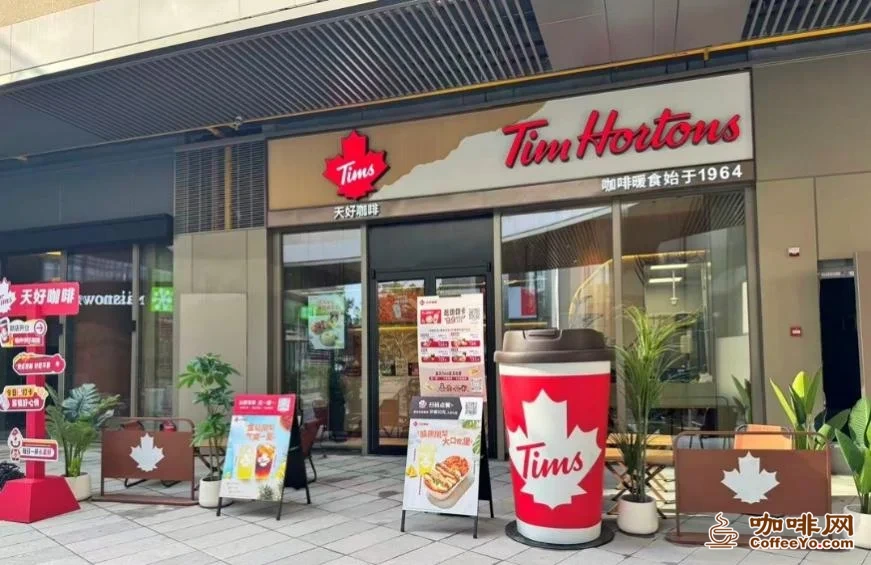 Tim Hortons China Q3: System Sales Up 6.3% Quarter on Quarter
- CRH Plans OATLY Exit, Nayuki Leaves Wenzhou | Tea & Coffee Weekly
 The 2026 Asian Coffee Association Annual Meeting will be held in Dehong, Yunnan, and the Asia ABODY Coffee System Standard will be officially released
 The President of Brazil's Victoria Coffee Business Center (CCCV) led a delegation of four people to Pu'er, Yunnan to conduct a special inspection of the coffee industry
 Behind the 1836 yuan "King of Brands": The Full Industry Chain and Offline Layout of Xinlu Coffee
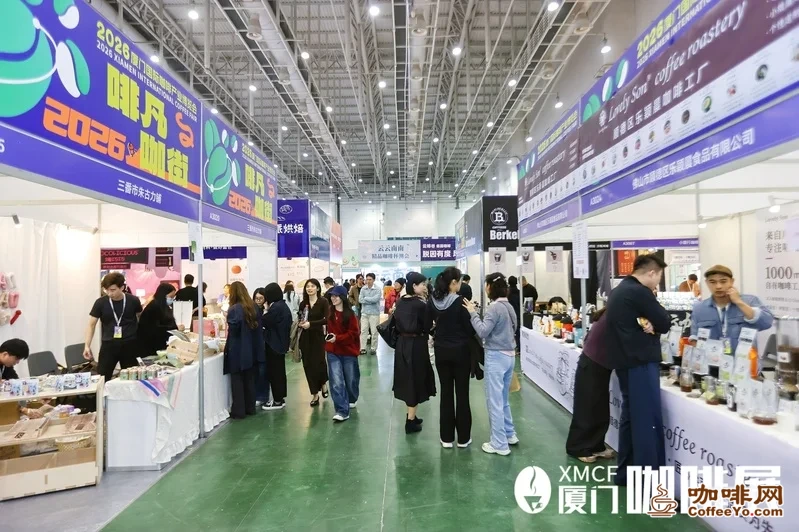 From a raw bean to a fragrant cup, Xiamen International Coffee Exhibition unlocks a new picture of the entire industry chain


 Liaoning ICP Security No. 21122402000217